72 Meters Down: Why Stingray Japan Returned to the Scandinavia
scuba divingtravel
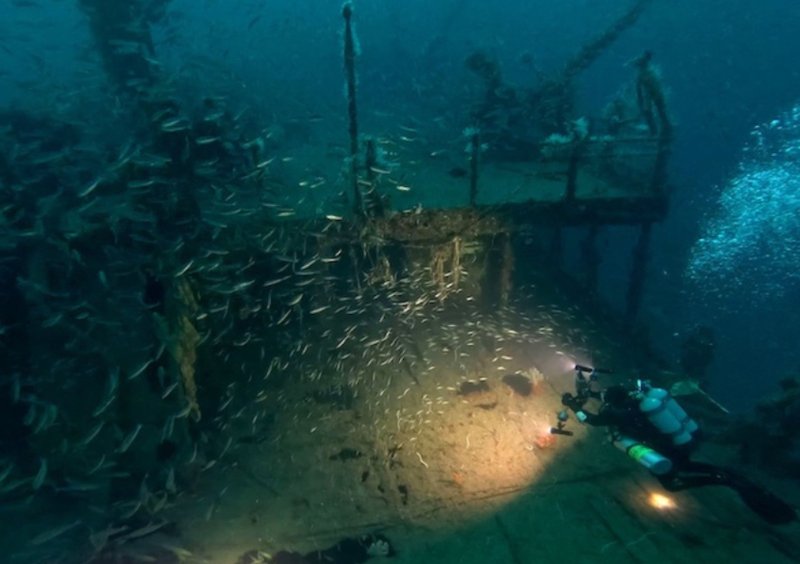
@Stingray-Japan
For more than 35 years, a pure white passenger ship rested off the coast of Numazu, Japan. Known as the Scandinavia—originally the Stella Polaris—the vessel served as a floating hotel and restaurant, becoming a familiar and beloved sight for locals.
Table of Contents:
-
Why Survey the Scandinavia Now?
-
A Wreck That Required Time—and the Right Team
-
Why This Wreck Matters
-
The Equipment, Planning, and Skill Behind a 30-Minute Mission
-
The Role of SSI Extended Range Training
-
A Team Built on Trust and Experience
-
Preserving Not Just a Wreck—but a Memory
-
More Than Adventure
-
About Stingray Japan
In 2006, while being towed back to her birthplace in Sweden, the ship sank off Cape Shionomisaki in Wakayama Prefecture, coming to rest at a depth of 72 meters. Since then, she has remained silent on the seafloor, slowly transforming into part of the marine environment.
Seventeen years later, in March 2023, that silence was broken. Stingray Japan—an SSI Extended Range (XR) Training Center specializing in technical diving—launched a dive survey of the Scandinavia. Since then, the team has conducted more than a dozen dives, and in 2025, returned for additional surveys. A public talk in Numazu brought together locals with fond memories of the ship, reconnecting the vessel with her human history.
SSI spoke with Masashi Nomura, SSI Extended Range Trainer and project lead, to understand why this wreck matters—and what it represents for the future of technical diving in Japan.
SSI: When did the Scandinavia first enter your awareness?
Nomura: I had seen her since around 2000. While diving at Osezaki, we passed by the ship almost every week, but back then, we never stopped to think about her.
SSI: When did that change?
Nomura: Around 2006, when the ship was sold and being towed away. Word spread that she had sunk, but the exact location was unclear. About a year later, I learned that an overseas technical diver had reached the wreck. That is when I realized, this is a wreck that can be dived. From that moment, the idea stayed with me.
@Stingray-Japan
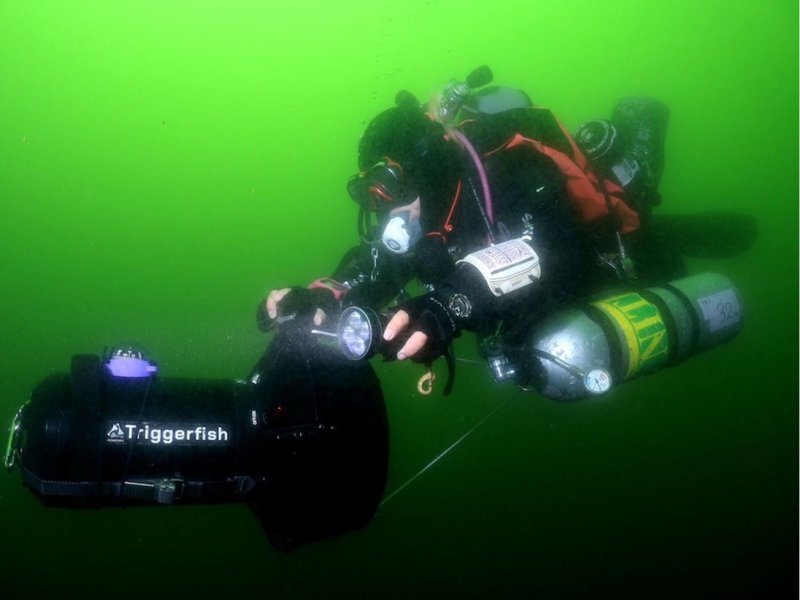
A Stingray Japan technical diver operating at depth during the Scandinavia wreck survey.
Although Nomura was active in technical diving, the Scandinavia lies at over 70 meters—well beyond recreational limits. Diving at this depth requires trimix, a breathing gas containing helium. In Japan, helium is expensive and hard to source. Back then, logistics alone made the project difficult, and the team that would become Stingray Japan was still developing experience.
Everything changed in 2022. While conducting a technical diving course in Kushimoto, Wakayama, Nomura was approached by Naofumi Ueda, owner of Dive Kooza.
"Why don't we go check out the Scandinavia?"
The first step was simply to confirm the location. A GoPro was lowered to the seabed—and the footage revealed what appeared to be a mast. From that moment, the team knew they had found her. Permissions were confirmed, and in March 2023, the first official dive took place.
"Descending onto the wreck for the first time," Nomura recalls, "we found a beautiful ship, quietly shaped by time."
@Stingray-Japan
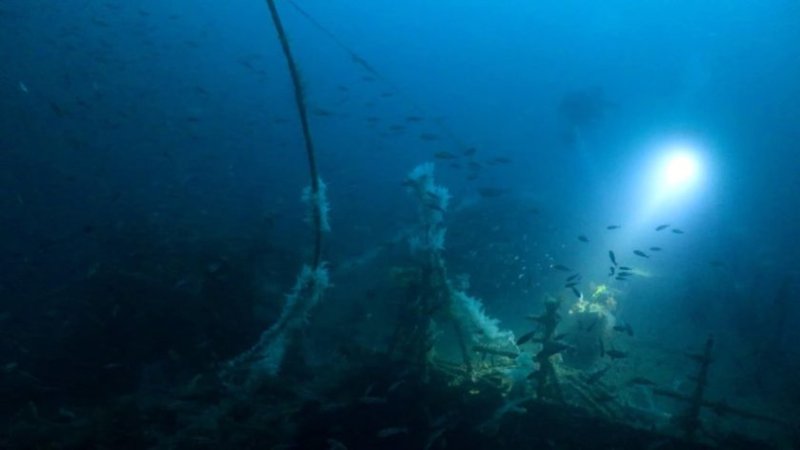
The Scandinavia rests at 72 meters, preserved by depth and time on the seafloor off Wakayama Prefecture.
The Scandinavia is unlike most wrecks in Japan. She is not a warship but a luxury passenger vessel with a second life as a restaurant and wedding venue. A vessel with that history, lying unseen at extreme depth, is rare globally.
At the start of the project, no one knew her condition or layout.
"Because it is not easily accessible," Nomura explains, "the survey itself is meaningful. It is a challenge—and a new benchmark for Japanese technical divers."
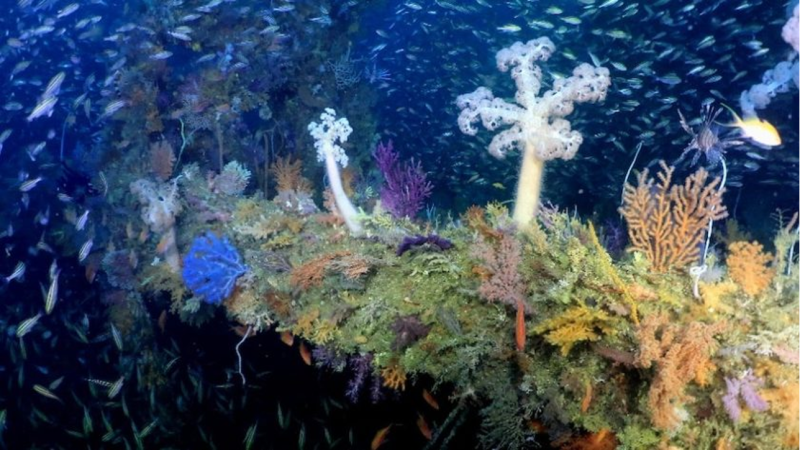
Over the years, the wreck has become home to marine life—from encrusting organisms to schools of pelagic fish—illustrating how nature gradually reclaims human history.
@Stingray-Japan
Marine life has gradually reclaimed the Scandinavia, transforming the wreck into a living reef.
A depth of 72 meters is hard to imagine for most recreational divers.
Each dive requires:
- Multiple trimix and decompression gases
- Five to six cylinders per diver
- DPVs (underwater scooters) to manage currents
- Careful pre-dive planning, including role assignments and contingency strategies
The weight and complexity demand exceptional buoyancy control, situational awareness, and team coordination. Bottom time is limited to 30–35 minutes, requiring divers to operate efficiently.
Because the team enters the wreck interior, divers must combine deep diving, technical wreck penetration, and blue-water navigation—descending and ascending without visual reference lines.
"We are not just diving," Nomura says. "We are executing a mission."
For divers interested in building these skills, SSI offers Technical Wreck Diving courses and Extended Range Trimix Diving programs designed for advanced depth and planning.
READ MORE: Diving The HMHS Britannic: The Everest of Technical Diving
@Stingray-Japan
Technical divers descend toward the Scandinavia during a tightly planned 30–35 minute bottom-time mission.
Nomura emphasizes that SSI Extended Range training is crucial for operating safely at this level. Courses such as Extended Range Trimix Diving, Technical Wreck Diving, and DPV Diving provide practical skills that translate directly into real-world conditions.
"All of these skills are required here—not as theory, but in practice," he says.
Three divers conduct the primary survey, supported by four to five technical divers trained at Stingray Japan. Many have backgrounds in firefighting, water rescue, and emergency response—critical experience at extreme depth.
Gas preparation, emergency procedures, and post-dive checks are executed as a coordinated team, emphasizing the level of planning and safety that advanced dives demand.
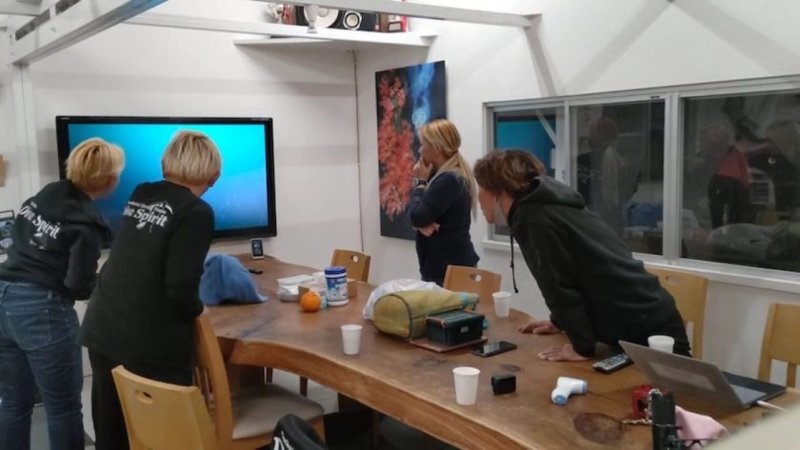
@Stingray-Japan
Detailed planning and team coordination are essential for safe operations at 72 meters.
The Scandinavia's value goes beyond her structure. She once hosted weddings, celebrations, and events. For many locals, she holds personal memories.
"We want to rediscover these 'spaces of memory' and record them," Nomura explains. "By identifying locations that served as gathering spaces, we preserve the vessel's human and cultural story alongside its physical remains."
This approach treats the wreck not merely as an underwater object, but as a cultural artifact, connecting divers to history and human stories.
Wreck diving often carries romance and adventure. But for Nomura and his team, the Scandinavia represents something deeper.
"This is not a place you visit once and move on. Because it carries human stories, it deserves care, respect, and understanding."
Through technical precision, teamwork, and ethical engagement, the survey sets a benchmark for deep wreck exploration in Japan—and globally.
LEARN MORE: Where are the Most Extreme Rebreather Dive Sites?
Stingray Japan is an SSI Extended Range Training Center in Isehara City, Kanagawa Prefecture, specializing in technical and adventure diving. They support a wide range of disciplines:
- Double tank and sidemount
- Deep and wreck diving
- Cave and DPV diving
Instructors actively dive in the field, ensuring training reflects the latest techniques and safety standards. Stingray Japan equips divers to explore the underwater world with confidence, skill, and respect.
▶︎ Learn more on the official Stingray Japan website