Swimming Drills: 10 Beginner Exercises to Build Confidence
swim
Foggs
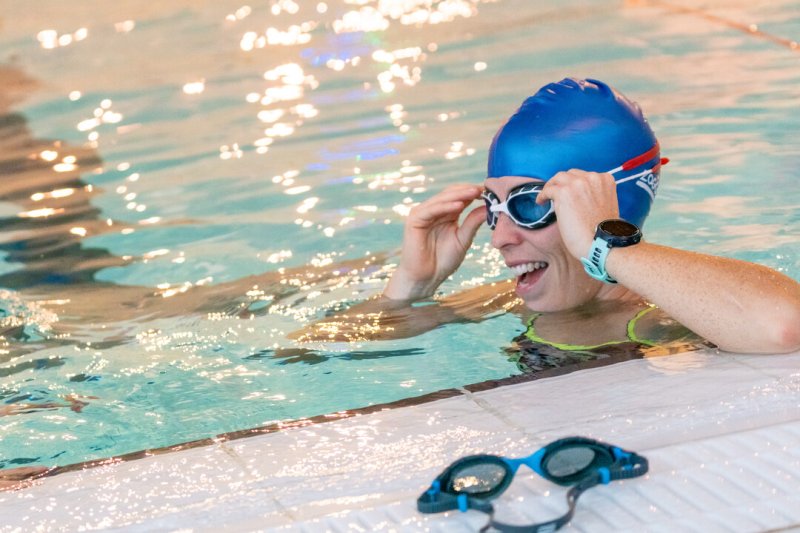
Learning to swim can feel exciting, intimidating, and rewarding all at once. Nobody becomes a confident swimmer overnight. Progress happens through consistency, patience, and the right techniques. That is where swimming drills come in. Instead of swimming lengths without direction, each drill gives you one clear feeling to find, from bubbles drifting past your face to a clean glide away from the wall. You may be preparing for snorkeling or your first dive, or simply want to feel more comfortable in the water. These beginner swimming drills can help the water feel calmer and more familiar with every session.
Table of Contents:
One of the first swimming drills every beginner should learn focuses on breathing control. Many new swimmers hold their breath underwater, tightening their shoulders and turning every movement into a rush for the next breath.
To practice, stand in shallow water where you feel comfortable. Take a breath through your mouth, place your face in the water, and slowly exhale through your nose or mouth. Watch the bubbles drift past your cheeks and break at the surface. Lift your head, take another calm breath, and repeat for several minutes.
This drill improves breathing rhythm and reduces anxiety. Instead of hurrying back to the surface, you begin to set the pace. Once comfortable, repeat the rhythm with gentle kicks or a short glide. Good breathing habits make every stroke feel calmer and more controlled.
Floating is a foundation for many swimming drills because it teaches body awareness and lets you feel that the water can support you.
Begin in shallow water and hold the pool edge if needed. Take a breath, stretch your arms forward, and gently lean into the water. As your chest settles, allow your legs to rise behind you. Keep your face relaxed and your body long from fingertips to toes.
Many beginners tense their muscles, causing their hips or legs to sink. Instead, think about resting on the surface and letting the water carry your weight. Once you can float for 10–20 seconds, push gently off the wall and hold that quiet glide for 2-5 meters (6-16 feet).
Want to see where stronger water confidence can lead? Read How to Become a Diver with No Experience: Step-by-Step Guide.
Foggs
A back float helps swimmers relax, with the ceiling or sky above and the water supporting them below.
Lie back with your ears submerged, your head neutral, and your eyes toward the ceiling or sky. Spread your arms and legs gently, feel the water support your shoulders and hips, and slow your breathing.
This drill improves comfort in deeper water and teaches relaxation during moments of fatigue. Start in shallow water where your feet can touch the bottom if needed. Over time, float for 20–30 seconds without assistance. Knowing you can lie back, breathe, and let the water hold you can transform your confidence.
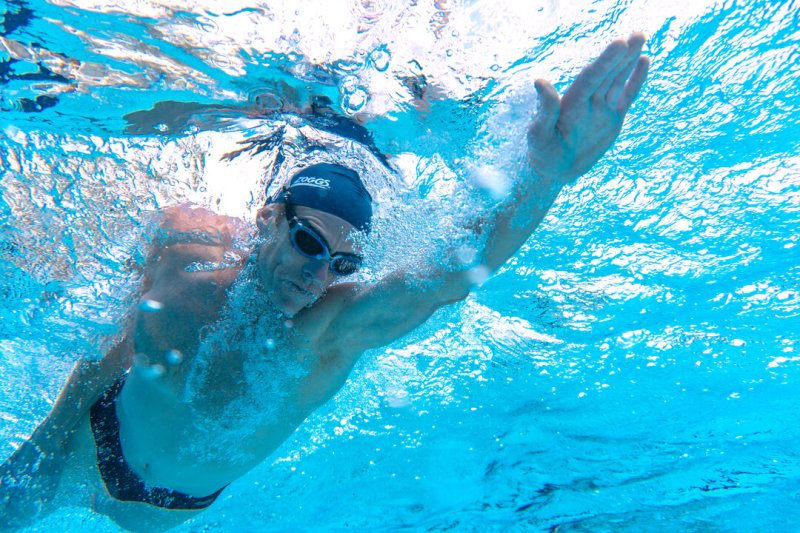
Swimming efficiently starts with body position, and the streamline push-off lets you feel the difference immediately.
Push gently off the wall with both feet, extend your arms overhead, and stack your hands together. Squeeze your arms close to your ears and stay straight like an arrow as the wall sends you forward.
Glide until you feel the water begin to slow you. When your body stays long and narrow, you slip forward with less resistance and the push from the wall carries you farther. Drop your hips or let your arms open, and the water catches your body, ending the glide sooner. Over 3-8 meters (10-26 feet), you begin to feel the difference between cutting through the water and pushing against it.
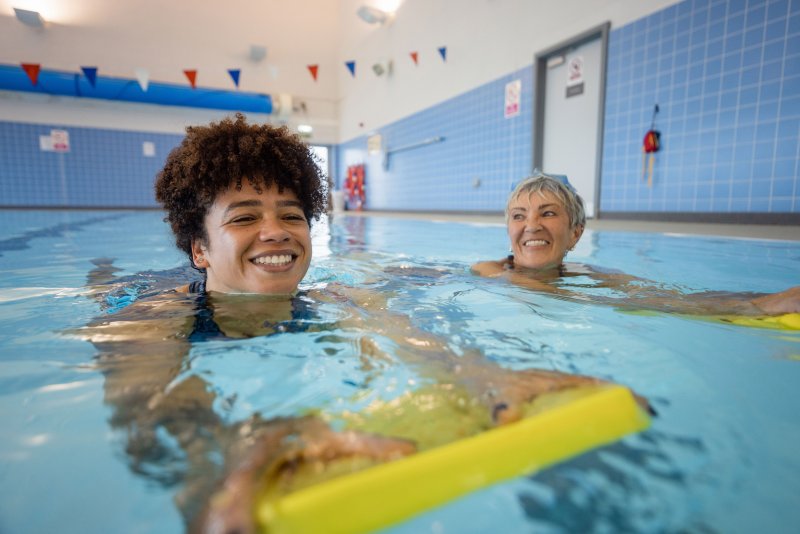
Strong kicking supports body position and carries you forward. Small, quick kicks leave a narrow trail of splashes behind your feet, while large kicks churn the surface and drain your energy.
Hold onto a kickboard or pool edge and practice small, quick kicks from the hips rather than the knees. Keep your ankles relaxed and toes pointed, leaving a narrow trail of small splashes behind your feet.
Try kicking for 20–30 seconds before resting. As you improve, increase to 1–2 minutes. These swimming drills for beginners strengthen your legs and help you move the kickboard steadily forward without draining your energy too quickly.
To progress, kick without a board and keep the same long, streamlined position.
iStock-SolStock
Learning to breathe during freestyle often feels challenging. Many beginners lift the whole head as if looking across the pool, making this a valuable freestyle swimming drill.
Hold a kickboard with one arm extended and turn your head gently to the side every few kicks. Let your mouth clear the surface, but keep one ear in the water.
Lifting your head too high causes the hips and legs to sink, and each stroke begins to feel heavy. Start slowly. Let the movement settle into a simple rhythm as you kick, turn to breathe, and place your face back in the water. Once comfortable, practice without a kickboard over short distances.
Is freediving more your thing? Read Starting Freediving: Busting the Myths That Hold Beginners Back.
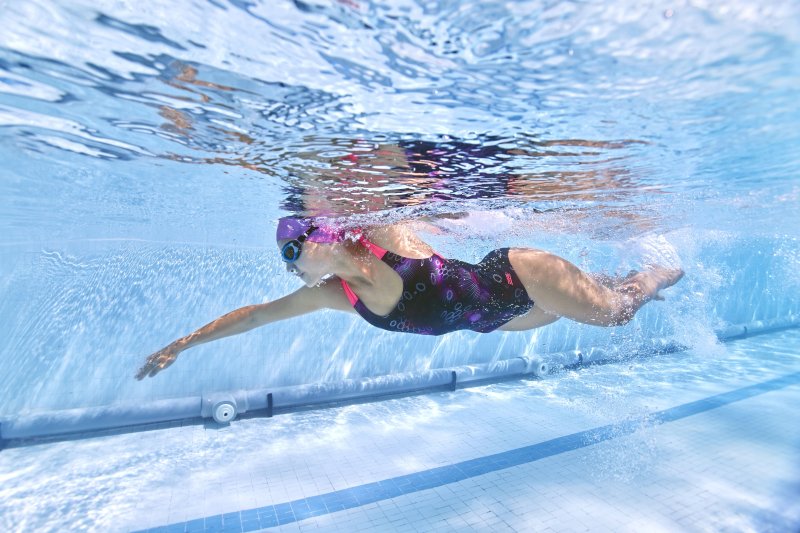
The catch-up drill develops coordination by giving each arm time to finish before the other begins.
Swim freestyle slowly, moving one arm only after the other returns to the front. Your hands meet before the next stroke, almost as if one hand passes an invisible baton to the other.
This exercise slows everything down so you can feel the timing and stop rushed arm movements from wasting energy. Practice over 10-25 meters (33-82 feet), rest when needed, and notice how the stroke becomes less hurried.
Many coaches recommend this drill because it creates clearer coordination and better balance. When the timing clicks, the body travels forward as one connected line. SSI's Top Tips for Improving Your Swimming Technique shares more ways to refine swimming technique for beginners.
ssi_wei_shang-min
Sculling may look simple, but each small figure-eight helps you feel the water pressing against your palms. Compared with faster swimming drills, the movements stay small and controlled.
Float horizontally and make small figure-eight movements beneath the surface. Keep your elbows relaxed and feel the pressure shift across your palms and forearms as your hands change direction.
This drill improves body awareness and lets you feel propulsion through your palms. Tilt your hands slightly, and the water either holds you steady or nudges you forward.
Practice in shallow water first, then progress toward longer floating sessions as the movement feels natural.
Swimming with one arm at a time makes the differences between your two sides easy to feel.
Keep one arm extended in front like a guide while the other completes the stroke. Focus on rotation, breathing, and control rather than speed.
Switch arms every length or after 10–15 strokes. One side may carry you forward in a steady rhythm, while the other breaks that rhythm or pulls you slightly off line. That contrast shows you where your timing needs work.
If it feels difficult at first, use fins or a kickboard so you can slow down and focus on the arm movement.
Not every drill is about moving forward. This one turns the uneasy feeling of sinking into a movement you understand and control.
In shallow water, with an SSI Professional or capable swimmer nearby, gently exhale and watch your bubbles rise as your body settles lower. Let your feet find the bottom, then stand calmly.
This drill reduces fear and teaches how the body responds underwater. As the movement becomes familiar, you exhale, sink slightly, feel your feet return to the bottom, and stand again without rushing. Staying calm gives you time to respond.
As confidence improves, combine this with floating and gliding so each transition feels less sudden.
Like any new skill, swimming improves with repetition. Practice swimming drills regularly instead of trying to master everything in one session. One day the win may be calmer bubbles. Next, a longer float or a glide that carries you farther from the wall. Even 20–30 minutes a few times each week can build confidence, coordination, and endurance.
Everyone learns at a different pace. Some grasp floating but struggle with breathing; others find kicking easier than stroke timing. Notice the small changes. Your legs sit a little higher, your breathing stays calmer, or you travel a little farther down the lane before resting. Those moments make progress visible.
If you want extra support, an SSI Professional can spot why your legs sink or why each breath breaks your rhythm, then help you work on that movement without rushing. The SSI Survival Swim program develops fundamental swimming skills, safety awareness, controlled breathing, efficient movement, floating, and water confidence. Use the SSI Center Locator to find a local swim program.
Most importantly, enjoy the process. Great swimmers grow when you stop fighting the float, feel the wall send you into a clean glide, or finish a short length with breath to spare. Patience, consistency, and the right swimming drills turn those moments into confidence.
Ready to feel these swimming drills click into place? Find an SSI Professional and choose a swim program that matches your goals. Your next session may be the one where the water starts to feel like a place you want to stay.