Top 10 Scuba Diving Myths You Should Stop Believing
scuba diving
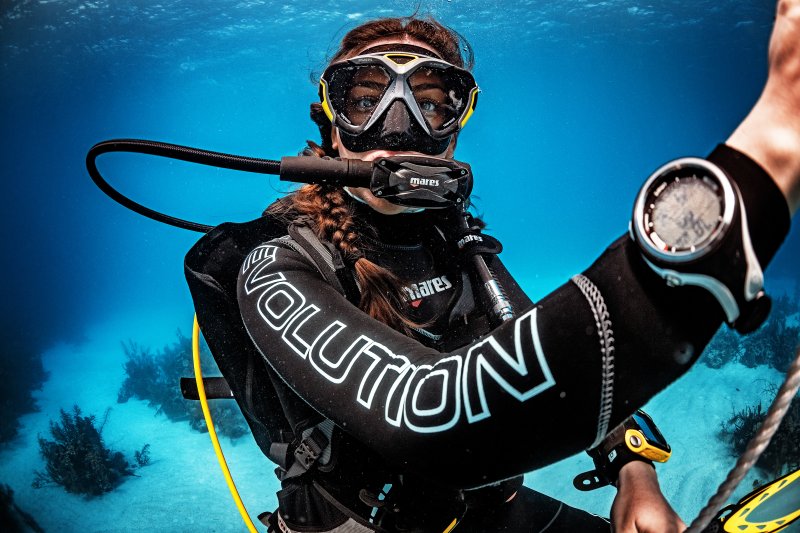
predragvuckovic
If you have ever been curious about diving, chances are you have heard a few stories that made you hesitate. You may have heard that sharks circle every diver, that you could run out of air without warning, that diving is only for the young and fearless, or that it is simply too expensive. There are plenty of scuba diving misconceptions floating around before you have even dipped a fin beneath the surface. The truth is that most scuba diving myths come from outdated information or simple misunderstandings. Modern training, equipment, and safety standards have made diving more accessible than ever. We will break down the most common scuba diving myths so you can see what diving is really like and feel confident taking that first step into the underwater world.
Table of Contents:
-
Scuba Diving Myth 1: Scuba Diving Is Extremely Dangerous
-
Scuba Diving Myth 2: You Need to Be Super Fit
-
Scuba Diving Myth 3: Sharks Make Diving Dangerous
-
Scuba Diving Myth 4: You Will Run Out of Air
-
Scuba Diving Myth 5: Scuba Diving Is Too Expensive
-
Scuba Diving Myth 6: You Have to Be Young to Learn
-
Scuba Diving Myth 7: Equalizing Is Painful and Difficult
-
Scuba Diving Myth 8: You Need to Own Expensive Gear
-
Scuba Diving Myth 9: Diving Is Only for Tropical Destinations
-
Scuba Diving Myth 10: You Need to Go Deep to Enjoy It
-
Scuba Diving Myths Debunked
-
Dive Deeper
One of the most persistent scuba diving myths is that it is a high-risk activity. This belief often comes from dramatic portrayals in movies or viral stories online, where warning alarms sound, panicked ascents fill the screen, and divers rush toward the surface. In reality, scuba diving training follows established standards and procedures.
When you follow proper procedures and dive within your limits, scuba diving can be a safe activity. The SSI Open Water Diver program teaches you how to manage risks, monitor your air, and respond to different situations calmly. Good habits, proper planning, and awareness help prevent many problems, from the briefing before the dive to the slow ascent back toward the sunlight. For added peace of mind beyond your training, DiveAssure offers dive accident and travel coverage designed for divers.
Another common misconception is that you need the body of an endurance athlete. Basic fitness and comfort in the water are important, but you do not need to arrive ready for a marathon.
Underwater, efficiency beats brute strength. When your breathing settles and your buoyancy is balanced, a small fin kick can carry you over the reef instead of leaving you fighting the water. The SSI Perfect Buoyancy Specialty helps certified divers refine body position and reduce wasted effort.
Thinking about your first program? Read Scuba Certification Course: What to Know Before You Start to see how training, in-water practice, and certification fit together.
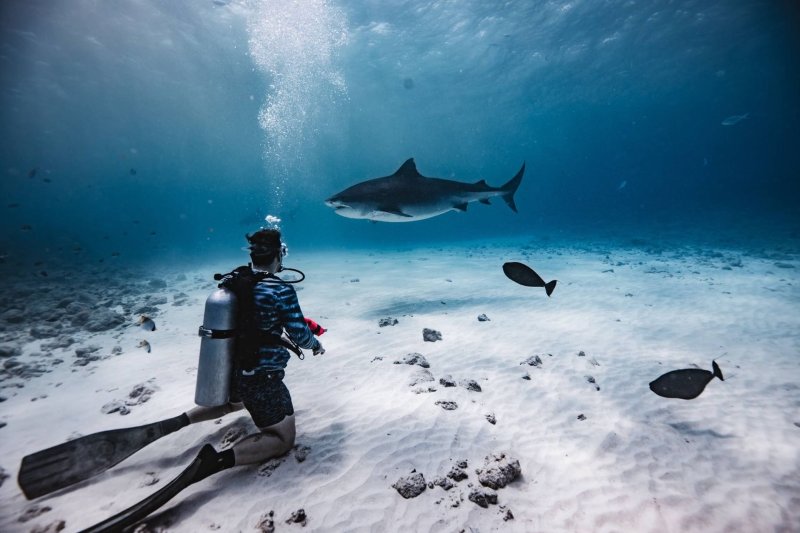
Fear of sharks is one of the most familiar scuba diving worries, often fueled by movies and media. A dark fin cuts across a movie screen, the music rises, and the ocean suddenly looks like a trap. That picture has little in common with most real shark encounters.
In reality, shark encounters are rare, and when sharks do appear, they usually keep their distance and continue on their way. Divers often describe seeing one as a highlight of the dive. A silhouette appears in the blue, glides calmly along the reef, and slowly disappears again. Learning about shark behavior through the SSI Shark Ecology Specialty can replace fear with fascination.
Mohamed-Saarim-Abdulla
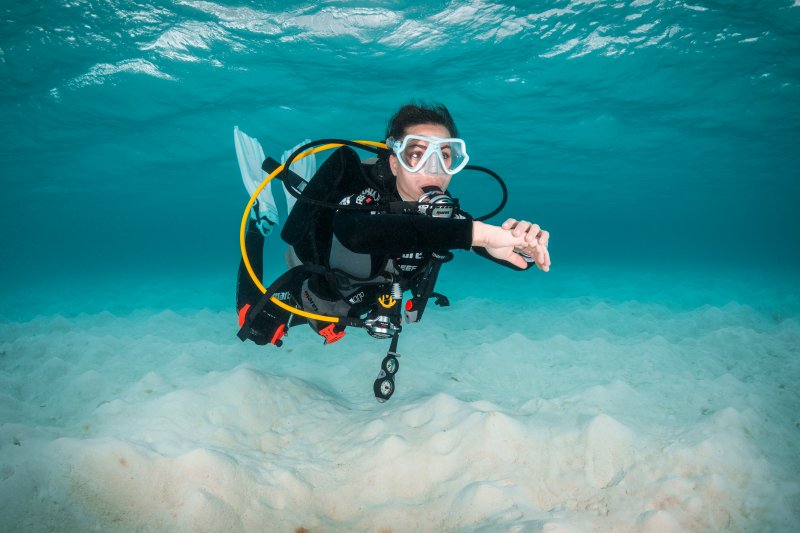
The fear of suddenly running out of air can make a first dive feel like a countdown. Beginners often imagine a gauge dropping from full to empty in a moment.
Divers are trained to check their pressure gauge and monitor their air regularly. Each glance at the gauge shows how much air remains, and every dive is planned with clear safety margins. You also learn emergency procedures, such as sharing air with a buddy. These backup procedures make the situation far more manageable.
For a closer look at how training and buddy checks support safer first dives, read Is Scuba Diving Dangerous? Safe Scuba Diving During Your First SSI Course.
predrag-vuckovic
Cost is another reason people believe scuba diving myths that suggest the sport is only for wealthy travelers. Some luxury dive trips can be expensive, but they are not the only doorway into diving.
Many beginners start with a local course and use rental equipment instead of buying a complete kit. The SSI Center Locator helps you find nearby dive centers and ask about course packages, rental equipment, and flexible schedules. The first investment can be a course close to home, not an entire tropical expedition.
The world is your oyster. Explore Best Scuba Diving in the World: 15 Incredible Destinations and see where your first certification could eventually take you.
Age can become a barrier before a person ever reaches the water. Some adults think they waited too long, and some families assume children must wait until their teenage years.
Scuba diving is open to a wide range of ages. The SSI Open Water Diver program is available from age 10, with a maximum depth of 12 meters (40 feet) for 10- and 11-year-old Junior Open Water Divers. Many people learn to dive later in life and continue for years. As long as you meet the medical and water fitness requirements, age alone is not a barrier. Water comfort and readiness to learn matter more than being the youngest person on the boat.
Ear discomfort is often misunderstood, making it one of the more discouraging scuba diving myths. People worry that pressure changes will become painful as the surface moves farther above them.
In reality, equalizing is a technique you learn early in your training. By gently balancing pressure in your ears as you descend, you can help prevent discomfort. The key is to descend slowly and equalize early and often. As your ears balance, the pressure eases, and with practice, the technique becomes second nature.
Many beginners believe that they must invest in a full set of gear right away. Seeing rows of regulators, computers, suits, and cylinders can make getting started look expensive before you even enter the water.
Most dive centers provide rental equipment for courses and dives, so you can learn what fits before spending heavily. Divers often buy a mask first, then add equipment as their experience grows. Your first dive does not need to begin with a shopping cart full of gear.
Warm, clear water is the postcard image behind many scuba diving myths. Palm trees, coral, and sunlight make it easy to assume that diving only happens on vacation.
Incredible dive sites also wait beneath the surface of lakes, quarries, and colder coastal waters, far from the postcard-blue tropics. Local diving is a great way to build skills and stay active. Your next descent may begin at a nearby shoreline rather than beneath palm trees.
With the right exposure protection, such as a wetsuit or drysuit, you can dive comfortably in a wide range of temperatures. The SSI Dry Suit Diving Specialty teaches certified divers the knowledge and skills needed to dive safely and comfortably in a drysuit.
When you are ready to travel, Scubago helps you explore dive sites, compare dive centers, and book your next diving experience.

Apeks
Depth is often misunderstood, making it one of the more persistent scuba diving myths. New divers often assume that the person going deepest on the boat must be having the best dive, as if the reef only becomes interesting after the light begins to fade.
Some of the best diving happens in shallow water. Coral reefs, swaying kelp beds, turtles, and schools of fish are often found within the first 10–18 meters (33–60 feet), where sunlight still reaches the reef and brings its colors into view. Staying shallower also allows for longer dive times and more relaxed exploration. Read How Deep Can Scuba Divers Go? Scuba Diving Depth Limits Explained to see how training and experience shape the depths you can explore.
With these scuba diving myths debunked, the picture looks very different. The first descent is not a movie scene or a test of fearlessness. It is the quiet hiss of a regulator, bubbles rising past your mask, and the moment the water begins to carry you. If these common myths about scuba diving have kept you on shore, let an SSI Professional answer your questions and show you what the first step feels like.
Ready to discover what diving is really like? Use the SSI Center Locator to connect with an SSI Professional and choose the right first program for you.