How to Swim Faster with Less Effort: 10 Practical Tips
swim
AdobeStock-aetb
Table of Contents:
You kick harder, churn through the water, and rush every stroke, only to reach the wall breathless and barely any faster.
Swimming faster is not always about working harder. It often starts with less drag, so each stroke carries you forward instead of wasting energy.
If you are building confidence in the pool or chasing a quicker lap time, small adjustments can turn a frantic swim into a smoother, more controlled rhythm.
These ten tips show you how to swim faster with less effort and cover more distance without every lap feeling like a battle.
Your position in the water changes how easily you glide forward. When your hips and legs sink, it is like swimming with the brakes on, making you work harder just to maintain your speed.
Keep your body long and nearly horizontal, with your head in a neutral position. In freestyle, let your eyes settle on the bottom of the pool instead of looking ahead. Lift your head, and your hips often drop, creating more resistance.
Try a few relaxed lengths with your head steady and your hips near the surface. Feel how much more easily you glide forward. That balanced position can help you swim faster without pushing harder.
iStock-microgen
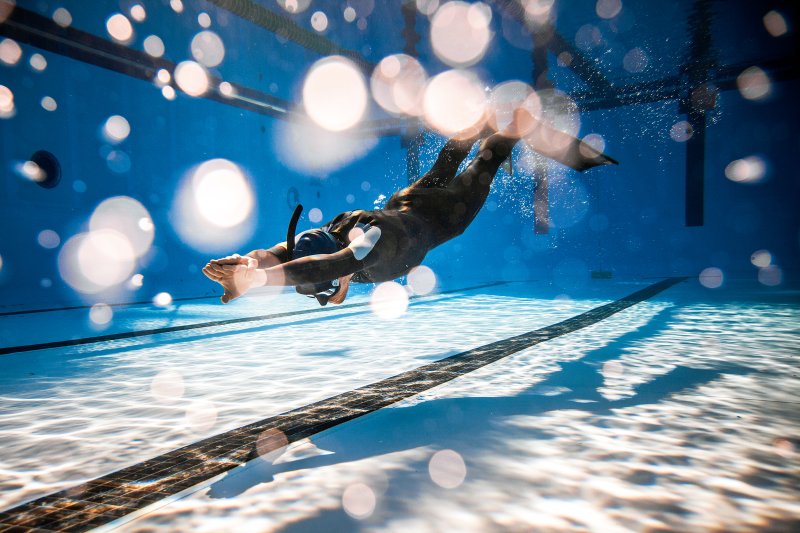
Streamlining lets you slice through the water instead of pushing it aside. You feel the difference after a turn or at the start of a length.
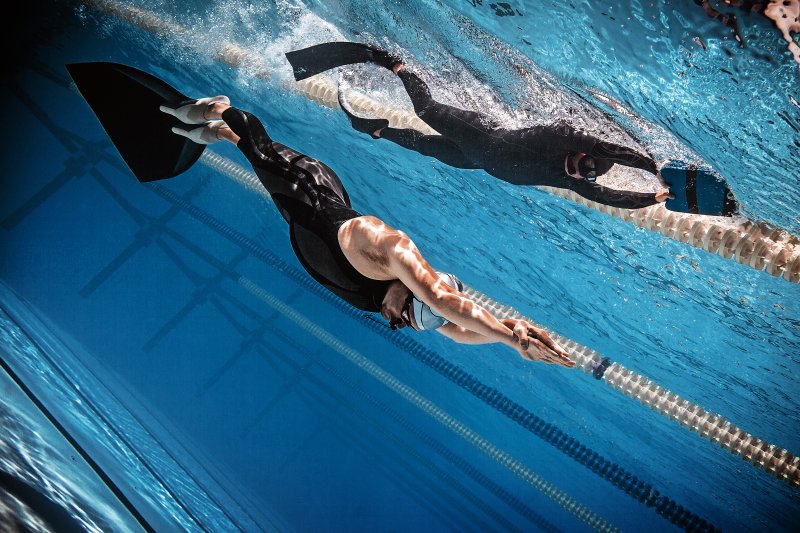
Extend your arms overhead, one hand over the other, and gently squeeze your upper arms beside your head. Keep your body straight, engage your core, and point your toes. If your back arches or your legs drift apart, that narrow line breaks.
Push off the wall in this position and glide before starting your stroke. Feel the water slip past as you move forward without pulling. Holding that shape preserves your momentum instead of letting drag slow you down.
More strokes do not always mean more speed. Rush your technique, and your hand may slip through the water without pushing you forward. Your arms work harder and waste energy, yet the pool wall barely seems to get closer.
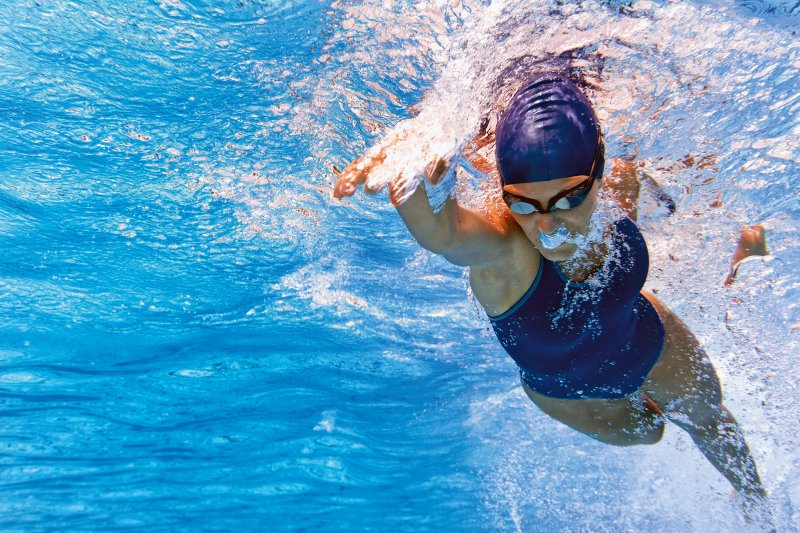
In freestyle, enter the water with your hand in line with your shoulder and reach forward comfortably. Pull the water back toward your feet, not down toward the pool floor. Keep your elbow relatively high early in the underwater pull, without forcing an awkward shoulder position.
Picture your body moving past your hand instead of just swinging your arm through the water. A relaxed, controlled stroke can help you move forward more efficiently before you increase your stroke rate.
To swim faster without unnecessary strain, read Swimming Injuries: 10 Ways to Help Prevent Strain for practical ways to protect your shoulders.
Shutterstock-Benoit-Daoust
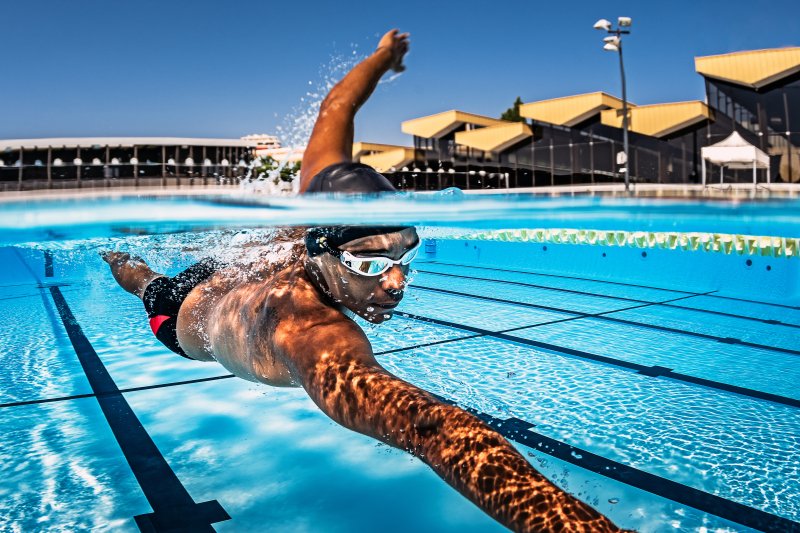
To swim faster, your kick should keep you level and work with your arms, not leave your legs burning before you reach the wall. Kick too hard from the knees, and your feet churn the water, creating drag instead of speed.
In freestyle, let a small, steady kick come from your hips, with relaxed ankles and toes pointing naturally behind you. Your knees can bend slightly, but avoid pedaling through the water as though riding a bicycle.
Swim one length with a gentle kick, then another with more energy. Notice your breathing, effort, and whether your hips stay near the surface. Find a kick that keeps you balanced and moving forward without draining your legs.
When your breathing gets rushed, even a steady stroke can feel like hard work. Holding your breath too long, lifting your head too high, or waiting until you are gasping for air can all interfere with your swimming rhythm.
In freestyle, let a steady stream of bubbles escape through your nose or mouth underwater. Turn your head to the side with your body for a quick, relaxed breath instead of lifting it forward. Bring your face back into the water so your stroke keeps flowing.
There is no need to force a strict breathing schedule. Find a rhythm that feels comfortable and keeps your technique steady. When each breath fits naturally into your stroke, you can swim faster without tensing up or losing momentum.
Aquasphere
A slow or awkward turn can steal your speed at every wall, like hitting the brakes mid-lap. You do not need a flip turn right away. Learning to approach the wall confidently and push away can help you swim faster.
As you approach, avoid cutting your final strokes short. For a simple open turn, approach the wall, plant your feet securely, and push away with both legs. For a flip turn, practice the somersault and foot placement gradually with a qualified instructor.
After pushing off, stretch into a streamlined position before restarting your stroke. Feel the glide carry you away from the wall. Practice turns at an easy pace until they feel controlled and consistent.
The first few seconds can set the rhythm for the entire length. Rush your push-off or launch into frantic strokes, and the momentum you just gained slips away before you find your pace.
At the wall, plant your feet securely and push away with purpose. Stretch into a streamline and let the wall slide behind you before taking your first stroke. For a competitive block start, learn the technique with appropriate supervision and follow pool safety rules.
For fitness swimming, a strong wall push-off and controlled transition matter more than a dramatic launch. A clean start helps you swim faster without wasting the speed you gained at the wall.
Want to maintain your pace over longer distances? Read Swimming Endurance: How to Swim Longer Without Getting Exhausted for practical tips on building stamina without exhausting yourself.
zoggs
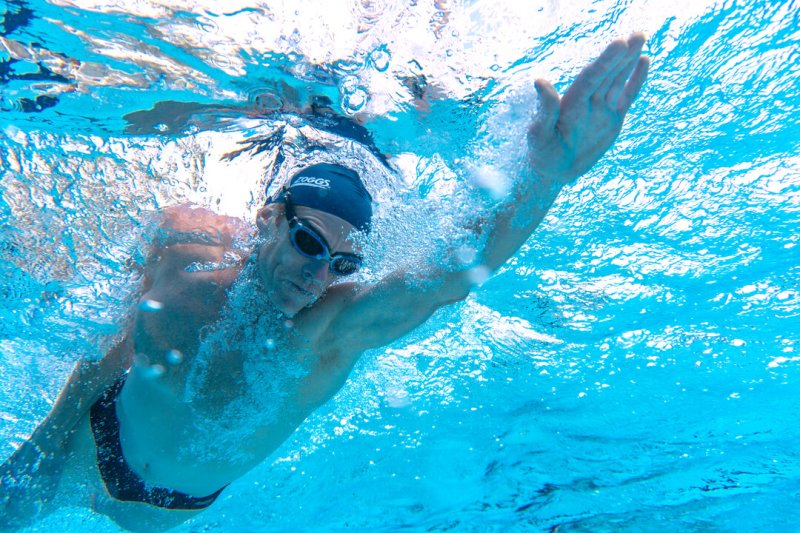
If you swim every length at full speed, your technique soon starts to slip. Your kick turns frantic, your breathing grows uneven, and each tired stroke takes you less far.
Instead, mix comfortable lengths with short, purposeful efforts. Swim four lengths at a pace where your strokes stay controlled, resting briefly between lengths. Then try two slightly faster lengths, keeping your body position and breathing steady even as you pick up the pace.
Notice how you feel rather than chasing speed at any cost. Manage your effort, and even the last length can feel controlled instead of exhausting. You can hold your pace, save energy for more practice, and gradually swim faster.
When your hands clench, your shoulders creep toward your ears, and your neck stiffens, even an easy stroke feels heavier. That tension makes you work harder to move forward.
Before each length, take a calm breath and let your jaw, hands, and shoulders loosen. In freestyle, allow your head to turn naturally as you breathe instead of holding your whole body rigid.
Choose one part of your technique to work on each length rather than trying to fix everything at once. Keep your head steady for one lap, then relax your ankles on the next. This makes practice easier and helps good habits develop over time.
Aquasphere
Improvement becomes easier when you know what is working. Instead of measuring success only by your fastest time, count how many strokes it takes to reach the wall, notice how steadily you hold your pace, and check how tired you feel afterward.
Choose a repeatable distance, such as 100 meters (109 yards), and record your time alongside how hard the swim felt. Repeat the test after several weeks under similar conditions. A smoother stroke or reaching the wall with less effort at the same pace means progress, even before your time improves.
To swim faster, consider joining an SSI Swim program where available or working with a qualified swimming instructor for feedback on your technique. SSI training can also help you feel more comfortable and capable in the water, especially if swimming is part of a bigger goal to explore snorkeling, freediving, or scuba diving.
Learning to swim faster with less effort does not mean powering through endless laps or pulling harder with every stroke. Better body position, a clean glide, steady breathing, and sensible pacing help you travel farther without burning through your energy.
Be patient and focus on one change at a time. Record your progress, celebrate a smoother lap or a quicker time, and let your technique develop naturally. Often, the biggest gains come from reaching the wall with energy to spare, not from pushing harder.
Ready to feel the difference on your next lap? Find an SSI Training Center and ask about swim instruction or technique coaching available near you.