What Shark Cage Diving Taught Me About Sharks - and People
ecology
alamy-cultura-creative
I walked away from my 9-to-5 office job in a quiet corner of rural England - the pension plan, the reliable routine, and the quiet ache of wondering if life was meant to feel so predictable - and moved to South Africa to pursue a dream. I was 34, training to become a Divemaster, and wide-eyed with the kind of hope (and fear) you only feel when you have set everything you knew aside.
What I found was a job as a shark cage diving guide in False Bay, and the years I spent there changed how I see wildlife, people, and even myself.
False Bay is famous for its "flying sharks" - great whites breaching as they hunt Cape fur seals off Seal Island, a scene immortalized in Discovery Channel's Air Jaws. Every morning we motored out at dawn, anchored off the island, and waited. What happened next never got old, and what I learned went far beyond sharks.
Here are just some of the lessons shark cage diving taught me.
One of the first things I learned is that fear is universal, but what frightens each of us is wildly different.
Some guests would step aboard in the pre-dawn darkness, visibly terrified of sharks, convinced by years of the media that great whites are bloodthirsty man-eaters. Others were entirely unbothered by the sharks but were paralyzed by being at sea. One woman panicked when a giant petrel flapped too close to the cage - then happily ducked beneath the waves to swim with a three-to-four-meter great white shark moments later.
I have seen guests too flustered to put on a wetsuit by themselves. Others were too seasick to move. One older woman sat clinging to the boat, unable to step anywhere near the edge because she was terrified of the water – but she wanted to be there with her family as they made their shark cage diving dreams come true.
But here is the thing: everyone, given time and support, overcame their fear in their own way. With a calm briefing and quiet encouragement, they edged closer - and then clicked. Every single person had it in them to do something they did not think they could.
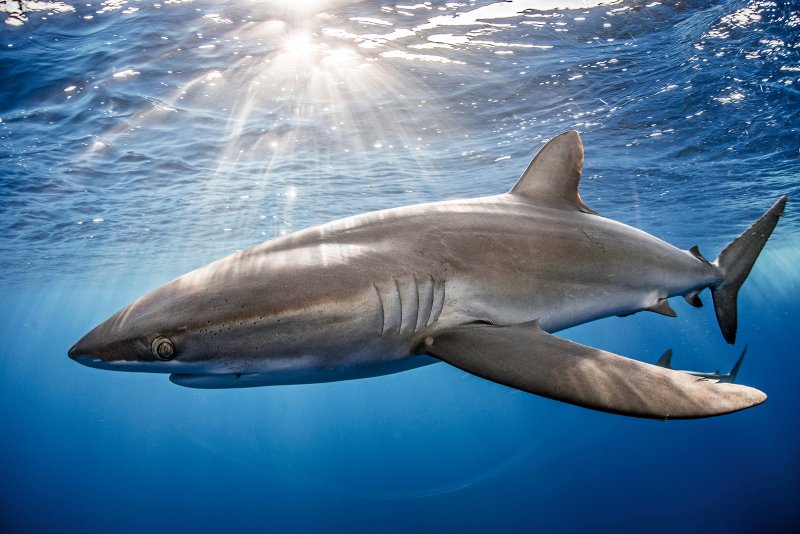
Spend a season shark cage diving, and you quickly learn great white sharks are not all the same.
There was a female Bella who was obsessed with the yellow buoy on our bait line – she would sneak in, steal it, and drag the buoy under. We had to get our guests out of the cage, lift the anchor (no easy task), move to fetch the buoy, re-anchor - and then she would steal it again.
Another shark had zero interest in the bait but was fascinated by the carpet cut-out of a seal we floated on the surface. Some sharks were shy, skirting the boat. Some circled boldly, investigating everything. And one regular seemed happiest under the hull, only ever surfacing for our boat and no one else's.
One of our guests even filmed a fascinating interaction during a trip to the Neptune Islands in Australia, where she witnessed how their size-based dominance hierarchies play out. This is a powerful reminder of their intelligence and social nuance. You can watch the great white shark dominance display here.
These were not just "sharks" - they were individuals, full of quirks and intelligence. And few people truly appreciate that until they spend time with them.
Again and again, I watched people's perceptions shift right before my eyes.
Guests would arrive unsure, some fumbling as they climbed into their wetsuits. Then they would lower themselves into the cage and, within seconds, you would hear them whooping and laughing through their snorkels.
Almost every single person came back onto the boat grinning and saying the same thing: "The sharks are nothing like I thought they would be."
That is the power of first-hand experience in life. It can undo a lifetime of fear and misunderstanding in a single morning - if you are brave enough to step into the unknown.
Planning a dive with sharks? Read SSI's shark safety tips and learn how to enjoy a safe and unforgettable encounter.
By the end of each shark cage diving trip, guests - even the most fearful - cared about the sharks in a way they had not before. They wanted to know more about the threats these animals face, about the role they play in keeping ecosystems healthy.
I have lost count of how many told me they would stop buying shark products, or that they would go home and share what they had learned.
It is hard to care about something you have never seen and cannot relate to. But put someone in a cage a meter away from a great white, and they care forever.
Our boat was small and full of people from all over the world - each with their own expectations, cultures, and nerves. Add in cold water, sometimes rough seas, and excitement, and you realize quickly that what you say (and how you say it) really matters.
Clear briefings, calm tone, paying attention to body language, and questions - those were the things that made guests feel safe enough to trust the guides and enjoy the experience.
It taught me to listen as much as I spoke - and to meet people where they were.
Seal Island is a riot of life: tens of thousands of Cape fur seals crammed onto the rocks, cormorants wheeling overhead, and great whites once waiting in the shallows.
It was humbling to watch the young seals dart past the sharks each day, risking their lives for food and returning again and again. Their resilience stays with me.
But even resilient ecosystems have limits. Just a few years after I left, False Bay's great whites vanished - no longer the apex predators of these waters.
Research now suggests their disappearance was driven not only by fishing pressures but by a pair of orcas, known locally as Port and Starboard, who developed a taste for great white livers and have since transformed the food web here.
With the great whites gone, bronze whaler sharks moved in, and even the behavior of other species has begun to shift in response.
Similar declines have since been observed further along the coast at Gansbaai, another historic great white stronghold, highlighting how far-reaching these changes have become.
Nature adapts - but the disappearance of the great whites from one of their last strongholds is a staggering reminder of how fragile even the strongest ecosystems can be.
Experience one of the best, and eco-conscious, bull shark dives in the world at Fiji's Beqa Lagoon. Read SSI's first-hand story to see what makes it unforgettable.
Shark cage diving is sometimes controversial. Critics claim it teaches sharks to associate boats and people with food. But at Seal Island, we never fed the sharks — we used fish heads as bait and a dilute chum of fish carcasses to create a scent trail, but nothing was ever given to them.
Of course, sharks being sharks, they sometimes managed to steal the occasional fish head off the line.
Some days, the sharks turned up instantly. Other days, we waited for hours and only saw fins in the distance as the sharks ignored us completely.
I will never forget one particularly quiet day when no sharks had shown up all morning. After hours of waiting, we lowered a metal bucket into the water to check the visibility - and as the bucket sank, a great white suddenly appeared and followed it back up, nose to bucket, curious and calm.
That independence and curiosity reassured me we were not harming them, and proved that shark cage diving, when done properly, can be an incredible education and conservation tool. The sharks did what they wanted to, when they wanted to.
Long, 13-hour days at sea in winter were exhausting - physically, mentally, and emotionally. As a dive guide, you always had to be "on," no matter how you felt, ready to soothe seasick guests, calm nervous divers, or empathize with the disappointed ones when no sharks appeared.
But the biggest lesson in resilience came later. After an injury ended my guiding career, I co-founded Friends for Sharks, a conservation organization aimed at ending people's fear of sharks. My now-husband and I toured eight countries in ten months, giving 87 talks to over 7,000 people - all while recovering from injury, with no income.
It taught me that even when life forces you to change course, you can still find a way to make a difference. It does not have to be as dramatic and all-encompassing as the path we created.
Sometimes it is as simple as sharing what you love with another person - and letting that ripple out into the world. I am currently writing a book about our Friends for Sharks journey, creating another ripple for positive change.
Shark cage diving taught me about wildlife, yes. But more than anything, it taught me about people - our fears, our courage, our capacity to care, and our ability to change.
If you are lucky enough to dive with sharks one day, I hope you come away not just with a memory, but with a new way of seeing the world and a commitment to creating positive change.
Ready to meet sharks — and see them differently?
Take SSI's Shark Ecology specialty course or explore their Blue Oceans program to learn how you can make a difference while you dive.
--
Kathryn Curzon is a global marketing consultant, conservationist, and award-winning author, studying creative writing at Oxford University. Subscribe here for updates on her work and upcoming book releases, or follow her on Facebook, Instagram, and LinkedIn.