Swimming Endurance: How to Swim Longer Without Getting Exhausted
swim
zoggs
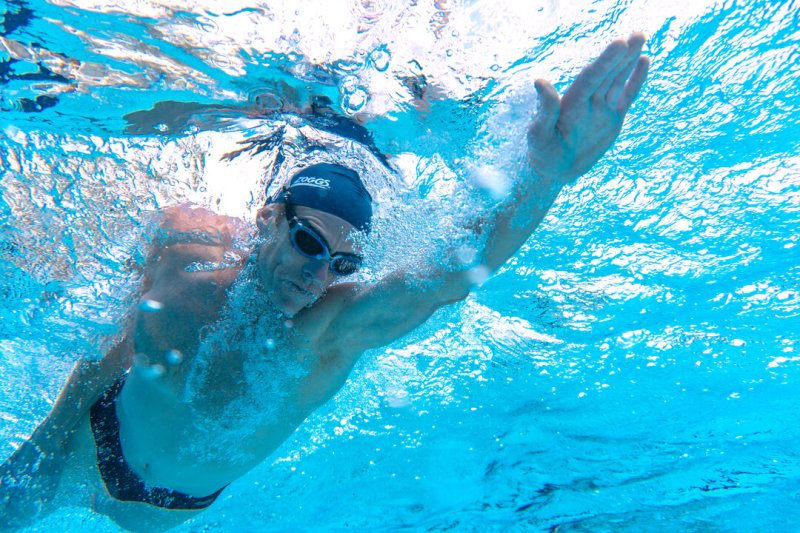
Building swimming endurance is about reaching those final lengths with steady breathing and enough energy to keep going. That matters if you are training for open water, preparing for snorkeling or scuba diving, or simply want longer sessions at the pool. Many swimmers assume every workout should end in exhaustion, but efficiency, pacing, and consistency can help you swim farther and finish strong.
If you are wondering how to improve swimming endurance, a few smart adjustments can make each length feel smoother.
Table of Contents:
-
Why Swimming Endurance Matters More Than Speed
-
Slow Down Before You Speed Up
-
Find a Comfortable Breathing Rhythm
-
Improve Your Stroke Efficiency
-
Use Interval Training to Build Swimming Endurance
-
Add Longer Steady Swims
-
Strengthen Your Core on Land
-
Build Aerobic Fitness Outside the Pool
-
Fuel and hydrate Properly
-
Do not skip recovery
-
Track Your Swimming Endurance Progress
-
Learn with Professional Guidance
-
Build Swimming Endurance One Step at a Time
-
Dive Deeper
When people first begin swimming, it is natural to focus on speed. But if just a few lengths leave you breathing hard and your arms already feeling heavy, swimming faster will not help you go farther.
Developing swimming endurance allows you to settle into a comfortable pace, hold it for longer, and use less energy. This benefits recreational swimmers, snorkelers, scuba divers, freedivers, and anyone who enjoys the water. As your endurance improves, your heart and lungs work more efficiently, your muscles recover faster, and longer swims begin to feel less demanding. You may finish a distance that once seemed daunting with energy left for another length.
Think of endurance as the foundation beneath every stroke. Once that foundation is in place, improving speed becomes much easier.
Ready to take the plunge? Learning to Swim as an Adult: It Is Never Too Late can help you build stronger water skills and confidence.
Starting every workout too fast can feel great for the first few lengths. You are fresh, your stroke feels strong, and the pace comes easily. But that early burst can catch up quickly, making every length harder.
If your first few lengths leave you breathless, you are probably swimming above a pace you can sustain. Ease back until your breathing settles and your stroke finds a steady rhythm, at a speed where you could comfortably hold a conversation on land. A good test is finishing each length feeling that you could immediately swim another one. Learning how to build swimming endurance starts with finding that repeatable pace instead of spending your energy in short bursts.
Many experienced swimmers begin each session at an easy pace before gradually increasing the intensity.
Breathing plays a huge role in how long you can swim comfortably. If it becomes rushed or uneven, tension builds quickly and your stroke can start to lose its rhythm.
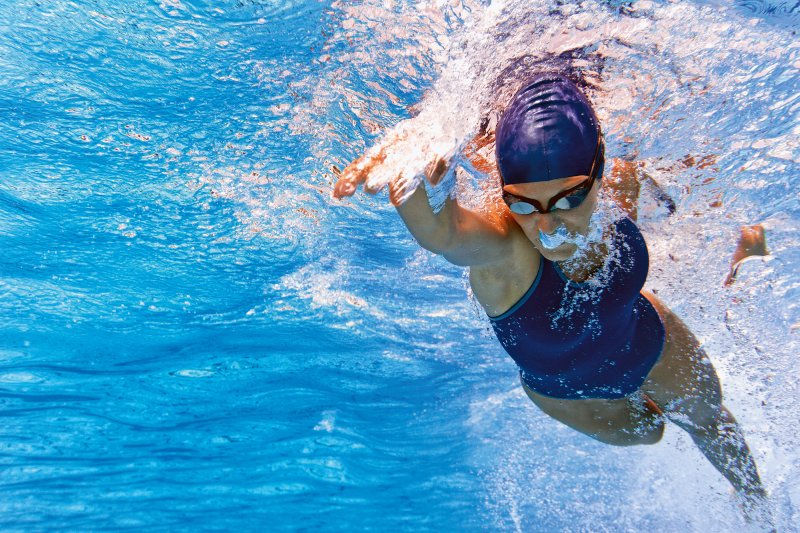
Many swimmers accidentally hold their breath underwater, then gasp for air at the surface. That can tighten the shoulders, shorten the stroke, and make each length feel harder than it needs to. Instead, exhale slowly underwater, then take a relaxed breath as your face turns. In freestyle, bilateral breathing every three strokes can help maintain balance, although breathing every two strokes is perfectly fine if that feels more comfortable.
Practicing that relaxed breathing rhythm can make longer swims feel calmer and more controlled.
iStock
Good technique beats unnecessary effort. Every stroke should send your energy forward instead of disappearing into extra splashing.
Keep your body horizontal, extend each stroke, and avoid lifting your head too high when you breathe. Your kick should help keep you balanced and moving in rhythm, not leave your legs burning after a few lengths. If you tire quickly, resist the urge to pull harder or kick faster. Instead, make each movement cleaner and notice how much farther a controlled stroke can carry you.
Improving efficiency helps build swimming endurance because every meter (3.3 feet) requires less energy. When your body stays aligned and your movements work together, you spend less time fighting the water and more time gliding through it. For more on body position, breathing, and stroke mechanics, see SSI's Top Tips for Improving Your Swimming Technique.
Swimming continuously has its place, but interval training can help you build stamina without turning every session into one long push to exhaustion.
Break the distance into shorter efforts with time to recover. Try 8 × 50 meters (164 feet) with 20 to 30 seconds of rest, then push off again once your breathing settles. As fitness improves, shorten the rest or add repetitions. You can also move up to 4 × 100 meters (328 feet), keeping the pace steady from the first length to the last.
Those short breaks let your breathing settle and help you keep your stroke controlled as fatigue builds. This swimming endurance workout lets you cover more distance, build stamina, and finish without feeling completely drained.
zoggs
Intervals help you build distance in smaller pieces, but longer continuous swims should also be part of your routine. They give you time to settle into a comfortable pace, find your breathing, and let the movement start to feel natural.
Aim for 15 to 30 minutes, starting shorter if needed and adding a few minutes every couple of weeks. Keep your stroke relaxed, let your breathing stay steady, and allow one length to flow into the next.
These steady sessions teach your body to use energy more efficiently and help build confidence for longer swims. With practice, a swim that once had you counting every length can start to feel calmer and easier to manage.
If water confidence comes first, Not a Swimmer? Discover SSI's New Survival Swim Program shows how SSI builds breathing, movement, floating skills, safety awareness, and water confidence.
Swimming starts with a stable core. Strong abdominal, lower-back, and hip muscles help keep your body aligned, so your hips are less likely to drop and create extra resistance in the water.
Planks, side planks, bird dogs, glute bridges, and dead bugs are simple exercises you can add to two or three short strength sessions each week.
As your core becomes steadier, your arms and legs can work without wasting energy holding the rest of your body in position. When your hips stay higher in the water, each length can feel lighter.
Swimming is not the only way to become a better swimmer. A brisk walk, bike ride, rowing session, hike, or easy jog can build aerobic fitness without adding another swim to your week.
Two or three sessions of 30 to 60 minutes can help your heart and lungs handle longer efforts more comfortably and give your swimming muscles a break.
Back in the water, you may notice the difference toward the end of a session: your breathing stays steadier, your pace is easier to hold, and the final lengths no longer feel quite so heavy.
Cross-training also keeps training varied and can reduce the repetitive strain of swimming every day.
It is easy to forget hydration when you are surrounded by water, but your body still loses fluids as you swim. Drink before and after your session, and keep a bottle poolside during longer workouts.
A balanced meal with carbohydrates and protein one to three hours before swimming can provide steady energy, and a nutritious snack afterward supports recovery.
Good fuel and hydration support swimming endurance. Instead of fading as the workout goes on, you can keep your breathing steady, hold your stroke together, and save enough energy for those final lengths.
Recovery is part of getting stronger in the water. Skip it too often, and tired shoulders, heavy arms, and a stroke that loses its rhythm can follow you straight into the next session.
After swimming, gentle stretching can help keep your shoulders, chest, hips, ankles, and back moving freely. Keep it slow and comfortable rather than forcing deeper stretches.
Sleep gives your body time to repair and adapt. One or two lighter training days each week can also keep fatigue from building.
Good recovery helps you return to the water ready to move, instead of fighting tired muscles from the first few lengths.
Tracking your progress can be motivating, especially when a swim that once felt tough gradually becomes part of your normal session.
Keep a simple training log with your distance, session time, and how the workout felt. After a few weeks, you may notice that 500 meters (1,640 feet) no longer has you counting every length, or that shorter interval rests suddenly feel manageable.
Those moments show that your swimming endurance is growing. Celebrate them. Sometimes progress is simply climbing out of the water with more energy than you had a few weeks ago.
Even small improvements in technique can make a noticeable difference to endurance. If you train consistently and still feel stuck, a qualified swim professional can spot habits you may not notice.
A simple adjustment can help your stroke feel easier and carry you farther.
Many SSI Training Centers offer swim instruction for children and adults, helping swimmers improve technique, water confidence, and endurance. Use the SSI Center Locator to find professional guidance close to home.
A few focused coaching sessions can move you forward faster than adding more lengths with inefficient technique.
Swimming endurance develops gradually. No single workout turns a tiring distance into an easy one, but every good session can leave you with steadier breathing, cleaner strokes, and a little more energy at the end.
You do not need punishing workouts or endless laps. Consistent practice, efficient technique, smart pacing, and recovery build stamina over time.
Some weeks, your progress may feel dramatic. Other weeks, it may seem much slower. Both are completely normal parts of building swimming endurance. Keep showing up, focus on swimming well rather than simply swimming hard, and celebrate the milestones. Then one day, the distance that once felt impossible is no longer the goal. It is your warm-up.
- SSI Survival Swim Build essential swim skills, breathing control, and water confidence so you can feel more comfortable and capable in the water.
- Top Tips for Improving Your Swimming Technique Learn how body position, breathing, and stroke technique can help you move through the water with less effort.
- SSI Center Locator Find an SSI Professional near you for guidance on swimming technique, confidence, and your next training step.