Snorkeling Techniques: 10 Skills for Safer, Easier Snorkeling
freedivingswim
predrag_vuckovic
Table of Contents:
The moment you lower your face into the water, the world beneath you comes into focus. Snorkeling lets you explore it without extensive training or complicated equipment, but it is far more enjoyable once you feel at ease. A few essential skills help you breathe easily, save energy, and stay calm if water enters your snorkel.
From a tropical beach to a sheltered bay close to home, these ten snorkeling techniques for beginners help you focus on the marine life around you. Start slowly, practice in safe conditions, and see what catches your eye beneath the surface.
Breathing comfortably through your snorkel is one of the first snorkeling skills to master. At first, the mask and tube may feel strange, making you breathe too fast and leaving you tense and tired.
Practice snorkeling breathing techniques in calm, shallow water where you can stand. Lower your face into the water, relax your shoulders, and breathe gently through your mouth. Your snorkel is made for normal surface breathing, so there is no need to gulp down air. If you feel uncomfortable, lift your head, breathe normally, and try again.
Once your breathing finds a natural rhythm, you can focus on fish weaving past the coral and other marine life below.
New to snorkeling? Read Do You Need to Know How to Swim to Snorkel? Snorkeling Safety to learn how swimming confidence and basic safety precautions can help you prepare for your first snorkeling experience.
A wave washing over your snorkel or a quick dip beneath the surface can leave water gurgling inside the tube. Knowing how to clear it helps you stay calm rather than panic.
With a traditional snorkel, a firm exhale through the mouthpiece usually pushes small amounts of water back out through the top. Some snorkels have a purge valve to help water drain, but you still need to know how your own equipment works.
Practice with an instructor in shallow water before swimming farther from shore. If you are unsure the snorkel is clear, lift your face out of the water and breathe normally rather than trying to inhale through it.

predrag_vuckovic
A leaking or pinching mask can quickly spoil an otherwise wonderful snorkeling trip. Before entering the water, check that the soft skirt sits evenly against your face, with no hair caught beneath the seal.
Hold the mask against your face without its strap and inhale gently through your nose. If it stays in place briefly, it may fit well, although water can still find a way in. Adjust the strap until it feels secure, never painfully tight.
To reduce fogging, use a mask defog product and rinse as directed. With a clean lens and a comfortable fit, you can watch the marine life instead of repeatedly stopping to fix your mask.
For more tips, read How to Prepare a New Mask, and Prevent Fog to learn how toothpaste, spit, and defog products can help keep your view clear.
Even a well-fitting mask can let in water. Feeling it trickle against your cheek can be distracting, but knowing what to do helps you stay calm.
If water enters, lift your face out of the water if needed and breathe normally. Once you feel comfortable, look slightly upward, press the top of the mask against your forehead, and exhale gently through your nose. The air helps push water out through the lower edge.
Practice in shallow water before relying on this skill during a longer swim. If your mask keeps leaking, stop and check the fit rather than struggling with it. You can always pause, signal for help, or return to shore.
Fins help you glide with less effort, but big, fast kicks can tire your legs and stir up clouds of sediment near the seabed.
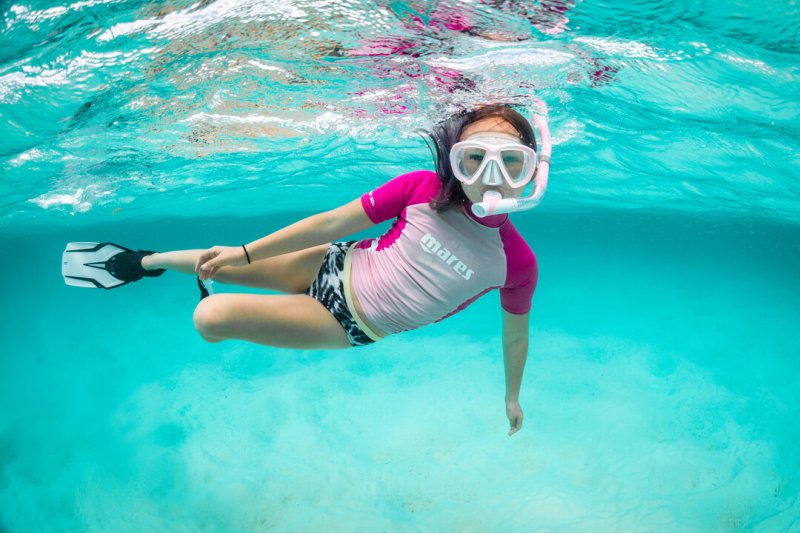
Keep your legs relatively straight, with a natural bend at the knees, and start the kick from your hips. Keep your ankles relaxed so the fins move freely through the water. Use small, controlled kicks instead of pedaling like a bicycle.
Swim a short distance, then pause to check your breathing and comfort. Efficient finning should feel smooth and easy to maintain without tiring your legs too soon. Choose fins that fit securely without pain or cramps, and avoid walking in them on slippery surfaces.
Your body position affects how much energy you need to move forward. If your legs sink or you lift your head too high, the water pushes back, making every kick harder.
Try to float horizontally with your face in the water and your body relaxed. Keep your arms close to your sides or comfortably extended in front. Look down as you swim, lifting your head regularly to check where you are going and what is around you.
Proper snorkeling technique helps you glide with less effort, leaving more energy to watch marine life instead of constantly correcting your position.
A duck dive lets you slip beneath the surface for a closer look at something that caught your eye. It takes practice, awareness of your surroundings, and the ability to equalize as you descend.
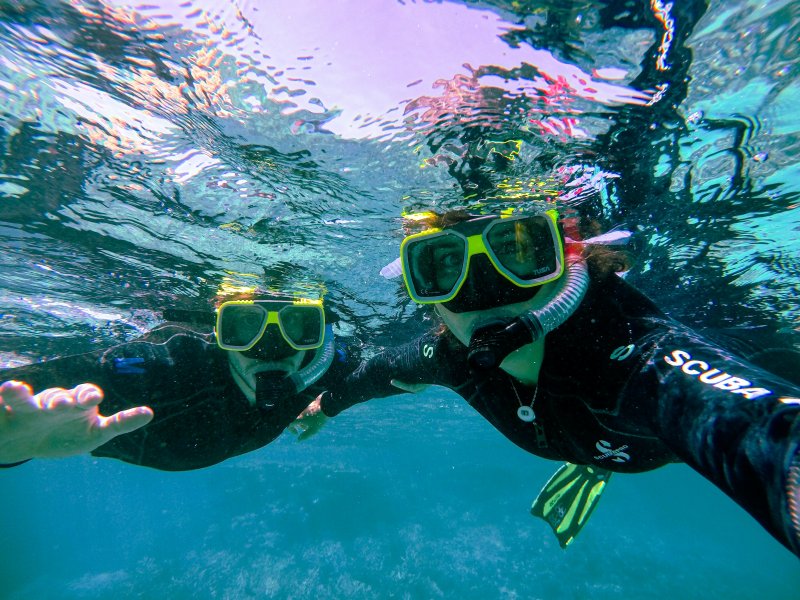
Start by floating face down, then bend at the waist and lift your legs above the surface. Reach your arms downward to help your body tip beneath the surface. Once submerged, use gentle fin kicks to descend, equalizing your ears early and often.
Never force equalization or descend through ear pain. Do not hyperventilate or take repeated deep, rapid breaths to extend your breath-hold. Always snorkel with a buddy and never practice breath-hold diving alone. If you are not confident swimming underwater, stay at the surface until you have received proper instruction.
Want to put your snorkeling techniques to use? Explore 10 Best Snorkeling Spots in the World for 2026 for inspiration on where to snorkel next.
victoria-ballesteros-unsplash
As you descend, increasing water pressure can make your ears feel full or blocked. Gentle equalization helps balance that pressure before it becomes uncomfortable.
You may have learned to pinch your nose and blow very lightly, or another method shown by an instructor. Start equalizing before you feel discomfort and repeat as you descend. If your ears will not equalize, stop and ascend slightly until the pressure eases.
Never force equalization or keep descending through ear pain. Avoid duck diving if you are congested or cannot equalize comfortably. You can still watch the marine life below from the surface without diving down at all.
For more ways to equalize comfortably, read SSI's Dive Health: How to Equalize Ear Pressure and discover alternative techniques to help protect your ears.
Snorkeling should not feel like a constant workout. If you find yourself kicking nonstop just to stay comfortable, check your body position, equipment, and water conditions.
Use suitable flotation equipment if you need support, and learn how it works before entering the water. A snorkel vest can help you float comfortably, but it cannot replace swimming ability, supervision, or proper safety precautions.
Rest when you need to, stay close to your buddy, and avoid swimming so far from shore that you struggle to return. Wind and currents can turn an easy swim out into a tiring journey back, so check local conditions and choose a sheltered spot that matches your ability.
Confidence comes from practice and repetition, not from rushing into rough water. Start in calm, shallow water with a clear view of the bottom, easy shore access, and little to no current. Check that your mask, snorkel, and fins fit before swimming farther.
These snorkeling techniques feel easier when you practice one at a time. Spend one session finding a relaxed breathing rhythm and getting used to your mask, then work on fin kicks and body position when you feel ready. Stay with your buddy, watch for changing weather and water conditions, and leave the water if you become cold, tired, or uncomfortable.
Snorkeling opens a window onto colorful reef fish weaving past, seagrass meadows swaying below, and rocky coastal habitats. Learning the basics helps you take it all in, take care of yourself, and enjoy these encounters, minimizing disturbance to marine life.
If you want structured guidance, check out the SSI Snorkel Diver program. It introduces essential equipment, in-water snorkeling techniques, and safety knowledge to help you feel more confident. With practice, appropriate supervision, and a gradual approach, you can move through the water comfortably and give the underwater world your full attention.