New insights into outcome of methane released at seafloor
environmentoceanmarine researchmethaneseafloor
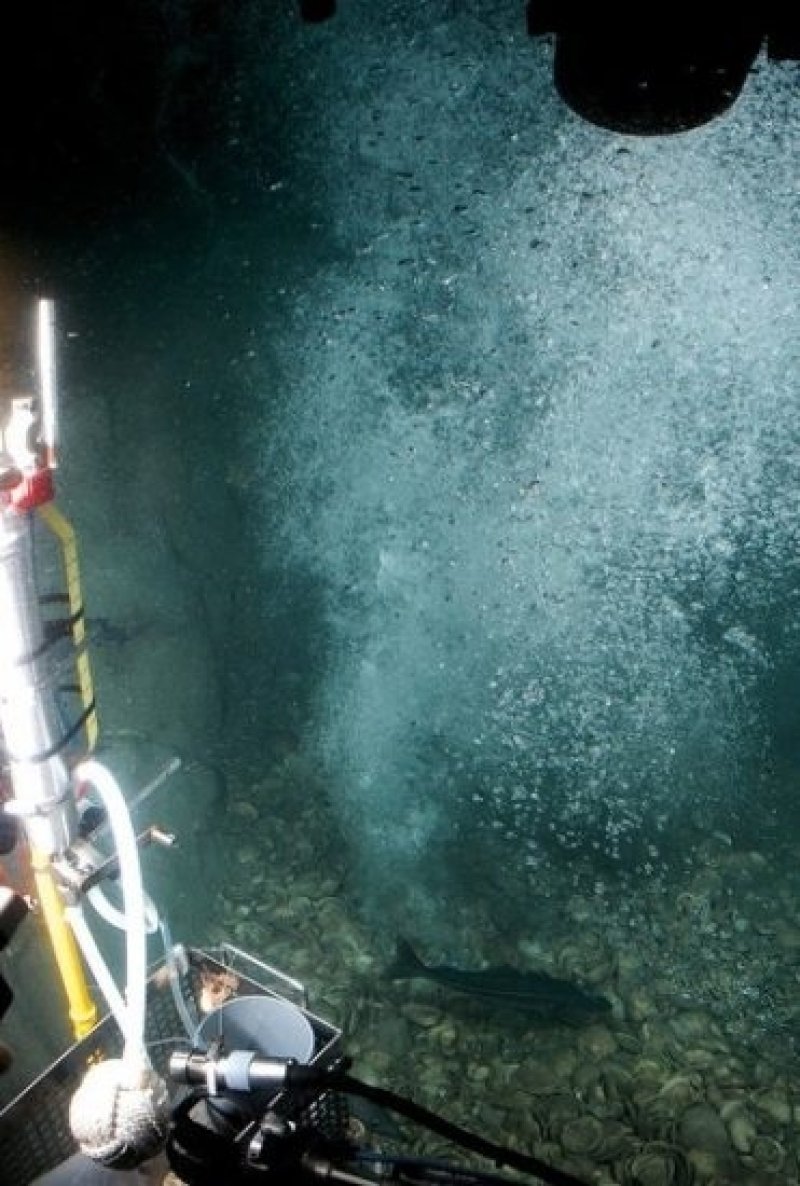
A crater at the bottom of the North Sea has yielded fresh insights into the fate of methane released at the seafloor. Publishing their findings in Journal of Marine and Petroleum Geology, the research team focussed their investigation on a crater that was formed in 1990 following a shallow gas blowout. On November 20th that year, an oil well about 200 kilometres east of Scotland encountered shallow gas, leading to the blowout. The massive release of methane that resulted created a crater at the seafloor. An expedition four years later showed that methane emissions were still coming out from the crater. "The concentrations we measured in the surface waters are still the highest I have ever encountered at sea," said Professor Gregor Rehder, marine chemist at the Leibniz Institute for Baltic Sea Research (IOW), who had conducted the investigation. A subsequent expedition the following year confirmed ongoing gas bubble emissions from the crater that was 60 metres wide
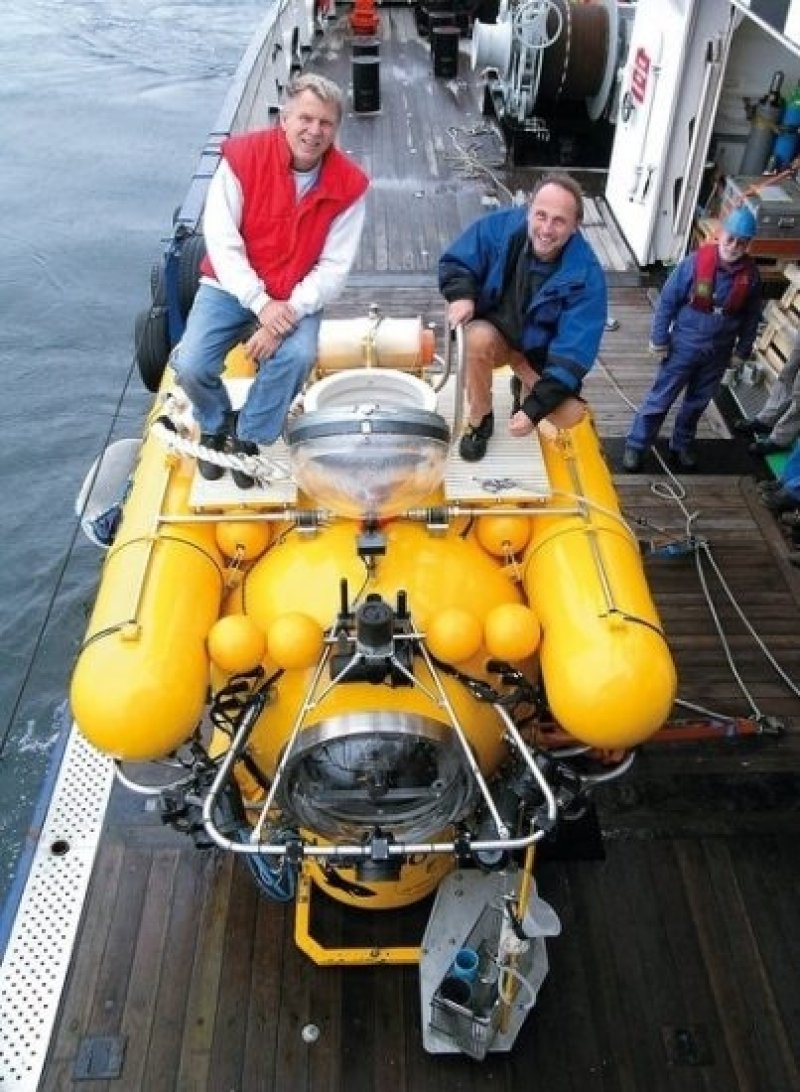
and 20 metres deep. Then, in 2006, the German research submersible JAGO's descent into the crater (at a depth of 120 metres) yielded much insight. Even at that time, methane was still being released and was even visible at the surface. In 2011, the British Department of Energy and Climate Change set out to quantify the emission rate of gas from the crater and to find out what happened to the gas as it ascended to the water surface.
Supported by ExxonMobil, the project was led by Dr Ira Leifer (Bubbleology Research International) and involved a multidisciplinary team that included Dr Alan Judd (Alan Judd Partnership), Dr Peter Linke (GEOMAR Helmholtz Centre for
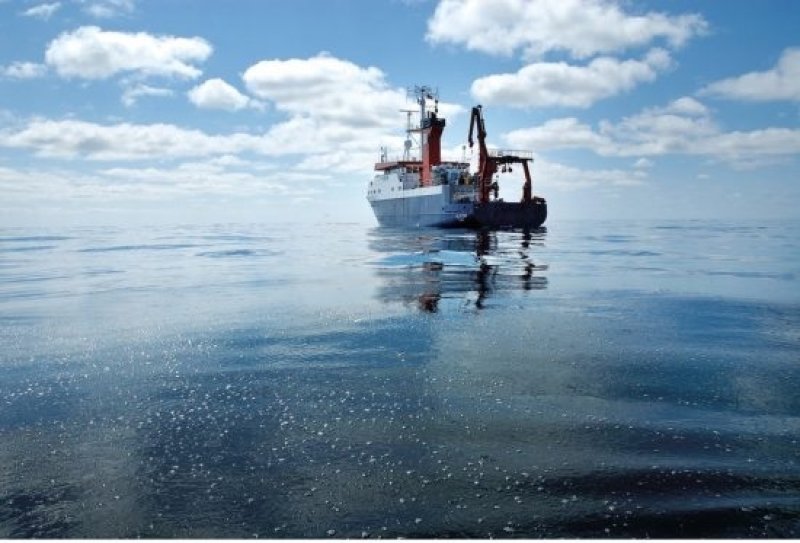
Ocean Research Kiel, David Long (British Geological Survey) and other experts from Germany, the Netherlands, the US and the UK. When scientists returned to the crater in 2011 and 2012, they observed that methane gas still continued to seep out. However, during the summer, the North Sea becomes stratified with layers of water of different temperatures, causing each segment to be clearly separated from one another by the thermocline. Elaborating on this, Dr Linke said, "In periods of little mixing, only very little methane reaches the surface with the bubbles. So the methane is likely to be transported away from the well with the bubbles, diluted and dispersed. Part of it is taken up by microbes at the sea floor and in the water column, but we do not know yet how organisms living in the vicinity of the well are affected."
Come late autumn to spring, the North Sea becomes "well mixed" and stirred up by occasional storms. This allows bubbles containing more methane to ascend to the surface and be released into the atmosphere. The highest concentrations of atmospheric methane have been found within an area measuring about four by four kilometres of the crater. Although these methane emissions appear significant, they are not cause for alarm. GEOMAR geophysicist Dr Jens Schneider von Deimling revealed that they were initially puzzled that higher concentrations had not been found above the thermocline, saying: "However, after the discovery of a large bubble vortex forming in the wake of gas bubble release from the seafloor, we suggest that this hitherto unknown process enhances gas ventilation and exchange. As a consequence, bubbles from larger plumes might not contain a lot of methane anymore when they reach the surface." Long-term observations with landers, platforms for various measurements and experiments located at the seafloor have shown some variation in the emissions. In December 2011, there was a large explosion with increased emissions; subsequent investigation by remotely operated vehicle ROV KIEL 6000 revealed that the features of the crater had been drastically altered, leading Dr Linke to conclude that eruptive forces play a sporadic but important role. He added that "the crater is still very active today and will probably continue to be so for quite a few years. We think that it is not just necessary to monitor this crater – we also need to use it as a natural laboratory, learn from it and reduce the risk at other exploration sites." The scientists recommend additional data be collected to test some hypotheses, the development of improved monitoring as well as a more detailed investigation into the fate of the methane in the water column and seafloor. Another expedition to the crater is planned for late August 2016.
Bài viết này được dịch tự động và có thể chứa một số lỗi nhỏ; vui lòng tham khảo bản gốc tiếng Anh nếu có thắc mắc.