Arctic Expedition: Research vessel "Polarstern" is supposed to freeze in the ice
environmentclimate changemarine researcharctic researchinternational cooperationmosaic expedition
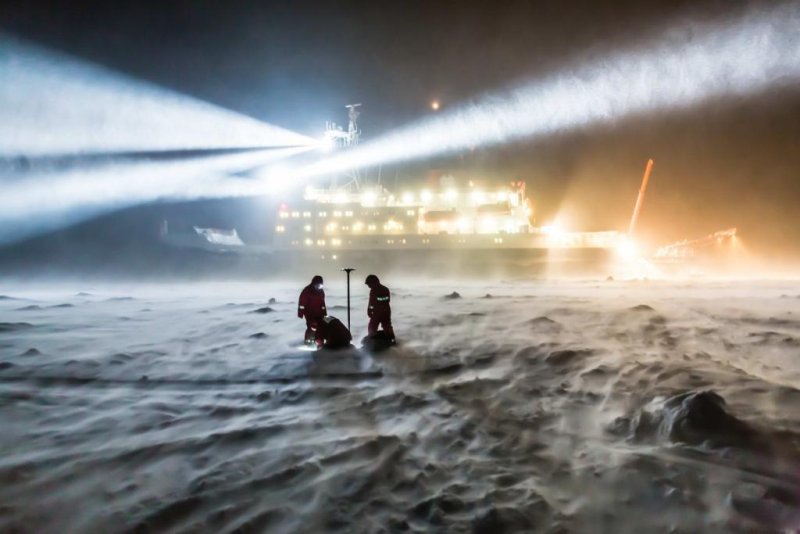
AWI sea ice physicists work on the sea ice, even with a refreshing wind and increasing drifting snow.
(c) Stefan Hendricks
International MOSAiC expedition starts in autumn 2019 It will be the largest Arctic research expedition of all times: In September 2019, the German research icebreaker "Polarstern" will start from Norway's Tromsø for the Arctic and drift through the Arctic ice for a year. Supported by other icebreakers and planes, a total of 600 people from 17 countries will take part in the expedition. Scientists will work with the data to take climate and ecosystem research to a new level. The mission is led by the Alfred Wegener Institute, Helmholtz Center for Polar and Marine Research (AWI). 125 years ago Fridtjof Nansen set out on his sailing ship "Fram" for the first drift expedition of its kind. But an expedition like the one planned now has never happened before: MOSAiC brings a modern research icebreaker loaded with scientific instruments in the winter near the North Pole for the first time. Four more icebreakers will be deployed for logistical support. A runway will be specially set up for supply flights and two research aircraft. In addition, helicopters, tracked vehicles and snowmobiles will be used. This elaborate polar mission is necessary to collect urgently needed data for climate research in the region, which is almost unattainable in winter. These will allow humanity new insights into the exchange processes between ocean, ice and atmosphere. The findings from the MOSAiC expedition will raise our knowledge of the Arctic to a new level. We urgently need this data in order to better understand the effects of global climate change and to improve our forecasts, " says Federal Research Minister Anja Karliczek. With the AWI, Germany has a world-leading center of polar research with many years of international contacts. " The AWI has succeeded in bringing together world leading Arctic research facilities on this unique project, " the Minister continued. At the political level, there is also international cooperation with regard to Arctic research. Under the motto "Arctic Science, Challenges and Joint Actions", Germany, the European Commission and Finland will host the second Conference of the Ministers of Science on Arctic Research in autumn 2018 in Berlin. In the MOSAiC expedition alone, the force of nature - the drifting sea ice - determines the route on which the research vessel "Polarstern" will be traveling beyond the Arctic Circle. Ice breakers from Russia, China and Sweden will support the expedition and exchange personnel. " Such a project can only succeed through international cooperation, " explains Prof. Antje Boetius, Director of the Alfred Wegener Institute. In addition to the "Polarstern", a network of various research camps is being created on the ice, at least 1.5 meters thick. Here, the various teams set up measuring points to explore the ocean, ice and atmosphere as well as the Arctic life in winter. " What happens in the Arctic does not stay in the Arctic. The climate development in our latitudes depends crucially on the events in the Arctic weather kitchen. We now have to look and investigate the interaction between atmosphere, ice and ocean there, " says expedition leader and coordinator of the MOSAiC project Prof. Markus Rex, head of atmospheric research at the Alfred Wegener Institute. " And the Arctic polar night plays a key role in the adaptation of life, so we also expect completely new findings for biology, " Boetius assigns the major project. The expedition has five research priorities: the physics of sea ice and snow cover, the processes in the atmosphere and in the ocean, the biogeochemical cycles and the ecosystem of the Arctic. The Arctic is considered an early warning system for climate change. The dark water absorbs more energy than ice, which reflects the sun's rays, and the thinner ice brings more heat from the relatively warm ocean to the surface and into the atmosphere. Thus, feedback effects significantly increase Arctic warming. The observations are missing in order to understand the individual processes in the ocean, in the sea ice and in the atmosphere as well as their interactions and to quantitatively describe them in climate models. " The drama of warming in the Arctic is not fully reflected in today's climate models and the uncertainties in climate predictions for the Arctic are enormous, " Markus Rex describes the current gaps. " That's why we have to study the climate change processes, especially in winter, " says the AWI atmospheric researcher. And what is happening in the Arctic is already affecting Europe, Asia and North America today: lower temperature differences between the Arctic and the tropics are destabilizing the typical air pressure patterns, causing polar cold air to reach temperate latitudes and penetrating warm, humid air into the central Arctic in reinforced to accelerate the warming contribute.
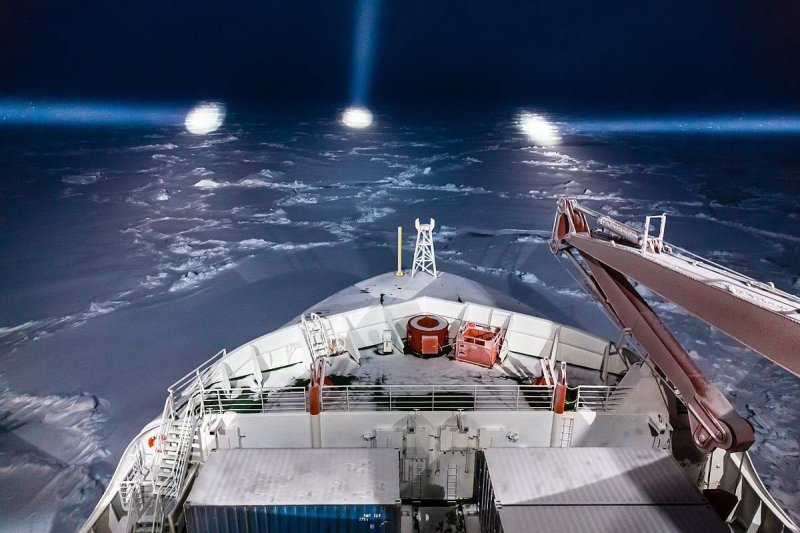
Polarstern navigates through the ice at night
(c) Stefan Hendricks
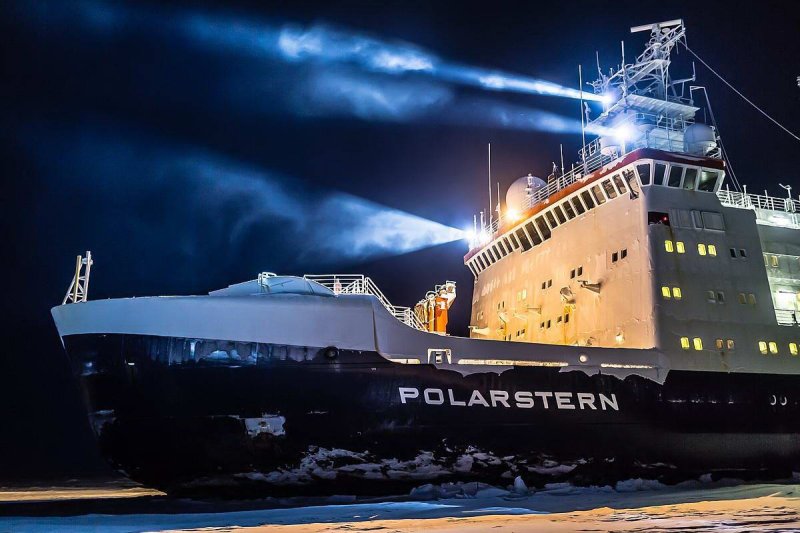
Polarstern in the Weddell Sea.
(c) Stefan Hendricks
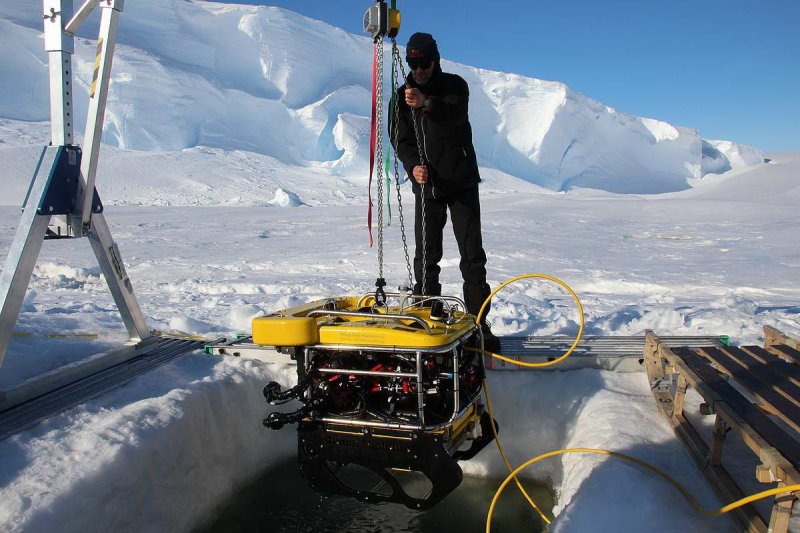
AWI biologist Horst Bornemann heaves the diving robot out of the hole in the ice with the aid of a beam construction (c) Dominik Nachtsheim
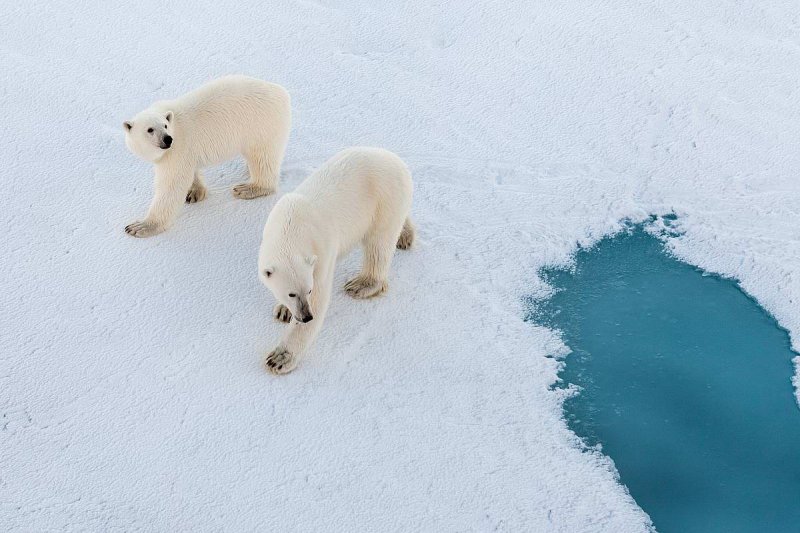
Picture of two polar bears on the sea ice of the Arctic Ocean.
(c) Mario Hoppmann
Cet article a été traduit automatiquement et peut contenir des inexactitudes mineures ; veuillez vous référer à la version anglaise originale en cas de doute.