12 top tips for perfect buoyancy!
scuba divingenvironmentdiving skillstechnical divingbuoyancyexercises
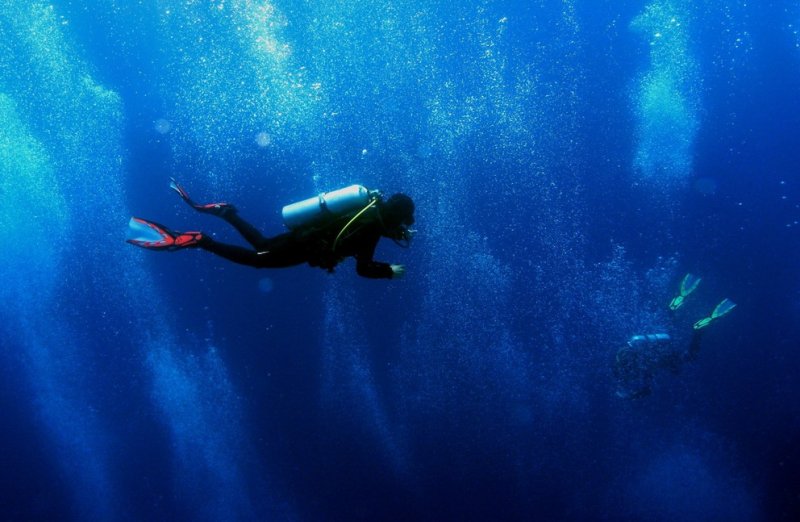
Buoyancy control and trim are the most important skills in diving.
Diving skills for beginner and advanced divers EXERCISES FOR EVERYONE
After learning the basics, buoyancy control and trim will be integral in the curriculum for subsequent instruction.
Organizations like SSI and others offer special courses and specializations, like diving in perfect buoyancy.
Technical diving associations, as well as the relevant departments of sports diving associations, offer corresponding "fundamentals" in which they focus on the important topic of trim. Irrespective of the courses offered, receiving training in buoyancy control and trim with some experienced dive partners is recommended. Here are some easy-to-implement exercises which can be varied and/or extended as one wishes. Perform a perfect descent:
• Dive 1 - 2m vertically, then switch to a floating position (be mindful about your trim)
• At five meters, do a bubble check by lying on the back, breathing in briefly and looking for bubbles. Repeat in a floating position without losing depth
• Stop at different depths, hover for a few minutes, and then continue to descend • Float motionlessly for five minutes at a certain depth, while maintaining the same depth
• Hover while completing tasks (without losing buoyancy): writing underwater (using a writing board or Wetnotes), tying knots, closing and opening valves, changing from primary to secondary regulator and back, changing masks, storing utensils in the jacket’s drybags and similar tasks
• Slowly approach with 3m stops and breaks of several minutes, and deploy a buoy at a depth of 5-6 meters
• Partner exercises: Dive partner pretends to be wounded and needs assistance. Ascend with him / her to the surface. Also practice out-of-air situations including sharing of air / gas.
Recommended exercises:
• Hover with stages without getting into contact with the ground, while over the ground and without using fins.
• Remove and install the stage(s), both stationary (balanced above the ground) and floating. The diver can develop a feel for using respiration consciously to prevent sagging and rising during this process.
• Change the stages from the left to the right, as well as changing stages with your buddy or dive partner
• Sit cross-legged while hovering in the water? Why not - somehow you have to make a good impression on the girls and / or guys ;-)
A last tip: Use a video camera to facilitate correction and fine tuning by video analysis.
See also:
Buoyancy Control Optimal Trim

Buoyancy control and trim should be maintained in any situation...

...like in Valve Drills,
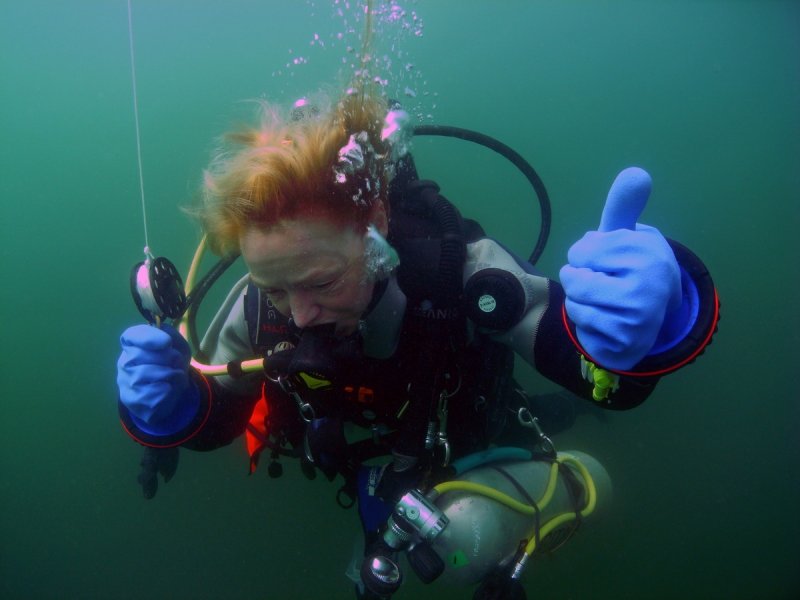
in all (also unusual) situations (after losing your mask)...
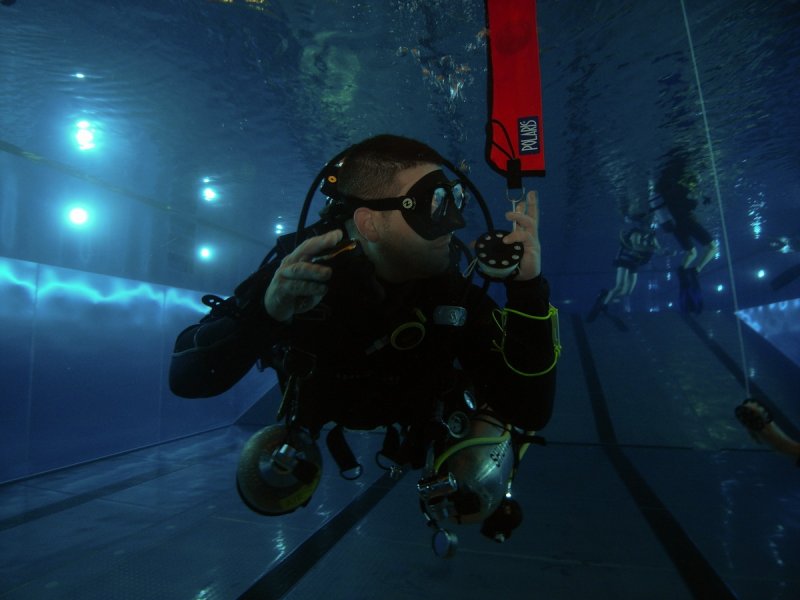
and of course when deploying a buoy.
Ez a cikk automatikusan lett lefordítva, és apróbb pontatlanságokat tartalmazhat; kétség esetén kérjük, tekintsd meg az eredeti angol változatot.