Mermaid Skills: Master Buoyancy for Effortless Movement
mermaid
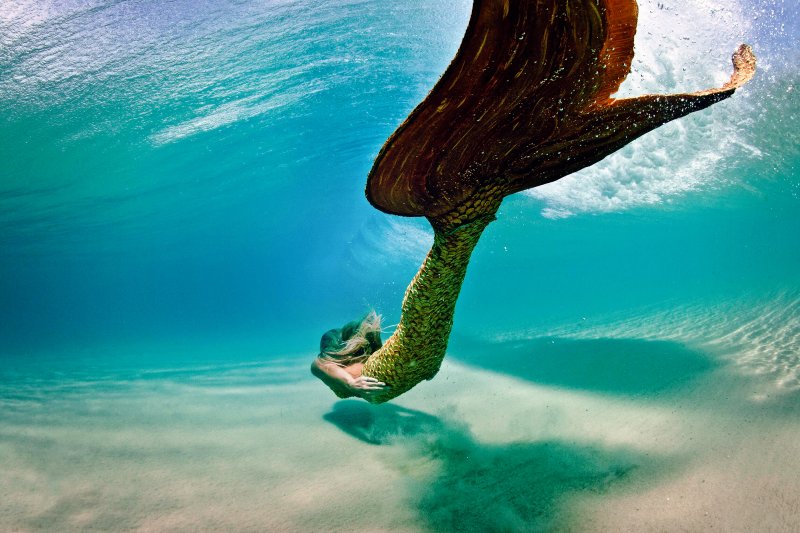
SAMUEL-SMITH
A mermaid tail can make you look the part, but buoyancy control is what makes you move like a real mermaid underwater. Graceful movement does not come from swimming harder, but from letting your body position, breathing, equipment, and the water around you work together. As your breathing and body position begin to work with the water, each movement flows naturally into the next, helping you conserve energy, stay safer, and create the fluid motion that makes mermaid swimming feel so magical. From your first sessions in a swimming pool to open water adventures, these mermaid skills help you build the confidence and control to glide, turn, and move naturally underwater.
Table of Contents:
-
Why Buoyancy Matters for Your Mermaid Skills
-
Start with Proper Body Position
-
Use Your Breathing to Control Buoyancy
-
Understanding Weighting
-
Practice Neutral Buoyancy in the Pool
-
Master Slow, Controlled Movement
-
Progressing into Open Water
-
Safety Always Comes First
-
Common Buoyancy Mistakes Beginner Mermaids Make
-
Build Buoyancy into Every Practice Session
-
Bringing Your Mermaid Skills Together
-
Dive Deeper
Buoyancy sits at the heart of strong mermaid skills. When your buoyancy is balanced, your body stops fighting the water. Instead of kicking to stay underwater or drifting toward the surface, each movement feels smoother, lighter, and easier to control.
Good buoyancy also supports safety. Holding your position without constant corrections uses less energy and helps you stay relaxed. That lets you focus on your technique, your surroundings, and enjoying the swim.
For performers and underwater photographers, buoyancy creates that weightless look that makes mermaid movement so captivating. Hair drifts freely, movements appear effortless, and poses can be held comfortably for longer without constant corrections.
Thinking about teaching mermaid skills one day? Read Pro Mermaids: The Skills You Need to Teach, Lead, and Inspireto see how you can progress from performing to teaching others.
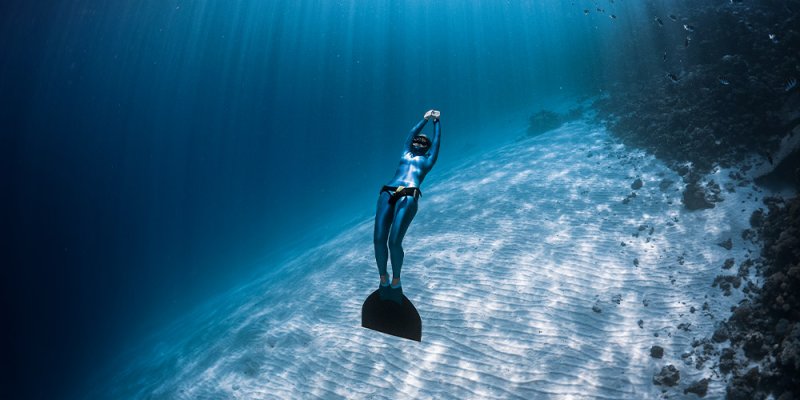
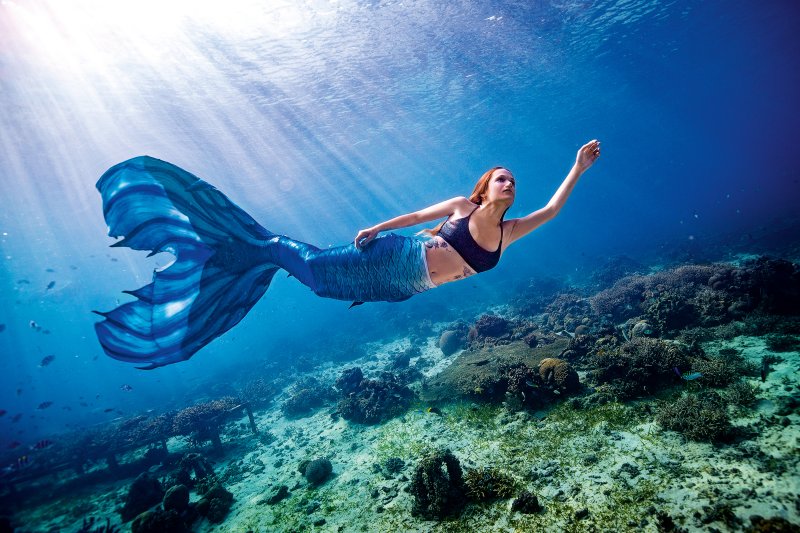
A core part of mermaid swimming technique is learning to hold your body as one long, streamlined line.
Your head, shoulders, hips, knees, and monofin should stay aligned as much as possible. Lift your gaze too far and your hips can sink; look straight down and your legs may rise, breaking that long, balanced line.
Keep your shoulders relaxed and gently engage your core throughout every swim. This steadies your body in the water and prevents small, unnecessary movements from interrupting your flow.
Instead of kicking sharply from the knees, allow the dolphin kick to begin through your chest and hips, then travel down your legs into the monofin like a single wave. The result is smoother propulsion with less drag.
Many beginner mermaids feel the difference almost immediately when they focus on posture instead of kicking harder. Their body line stays more streamlined, the kick feels more natural, and moving through the water becomes easier.
iStock-mihtiander
Breathing is a simple but powerful tool for fine-tuning buoyancy.
With a full breath, the extra air in your lungs makes you slightly more buoyant. As your lung volume decreases, you may notice your body settle a little lower in the water. Learning to feel these small changes helps you adjust your position without constantly kicking or correcting with your tail.
A useful part of your mermaid skills is learning to release unnecessary tension before diving. Take slow, relaxed breaths at the surface, then a full, controlled final breath before submerging. A relaxed body makes it easier to move with the water instead of constantly correcting your position.
Never hyperventilate before underwater swimming. Hyperventilation lowers carbon dioxide levels and delays the natural urge to breathe, which can significantly increase the risk of blackout.
SSI Mermaid professionals teach breathing and recovery techniques that help you stay relaxed and recover correctly after each breath-hold.
Mermaids do not always need additional weight. Body composition, exposure protection, fresh or salt water, and performance goals affect how your body floats, so some experienced mermaids use carefully selected weights under professional supervision.
Proper weighting should never pull you down or make the surface feel harder to reach. It should help you stay comfortably balanced at the intended depth and still allow an easy ascent.
Too much weight adds unnecessary risk and makes you work harder. Too little can make it harder to hold your depth or keep an underwater pose steady.
If you are considering weights, seek guidance through an SSI Mermaid program, where a professional can help you choose appropriate equipment and learn how to use it safely.
Safe weighting is about staying comfortable and in control, never simply making it easier to sink.
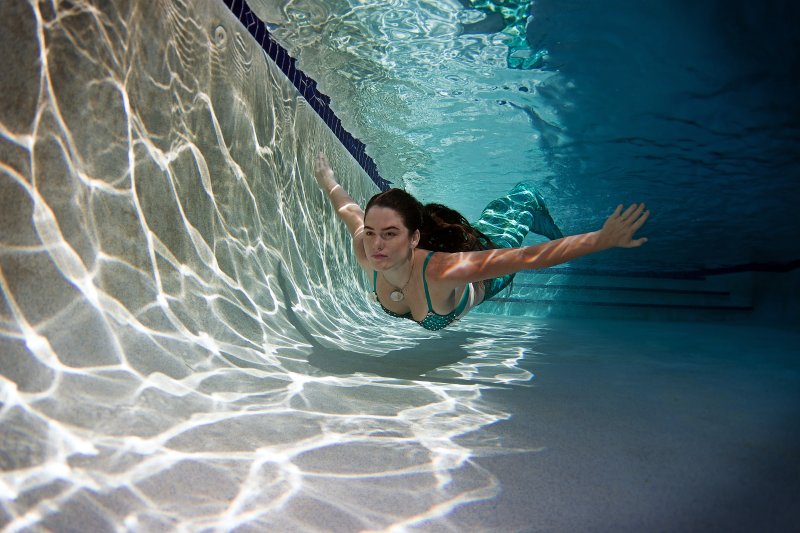
Swimming pools give you a controlled place to practice buoyancy and notice how small changes shift your position in the water.
Begin by floating motionless just below the surface. Stay relaxed and use only tiny breathing adjustments to keep your body steady.
Next, practice gentle descents with a slow, partial exhalation instead of kicking hard downward. Once underwater, aim to hover without constantly moving your tail.
As confidence grows, practice slow ascents and let natural buoyancy lift you instead of relying on powerful kicks.
These exercises build body awareness that carries into open water and strengthens your mermaid skills.
Experienced performers still use them to reinforce relaxed, controlled movement.
Shutterstock-Peter-Leahy
A key part of developing your mermaid skills is learning to slow everything down.
Fast movements stir up the water, throw off your balance, and use more energy. Slower, deliberate movements look more graceful and make it easier to stay balanced at the depth you want.
Imagine moving through thick, silky water. Let every kick flow naturally into the next, without sudden bursts of speed or sharp corrections.
When changing direction, rotate your whole body instead of twisting only your shoulders or hips. Your body stays aligned, and the turn flows more naturally for both performances and underwater photography.
Patience often creates more graceful movement underwater than strength.
Sea and pool water can take its toll on your hair. Read Want Perfect Mermaid Hair? Try These 7 Game-Changing Tipsfor practical ways to care for your hair between mermaid sessions.
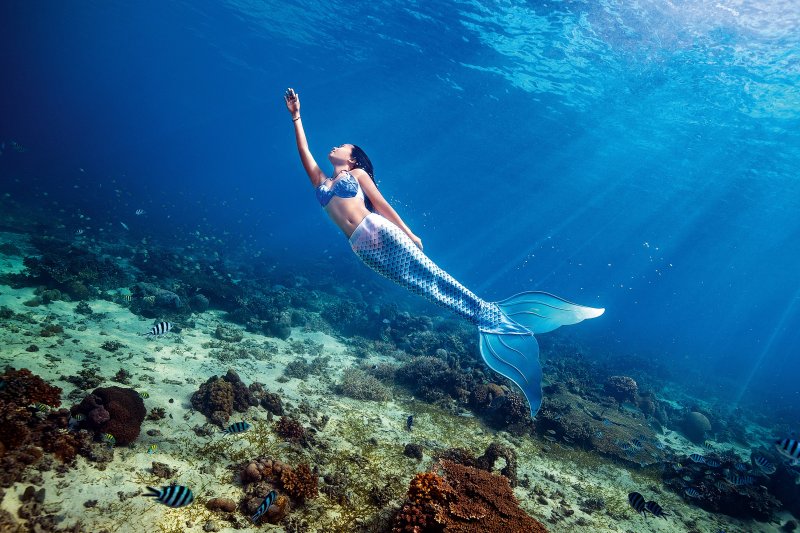
Once your pool skills feel comfortable, lakes, springs, and the ocean can become the natural next step.
Open water adds waves, current, changing visibility, different salinity, and temperature. Some of these change your buoyancy directly. Others make it more challenging to hold your position and move with control.
Saltwater gives you more natural buoyancy than freshwater, so you may notice your body floating a little higher during ocean sessions.
ssi_wei_shang-min
Start in calm conditions with clear visibility and shallow water where you can easily stand if needed.
Ready to take your mermaid skills beyond the pool? The SSI Ocean Mermaid program teaches you to assess open water conditions and practice safely with a qualified buddy in locations with easy exits from the water.
Use the SSI Center Locator to find a Training Center offering Mermaid programs and take your next step into open water with the right support.
Safety matters from your first breath at the surface through your final recovery breath.
Never practice breath-hold swimming alone, even in a shallow pool. Your buddy should stay close and watch you throughout the dive, ascent, and recovery. A blackout can happen close to the surface or shortly after you come up.
Know your personal limits and resist the temptation to stay down a few seconds longer for the perfect photo or video. No image or attempt to impress someone is worth pushing a breath hold beyond your personal limits.
Give yourself enough recovery time between dives, stay hydrated, and skip training when you feel tired or unwell.
If waves begin to build or the current becomes stronger in open water, change your plan rather than pushing on in harder conditions.
Beautiful movement is only part of good buoyancy. You should also feel relaxed and in control, without constantly correcting your depth or using unnecessary energy to hold your position.
Many beginner mermaids run into the same buoyancy challenges.
Some keep kicking instead of letting buoyancy do part of the work. Others hold so much tension that their body becomes stiff and every movement feels harder than it needs to.
Looking up too often, rushing a descent, skipping recovery breathing, or going too deep too soon can all make buoyancy harder to control.
A simple way to improve your mermaid skills is to record yourself underwater. Watching the footage can reveal small habits you barely notice in the water, from a lifted head to constant tail movement.
An experienced SSI Mermaid professional can help you spot these details and turn them into calmer, more controlled movement.
Instead of treating buoyancy as a separate skill, make it part of every training session.
Spend five to ten minutes practicing relaxed floating before moving into swimming drills. Finish with slow hovers or gentle underwater glides, feeling how the water supports your body and noticing how little movement it takes to keep you balanced.
As your confidence grows, combine buoyancy practice with underwater turns, graceful poses, and controlled ascents. Turn, settle into a pose, then rise without breaking the flow of the movement.
ssi_wei_shang
SSI Mermaid training builds these skills step by step, helping you develop confidence and safe habits before progressing further.
For underwater performance, photography, fitness, or simply the joy of moving through the water, regular practice helps these movements feel calmer, lighter, and more natural.
Strong mermaid skills often come down to simple habits. Relax your breathing, keep a good body position, move slowly, and let the water support you instead of fighting against it.
Buoyancy control takes time, but regular practice and good instruction make staying in position easier and your movements calmer and more graceful.
Make buoyancy practice part of every session and keep developing your skills through SSI Mermaid training. Over time, you build the confidence, control, and flowing movement that bring the magic of mermaiding to life.