Scuba Diving Breathing: How to Stay Calm and Conserve Air
scuba diving
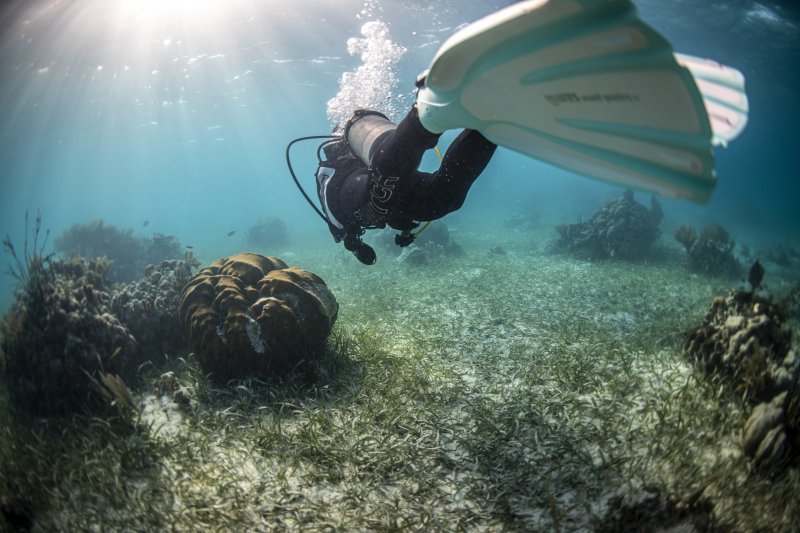
predrag_vuckovic
The moment your face slips below the surface, breathing suddenly has a soundtrack. Every inhale hums through the regulator, and every exhale sends a stream of bubbles brushing past your mask toward the light. At first, that rhythm can feel strangely unfamiliar. Yet mastering scuba diving breathing is one of the biggest keys to becoming a calm, confident diver. Good breathing habits help you relax, steady your buoyancy, reduce stress, and often use less air. If you are wondering how to breathe while scuba diving, finding a natural rhythm can make each dive feel easier and far more enjoyable.
Table of Contents:
-
Why Scuba Diving Breathing Matters Underwater
-
Slow and Controlled Scuba Diving Breathing Techniques
-
Focus on Long, Relaxed Exhalations
-
Relaxation Makes a Big Difference
-
Streamlining Reduces Effort
-
Slow Down Your Finning
-
How Posture and Buoyancy Affect Breathing
-
Scuba Diving Breathing Tips for New Divers
-
Advanced Breathing Tips for Experienced Divers
-
Common Scuba Breathing Mistakes to Avoid
-
Better Scuba Diving Breathing, One Dive at a Time
-
Dive Deeper
On land, breathing happens quietly in the background. Underwater, every inhale sounds louder through the regulator, and each exhale rises beside your face in a trail of bubbles. Good scuba diving breathing affects your comfort, confidence, safety, and gas consumption.
Fast, shallow breaths can tighten your chest and make the pressure gauge drop sooner than expected. Slow, controlled breathing helps your body settle, steadies your buoyancy, and leaves more attention for the reef.
When nerves rise, breathing often speeds up before you notice. Seeing the gauge fall can add more tension, creating a cycle that a calmer breathing pattern helps break.
The good news is that efficient breathing is a skill anyone can improve with practice.
Effective scuba diving breathing starts with a slow, relaxed, and steady rhythm.
Many new divers breathe too quickly because they are excited or nervous. Others take oversized breaths that lift the chest and feel forced. Neither approach allows the body to settle.
Instead, breathe naturally and simply slow the pace. Inhale comfortably, then exhale fully and gently without holding your breath.
Watch a fish move quietly across the reef and let your breathing soften with its pace.
Most importantly, never hold your breath while scuba diving. The gas in your lungs expands as pressure decreases during ascent, so continuous breathing is essential.
Practice these scuba breathing techniques on easy dives. You may soon feel your shoulders loosen, your movements quiet down, and your breathing settle into a more comfortable rhythm.
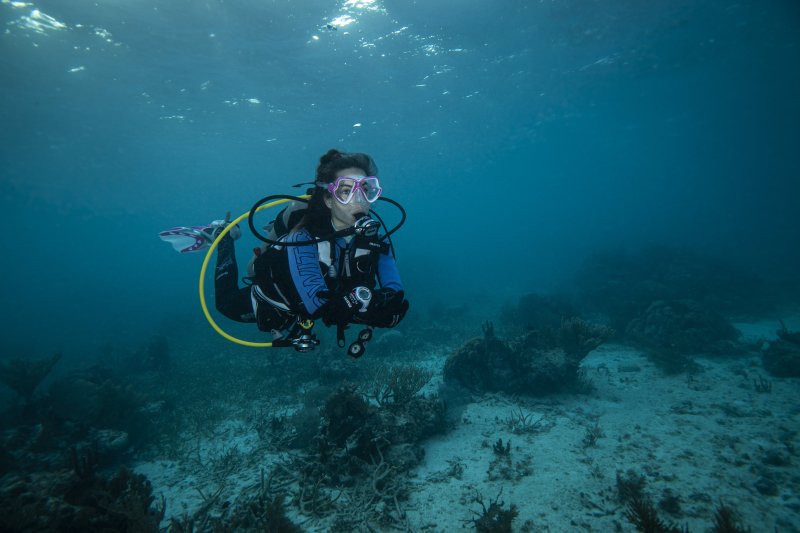
redrag_vuckovic
If there is one breathing adjustment that often helps divers conserve air, it is paying more attention to the exhale.
Many divers fill their lungs deeply, then let the exhale fall short. A slower, complete exhale helps clear carbon dioxide and allows the shoulders and chest to relax.
As carbon dioxide builds, the urge to breathe can feel intense even when plenty of gas remains. That sensation can be alarming and push the breathing rhythm even faster.
Think of your exhale as long and relaxed, almost like slowly fogging a mirror. Bubbles rise beside your face, and the next inhale arrives naturally.
Good scuba diving breathing is less about forcing giant breaths and more about maintaining a comfortable, sustainable rhythm.
Relaxation and breathing go hand in hand underwater.
Tension often hides in small places, such as fingers locked around a strap, shoulders lifted toward the ears, or a jaw clenched around the mouthpiece. Every tight muscle makes the body work harder and use more gas.
Before descending, take a quiet moment to check your body. Let your shoulders drop, loosen your jaw, and soften your grip on any hose or strap.
If anxiety rises underwater, look at a fish moving along the reef or follow your bubbles toward the light. That small shift can bring your attention back to the dive.
Simple scuba diving breathing exercises can also help before you enter the water. Breathe continuously and comfortably, letting each exhale last slightly longer than the inhale.
If nerves keep speeding up your breathing, SSI's How to Overcome Diver Panic and Anxiety - Part I explains how to recognize anxious reactions and regain a calmer rhythm underwater.
One of the best ways to improve scuba diving breathing has very little to do with the lungs at all.
Poor body position creates drag. Instead of gliding forward, you feel the water pressing against your chest, fins, and loose equipment, so every meter takes more work.
A dangling gauge taps against your side, low fins push through extra water, and poor trim turns each kick into a fight against resistance.
Aim for a horizontal position with your head, torso, and legs aligned in the direction of travel. Keep gauges, hoses, and other equipment secured close to your body.
Once your body settles into a clean line, each fin kick carries you farther. Less effort means your breathing no longer has to chase your movement.
Fast kicking is one of the biggest reasons divers burn through gas quickly.
Many beginners swim underwater as though they are trying to race somewhere. Scuba diving works best at a relaxed pace.
Long, slow frog kicks or gentle flutter kicks move you forward without churning the bottom or sending sediment across the reef.
Slow down on your next dive, and the reef stops rushing past. You may notice a shrimp beneath an overhang or a turtle you might otherwise have missed.
When your legs stop racing, your breathing often follows. Your body needs less oxygen, and the entire dive begins to feel quieter.
Want more ways to use less gas without rushing the dive? SSI's 10 Ways to Increase Your Bottom Time shares practical tips on movement, buoyancy, and dive preparation.
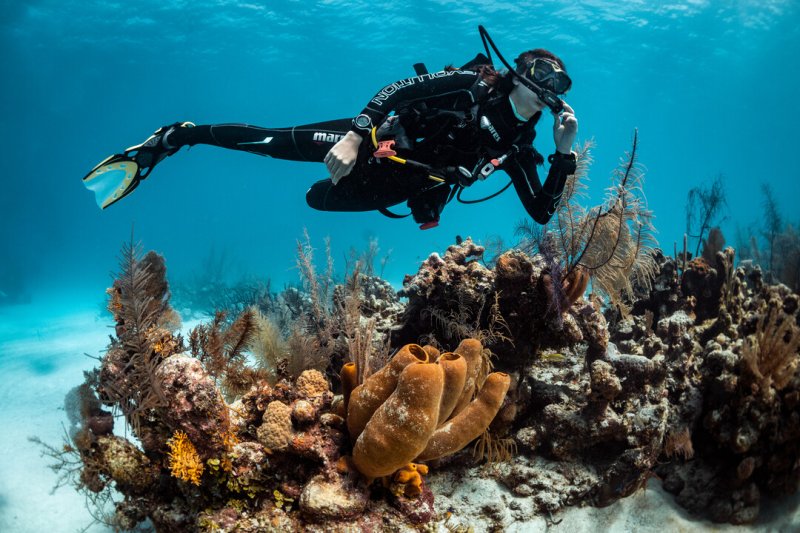
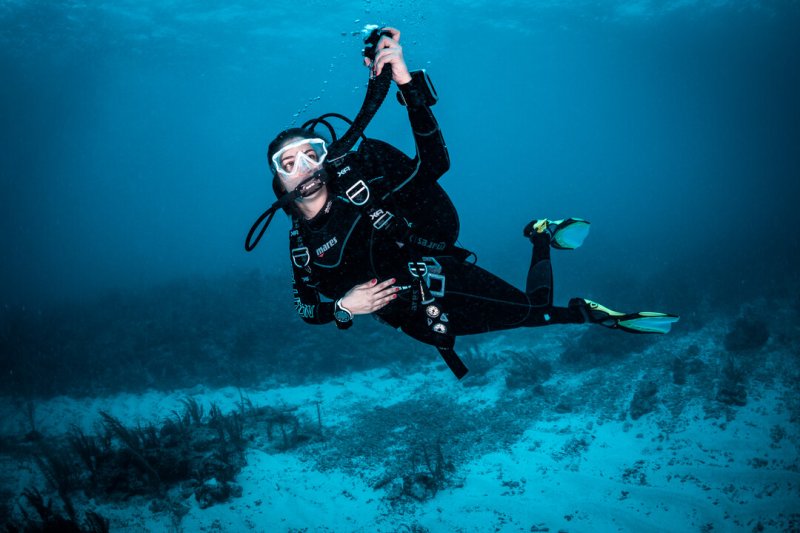
Streamlined scuba diver using slow fin kicks above the reef
Good posture underwater directly affects breathing comfort.
When buoyancy is unsettled, the whole dive becomes busy, with a kick to stop sinking, a deeper breath to slow a descent, and another fin movement to regain position. Each adjustment takes energy and disturbs your breathing rhythm.
Fine-tuning buoyancy lets you hover without those constant corrections. As your hands and fins grow still, your breathing often settles with them.
The SSI Perfect Buoyancy Specialty helps you refine weighting, body position, and buoyancy control, so you can move with less effort and keep a steadier breathing rhythm.
Use the SSI Center Locator to find an SSI Professional who can watch your trim and movement, then help you turn small adjustments into more comfortable dives.
SSI's Importance of Neutral Buoyancy explains why a stable hover supports safer, more controlled diving.
If you are still learning, remember that breathing efficiency usually improves with experience.
At first, your attention moves between your equipment, depth gauge, buddy, buoyancy, and pressure gauge. With so much happening at once, breathing can speed up without you realizing it.
Instead of chasing a lower air-consumption number, focus on staying relaxed and breathing comfortably. As the equipment becomes more familiar, air efficiency often follows.
Do not compare yourself with divers who have hundreds of dives. Their calm rhythm developed over many dives, and yours will too.
Keeping warm also helps. Cold can tighten your shoulders, shorten your fin kicks, and make your breathing faster, so choose thermal protection that suits the conditions.
If you have not dived for a while, the SSI Scuba Skills Update helps you refresh core skills and regain a calmer breathing rhythm before your next dive.
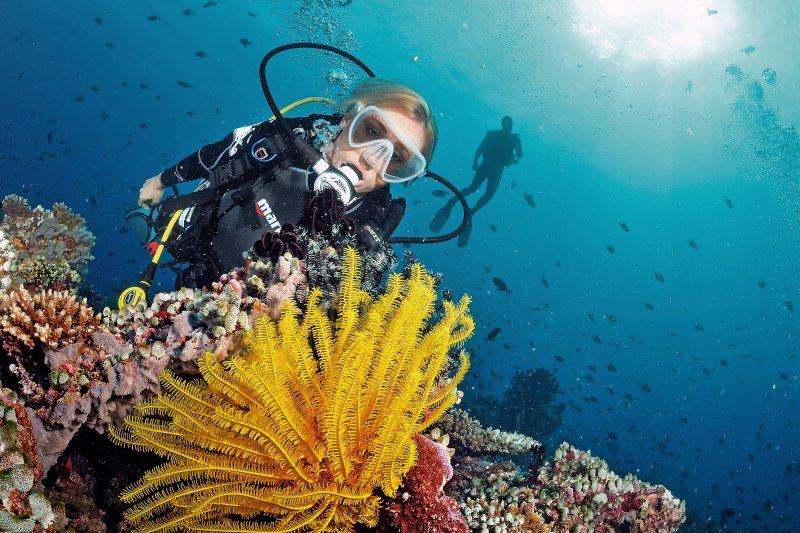
mares
Experienced divers can often improve scuba diving breathing further by noticing the small moments when their calm rhythm changes.
Does your breathing speed up when you swim into a current, raise your camera, or carry too much weight? These moments often reveal unnecessary effort.
Use a quick awareness check underwater. Notice your jaw, shoulders, trim, fin movement, and breathing rhythm before tension has time to build.
Underwater photographers often become efficient breathers because they stop chasing the scene. They settle into position, wait for the fish to turn, and allow the moment to come to them.
Tracking air consumption across similar dives can show how better buoyancy, trim, and movement affect your breathing.
A few small habits can make breathing feel harder than necessary.
Short exhalations, rushed breathing, overexertion, and tension in the body can all disturb a comfortable rhythm.
Skipping breaths is not a safe way to conserve gas. It can increase carbon dioxide buildup, causing the next breath to arrive with more urgency.
Effective scuba diving breathing should feel continuous, relaxed, and natural rather than forced or carefully rationed.
Better scuba diving breathing can change the feel of an entire dive. A steady rhythm supports buoyancy, lowers stress, sharpens awareness, and helps you use air more efficiently.
These skills grow one dive at a time as you slow down, release tension, and improve your body position.
On your next descent, listen to the first bubbles slide past your ears. Let your shoulders drop and notice how one calm exhale changes the rhythm of the dive. Small adjustments can make each dive calmer, safer, and much more enjoyable.
predrag-vuckovic
Ready to make calmer breathing part of every dive? Explore the SSI Perfect Buoyancy Specialty or use the SSI Center Locator to practice with an SSI Professional.