Plastic trash makes its way to the Arctic
environmentmarine lifeoceanplastic pollutionarctic
Researchers from the Alfred Wegener Institute, Helmholtz Centre for Polar and Marine Research (AWI) has shown that for the first time, plastic waste has now made its way to the oceans of the Arctic. The extent of this problem is still unknown. Nevertheless, for the animals living in the Arctic, this is a serious problem, as plastic residues are already found in the stomachs of seabirds and Greenland sharks.
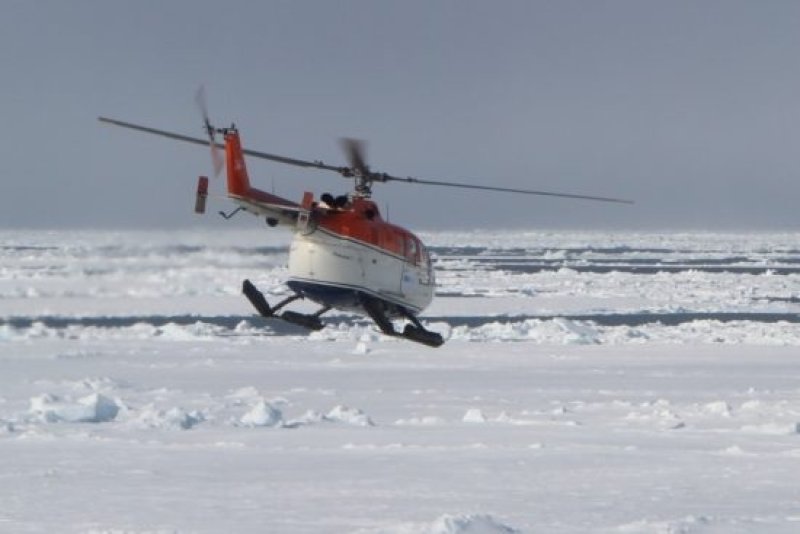
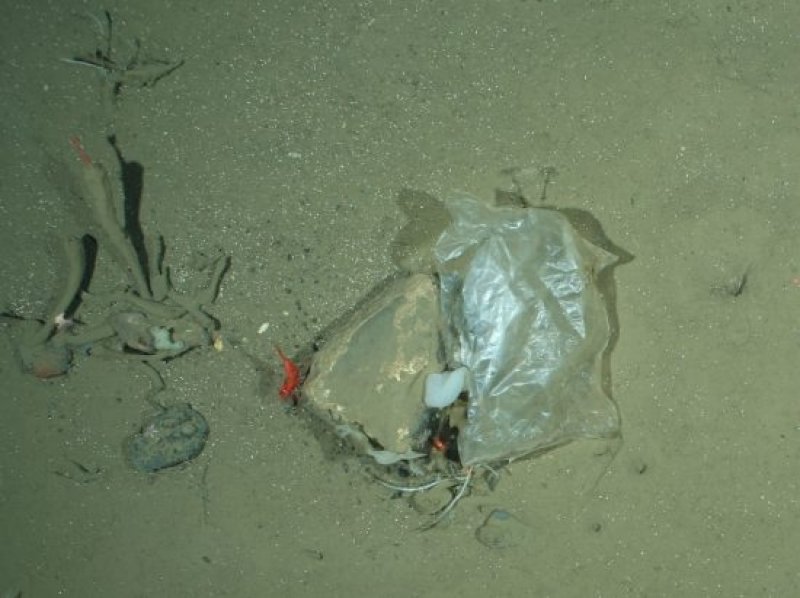
Indeed, the Arctic is no longer spared the scourge of plastic waste. This is evidenced in the first waste census at the Arctic Circle, carried out by a research team from the AWI and Belgium’s Laboratory for Polar Ecology. The results of the study was posted in the online portal of Polar Biology. To measure the extent of the pollution, in July 2012, the scientists surveyed the ocean between Greenland and Spitsbergen over a combined distance of 5,600km, both from aboard the icebreaker Polarstern, and from a helicopter. AWI biologist Dr Melanie Bergmann, who was part of the research team, said that a total of 31 pieces of litter had been spotted. Although this appears to be a small number, it provides confirmation that plastic trash has reached the Arctic Ocean. Taking into account the fact that the counts of trash had been made from the ship’s bridge (18 metres above the sea surface), and from a helicopter, this would mean that only large-size floating debris could be spotted. Hence, the count of 31 pieces is probably an underestimate. In any case, over time, plastic waste will disintegrate into smaller pieces as small as one or two centimetres. There is speculation that these debris may come from a new garbage patch that had been accumulating in the Barents Sea, north of Norway and Russia in recent years. Such garbage patches are formed when floating plastic debris are concentrated into a single massive pile due to the ocean currents. Currently, there are five known garbage patches worldwide, and the sixth patch in the Barents Sea is currently in its early stages of formation. Bergmann believes that this sixth patch is fed by the waste originating from the densely populated coastal regions of northern Europe. "It is conceivable that part of that litter then drifts even farther to the north and northwest, and reaches the Fram Strait. The AWI biologists added that another cause could be the retreat of the Arctic sea ice, which leads to more fishing trawlers operating further north, in pursuit of the cod. This subsequently leads to the trash from the ships, whether intentionally or accidentally, ending up in the sea. In a previous study, Bergmann had looked at photos of plastic, glass and other trash on the Arctic seabed. She and her team noted that even in the depths of the sea, the amount of waste has increased in recent years; now, the waste density at the seabed of the Fram Strait is 10 to 100 times more than at the surface. On the average, the researchers find 2.2 to 18.4 "pieces of garbage" for every 1km length along the route surveyed. She said that this indicated that the waste on the surface eventually sinks to the ocean floor, which acts as a repository for the deep sea. For seabirds that feed on prey that floats on the water surface, the problem of plastic waste is a particularly serious matter. This is especially true for fulmars, which spend their lives at sea. Recent studies from Isfjorden in Svalbard have shown that 88 percent of fulmars studied had ingested plastic waste. Even the Greenland sharks are not immune to this problem, as up to eight percent of those captured have plastic waste in their stomachs. Detailed information about plastic waste in the sea can be found in In Focus — Garbage in the Sea.
Овај чланак је аутоматски преведен и може садржати мање нетачности; уколико имате недоумица, погледајте оригиналну енглеску верзију.