From the surface to the seabed: Microplastics
environmentmarine lifeoceanpollutionmicroplastics
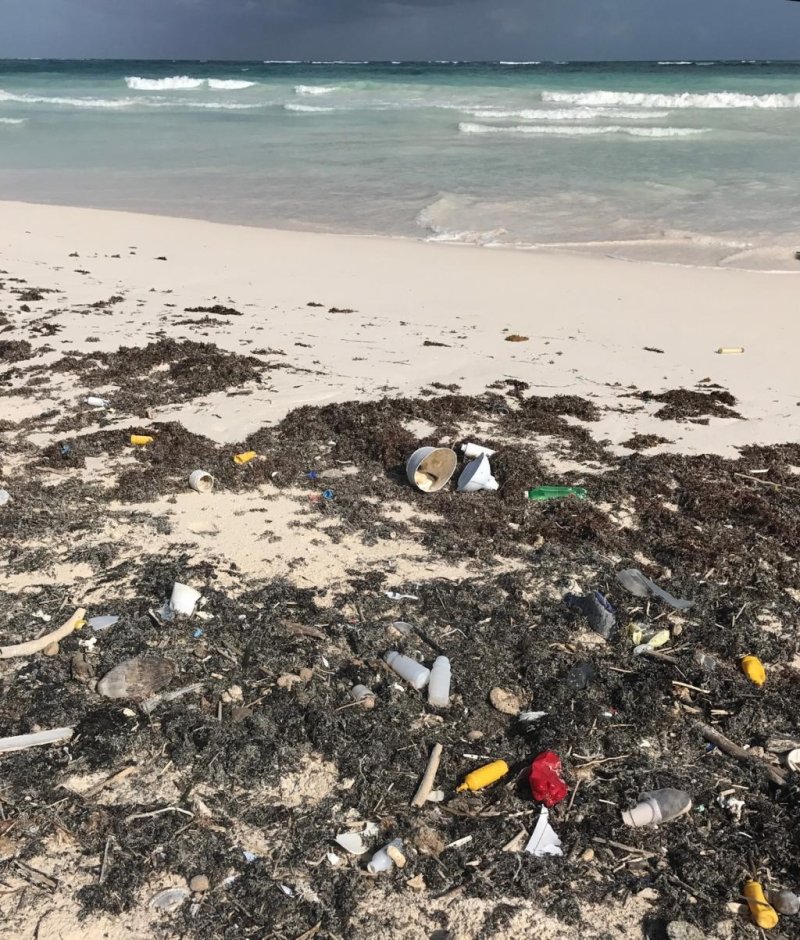
Trash on a beach (c) Hank Armstrong / Monterey Bay Aquarium
Highest concentration of plastic particles at depths of 200 to 600 meters A newly published study in the journal Scientific Reports shows that plastic particles of less than 5 millimetres in diameter, known as microplastic or microplastic, are spread from the surface to the seabed and penetrate into marine food webs - both on the surface and in the deep sea , Finally, the study indicates that most of this micro-plastic comes from consumer goods. For the study, the Monterey Bay Aquarium Research Institute (MBARI) and the Monterey Bay Aquarium performed repeat sampling for the first time at the same locations and depths, from just below the surface of the ocean to depths down to 1,000 meters. Research at California's Monterey Bay National Marine Sanctuary also revealed that small marine animals pick up micro-plastics that bring the particles into food webs - from shallow water to deep-sea. "Our findings support a growing body of scientific evidence that points to the waters and animals of the deep-sea, the largest habitat in the world, as the largest repository for small plastic waste," says lead author Anela Choy. "Our study shows a relationship between micro-plastics that are distributed across the water column and the entry of this foreign material into marine food webs by marine animals." Using MBARI underwater robots equipped with sampling equipment developed specifically for this project, researchers filtered plastic particles from seawater several times at two different locations and depths - from five to 1,000 meters below the surface of Monterey Bay, California. The results surprised the team. They found nearly identical concentrations of microplastic near the surface and in the deepest waters studied. Surprisingly for the researchers was that the microplastic concentration in the middle water range from 200 to 600 meters depth was four times higher than in near-surface waters. In addition to sampling the water, the researchers also studied the concentrations of microplastic particles in samples of two marine species that filter in the water column: pelagic red crabs and larvacea. The team found micro-plastics in all animal samples studied. Both sea creatures are critical components of food webs in the sea. The crabs are often found in large numbers close to the sea surface, where they are eaten by many species of fish, including tuna. Larvacea produce large slime filters that collect organic material and microplastics and then discard those filters that are consumed by other animals as they sink to the seabed. The most common plastics - polyethylene terephthalate (PET), polyamide and polycarbonate - are commonly used in consumer products, including food and beverage packaging such as disposable beverage bottles and to-go containers. Most of the microplastic particles discovered by the researchers were severely weathered, suggesting that they had been in the environment for months or years. Link to the study: https://doi.org/10.1038/s41598-019-44117-2.
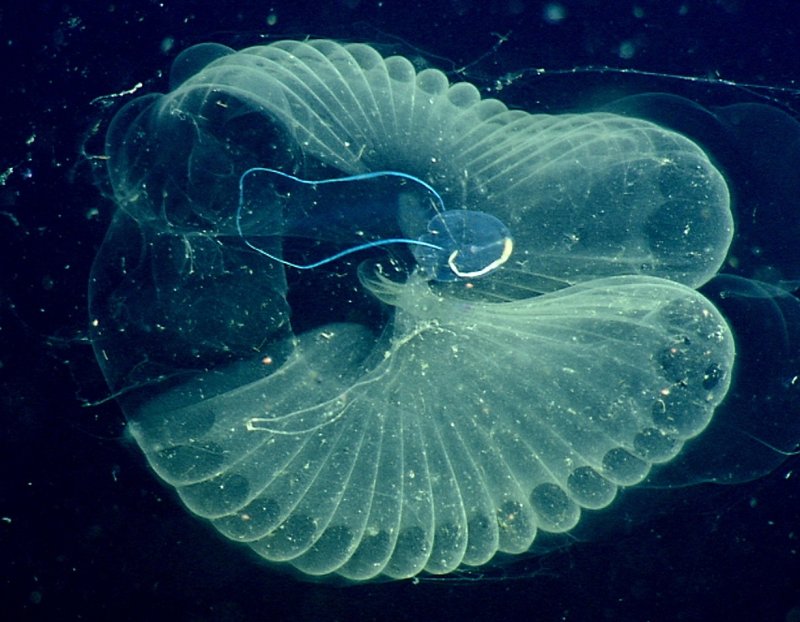
The researchers discovered microplastic particles inside the bodies of deep-sea larvaceans (c) MBARI
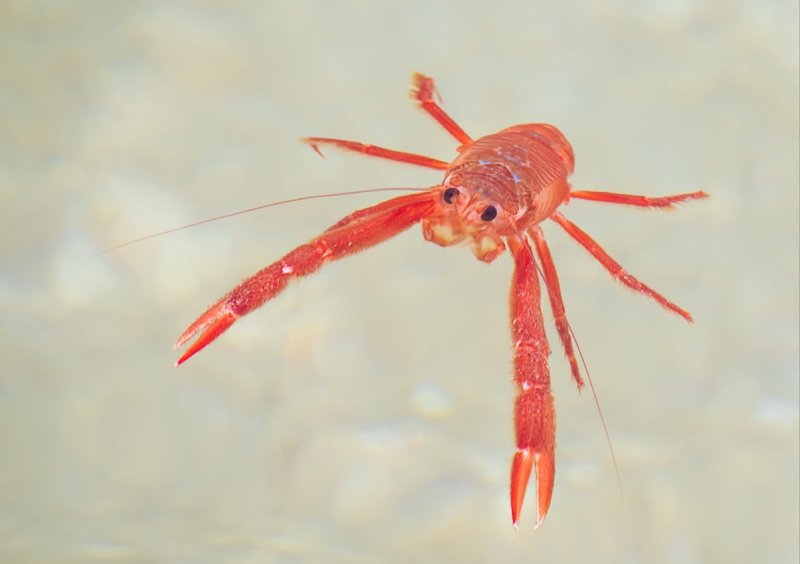
The researchers discovered microplastic particles inside the bodies of pelagic red crabs (c) Monterey Bay Aquarium
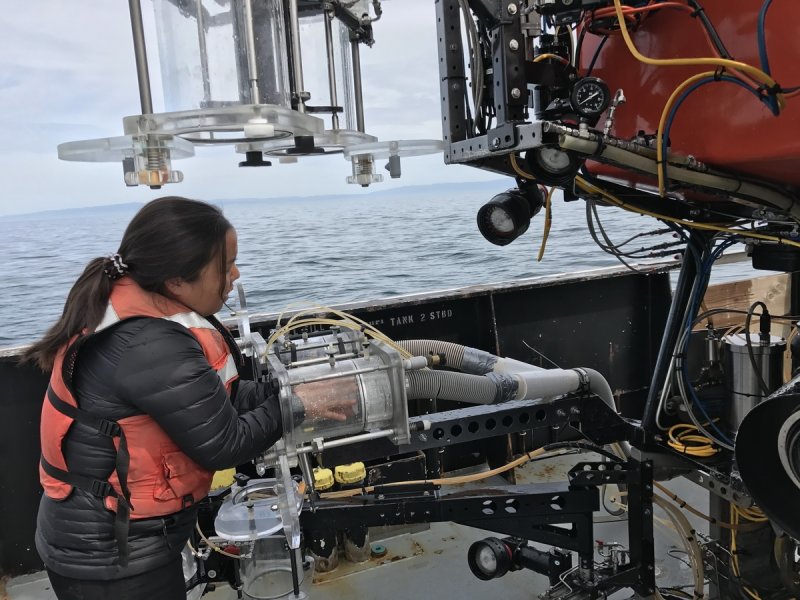
Former MBARI Postdoctoral Fellow Anela Choy led this study of microplastic. In this photo, she prepares a microplastic-sampling device mounted on MBARI’s remotely operated vehicle Ventana. (c) Susan von Thun, 2017 MBARI
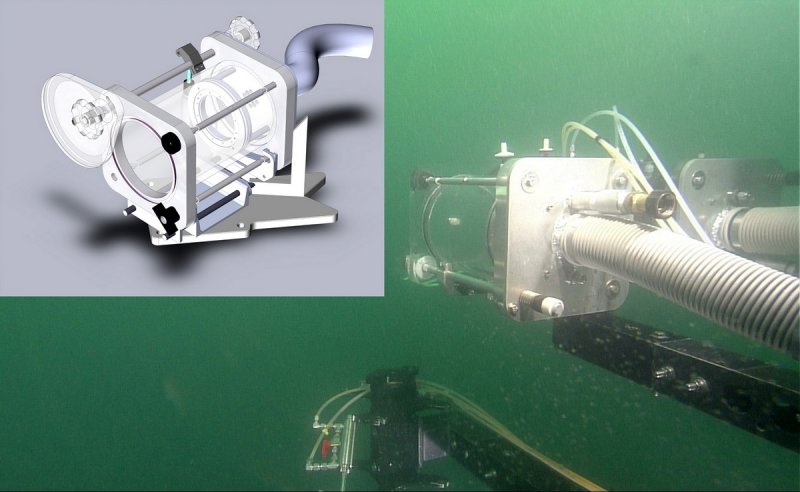
MBARI engineers spent considerable time and effort developing a device to collect an
Questo articolo è stato tradotto automaticamente e potrebbe contenere piccole imprecisioni; in caso di dubbi, consulta la versione originale in inglese.