Strange Sea Creatures: 10 Weird Animals Divers Can Spot
ecology
iStock-atese
The greatest joy of scuba diving is discovering that the ocean is full of surprises. Sharks, turtles, and manta rays steal the spotlight, yet many fascinating residents are smaller, stranger, and easy to overlook. Some disguise themselves as seaweed, others bury themselves beneath the sand, and a few hunt in ways that seem unbelievable. These strange sea creatures reward divers who slow down and notice the flicker, sway, or odd shape that does not match the reef. Here are ten weird sea creatures you might encounter.
Table of Contents:
-
1. Frogfish: A Living Fishing Lure
-
2. Leaf Scorpionfish: A Dead Leaf That Is Very Much Alive
-
3. Ribbon Eel: Electric Blue Above the Sand
-
4. Ornate Ghost Pipefish: Camouflage in Plain Sight
-
5. Longfin Batfish: From Floating Leaf to Silver Reef Fish
-
6. Stargazer: A Predator Beneath the Sand
-
7. Sea Moths: Tiny Fish That Walk the Seabed
-
8. Peacock Mantis Shrimp: Color and a Lightning-Fast Strike
-
9. Sea Spiders: Long-Legged Strangers Underwater
-
10. Nudibranchs: Small Sea Slugs in Wild Colors
-
Strange Sea Creatures: How to Get Better at Finding Them
-
Keep Looking Closer
-
Dive Deeper
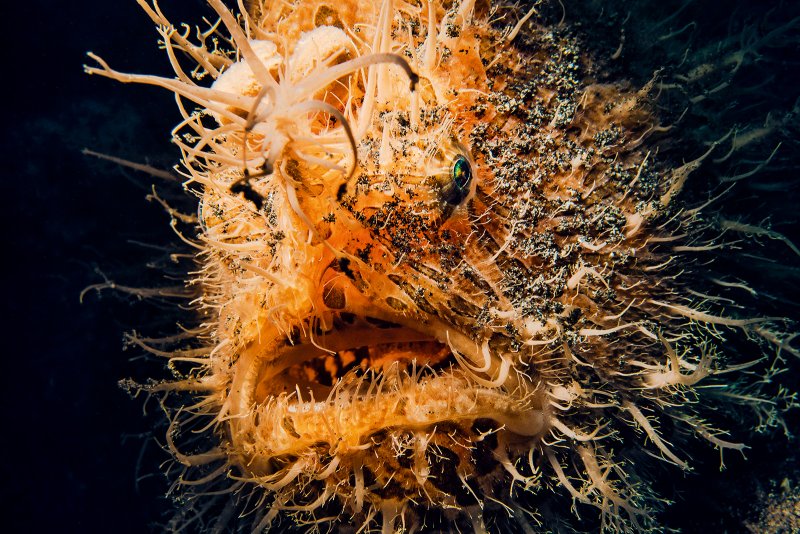
Few strange sea creatures are as bizarre as the frogfish. Rather than chasing prey, these masters of camouflage sit perfectly still and wait for an unsuspecting fish to swim close. Their secret weapon is a modified dorsal spine called an illicium, a tiny fishing rod with a lure that wiggles in front of the mouth.
Despite looking slow and clumsy, frogfish can open their mouths in just a few thousandths of a second, creating suction that pulls prey inside. They can also change color over time to blend into sponges or coral.
Frogfish turn up in Indonesia, the Philippines, Lembeh Strait, Ambon, Anilao, and other muck diving destinations. Move slowly and trust your guide's trained eye. Against a sponge or coral head, a frogfish can disappear so completely that your eyes may pass straight over it.
Planning a trip to spot more strange sea creatures? See Lembeh dive options on Scubago and review DiveAssure insurancebefore you travel.
At first glance, a leaf scorpionfish looks exactly like a dead leaf drifting with the current. Its flattened body, irregular fins, and gentle rocking motion complete the disguise, making it surprisingly easy for your eyes to pass straight over the fish.
This camouflage protects the fish from predators and lets it ambush prey that mistakes it for debris. It carries venomous dorsal spines but is not aggressive toward divers.
Leaf scorpionfish are common throughout the Indo-Pacific, particularly around Bali, the Philippines, Papua New Guinea, and Lembeh Strait. Careful buoyancy matters because these strange sea creatures often rest directly on the seabed.
Love tiny critters? SSI's Bali macro photography guide shows where a slow search can pay off.
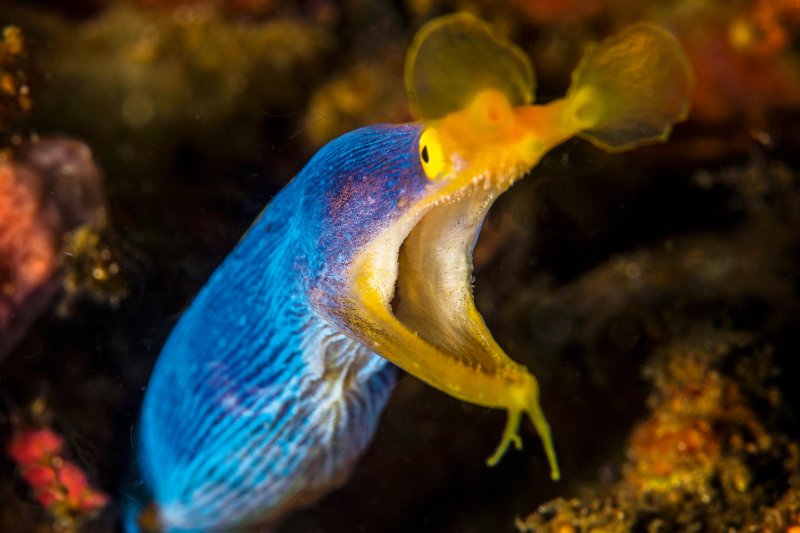
The ribbon eel looks more like a brightly colored ribbon dancing through the current than an eel. Juveniles are dark, adult males become electric blue with bright yellow jaws, and females are yellow later in life.
Most of the eel stays hidden inside its burrow, with only the upper body extending into the water. It opens and closes its mouth to move water across its gills, so the threatening-looking display is simply breathing.
These strange sea creatures are commonly encountered throughout Indonesia, Malaysia, Japan, the Philippines, and other tropical Indo-Pacific reefs where sandy bottoms meet coral formations.
iStock-atese
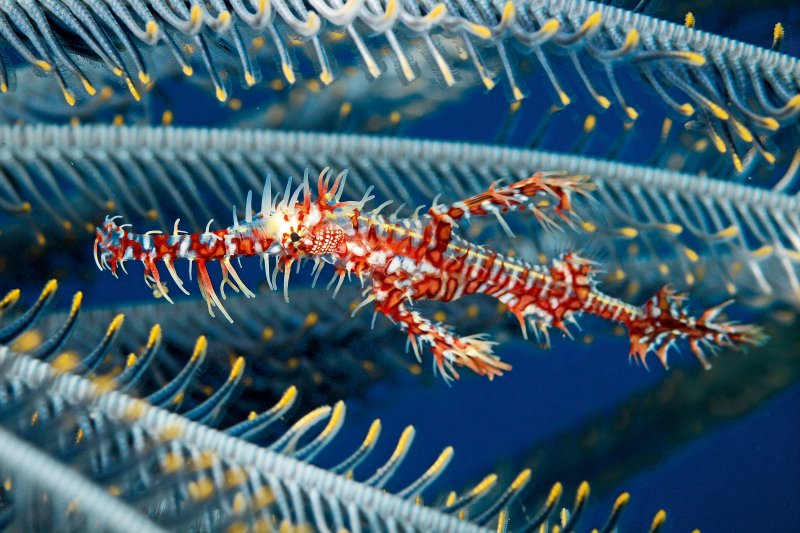
Ghost pipefish can almost vanish into their surroundings. Rather than swimming openly, they drift vertically between feather stars, soft corals, or seagrass, matching the shapes and colors around them.
Their elongated bodies and decorative fins make them favorites with underwater photographers. Females carry their eggs in a brood pouch formed by enlarged pelvic fins until they hatch.
Ornate ghost pipefish frequently appear around muck diving sites in Indonesia, the Philippines, Papua New Guinea, and parts of Australia, especially during seasonal breeding periods.
Alamy-Ross-Tom-Stack-Assoc
Juvenile longfin batfish look dramatically different from adults. Young fish resemble floating brown leaves, with exaggerated fins that strengthen the disguise. Adults become elegant silver fish marked with bold black bands.
A juvenile and an adult can look so different that you might never guess they are the same species. That change makes these weird sea animals especially fascinating to spot at different stages of life.
These strange sea creatures are often curious around divers and may investigate photographers near reefs or wrecks. Divers encounter them around Palau, Raja Ampat, Sipadan, the Maldives, and the Red Sea.
The stargazer earns its name because its eyes and mouth sit on top of its head, letting it bury itself beneath the sand and watch for prey. Sometimes, two eyes and the outline of a mouth are all you see.
When a fish swims overhead, the stargazer launches upward with incredible speed, swallows its meal, and disappears beneath the sand again. Stargazers can have venomous spines, and certain species also possess electric organs used for defense.
Divers may encounter these strange sea creatures on sandy bottoms throughout the Mediterranean, the Caribbean, Australia, South Africa, and parts of the Indo-Pacific. Scan the sand carefully so you do not swim straight over one of these hidden predators.
Sea moths are small bottom-dwelling fish that almost appear to walk rather than swim. Bony armor plates cover their bodies, and modified pelvic fins let them shuffle across the sand as they search for crustaceans and worms.
They can swim when necessary, but much of the time they shuffle slowly across the ocean floor, looking more like miniature armored walkers than typical reef fish.
Divers often spot these strange sea creatures on muck dives in Indonesia, Malaysia, Thailand, Japan, and the Philippines. Usually less than 15 centimeters (6 inches) long, they reward steady buoyancy and a careful eye.
SSI's 8 Best Spots for Muck Diving gives you more places to search on the seabed for strange sea creatures.
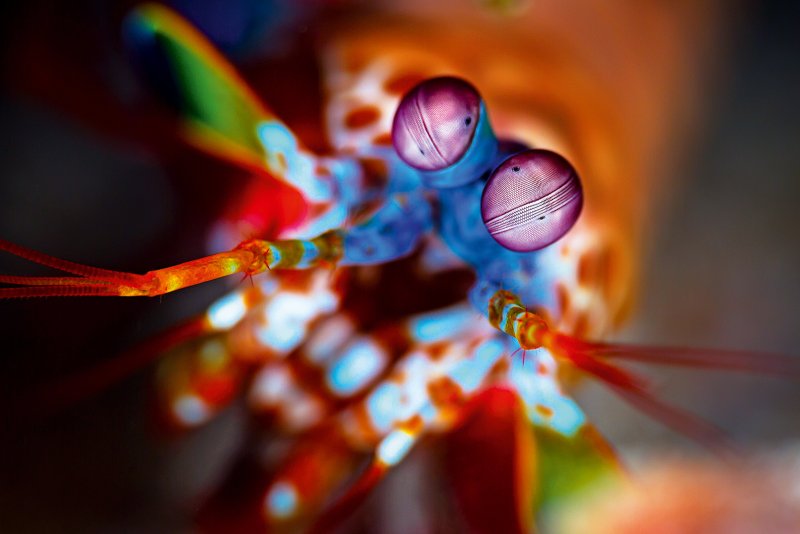
The peacock mantis shrimp combines brilliant colors with a lightning-fast strike. Club-like appendages accelerate so rapidly that they create cavitation bubbles, delivering enough force to break shells and stun prey.
Like two tiny periscopes sweeping in different directions, its independently moving eyes constantly scan the reef. Each eye can judge depth on its own, helping the mantis shrimp gauge distance with precision as it lines up its strike.
These weird sea creatures usually remain inside burrows unless they are searching for food. Divers encounter mantis shrimp throughout the Indo-Pacific, particularly in Indonesia, the Philippines, and Australia's Great Barrier Reef.
AdobeStock_Janelle
Sea spiders are not true spiders but belong to marine arthropods called pycnogonids. With extremely long legs and tiny bodies, these strange underwater animals can look almost alien.
Many species use a tube-like proboscis to feed on soft-bodied invertebrates such as hydroids, sea anemones, or bryozoans, drawing food through it as they crawl across the seabed.
Sea spiders occur worldwide, including in cold waters around Antarctica, Alaska, Norway, Scotland, and parts of British Columbia. Patient macro divers sometimes find these overlooked strange sea creatures crawling across reefs and kelp forests.
Prefer giants? SSI's biggest sea creatures guide covers ocean giants divers may encounter.
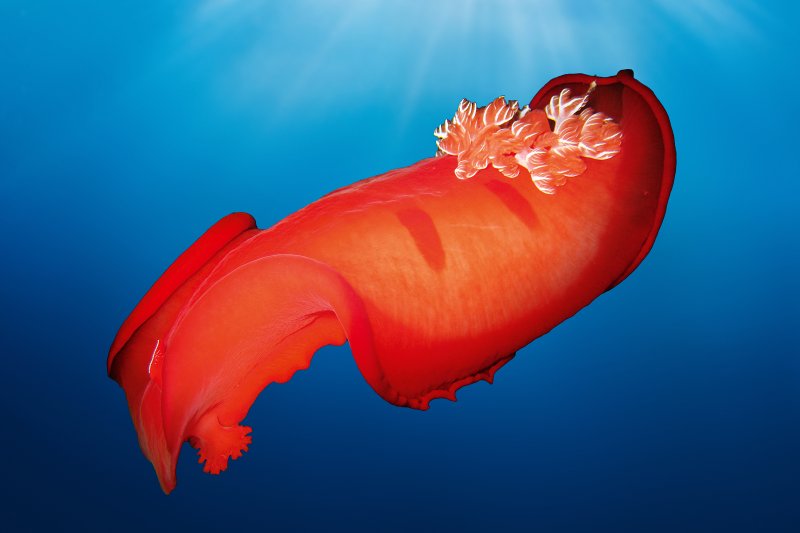
Nudibranchs belong on any list of strange sea creatures. These shell-less sea slugs display an astonishing variety of colors, shapes, and survival strategies, with more than 3,000 species described worldwide.
Some resemble flowers, others imitate toxic species, and many use chemical defenses. Some can even store the stinging cells of animals they consume and use them for their own protection. Their brilliant colors can warn predators to stay away.
Nudibranchs live almost everywhere, from tropical coral reefs to cold temperate waters. Divers searching for nudibranch variety often head to Anilao, Lembeh Strait, Bali, Norway, California, and the United Kingdom.
SSI's 14 Fun Facts About Nudibranchs offers more clues for your next reef dive.
AdobeStock-Christian
Spotting strange sea creatures is often less about luck and more about changing how you dive. Slow down, refine your buoyancy, and examine coral heads, sponges, seagrass, rubble, and sand. The SSI Perfect Buoyancy Specialty helps you hover carefully over a small subject without dropping onto the seabed.
Many unusual animals rely on camouflage rather than speed. Look for a flicking fin, a shape rocking with the current, or a patch of “sponge” with an eye. Those clues can reveal odd sea creatures hiding in plain sight.
SSI Ecology Specialty programs, including Marine Ecology, Marine Invertebrate Ecology, Fish Identification, and Nudibranch Ecology, help divers understand these animals and their habitats. As your knowledge grows, you start noticing marine life that other divers swim straight past. Use the SSI Center Locator to find a Training Center offering these specialties.
Large marine animals are unforgettable, but the ocean's smallest residents often leave the biggest impression. These strange sea creatures show extraordinary adaptations, from living fishing lures and walking fish to colorful sea slugs and lightning-fast shrimp.
The next time you descend, resist the urge to rush from one highlight to the next. Slow down, stay neutrally buoyant, and let curiosity guide you. The strangest creatures on the reef may become the encounters you remember most. Log your sightings after each dive and watch how your identification skills and appreciation for the ocean grow with every underwater adventure.