Sea Turtle Research: Three Days in the Gulf of Papagayo, Costa Rica
ecology
CREMA
When people picture sea turtle conservation in Costa Rica, the scene often begins on a beach after dark, with volunteers scanning the sand, protecting nests, or watching a female turtle return to the sea. That work is essential, but it is only part of the story.
Once hatchlings disappear into open water, an entirely different chapter begins. Where do they go? How do researchers learn about their movements, health, and survival? And what can divers do to help?
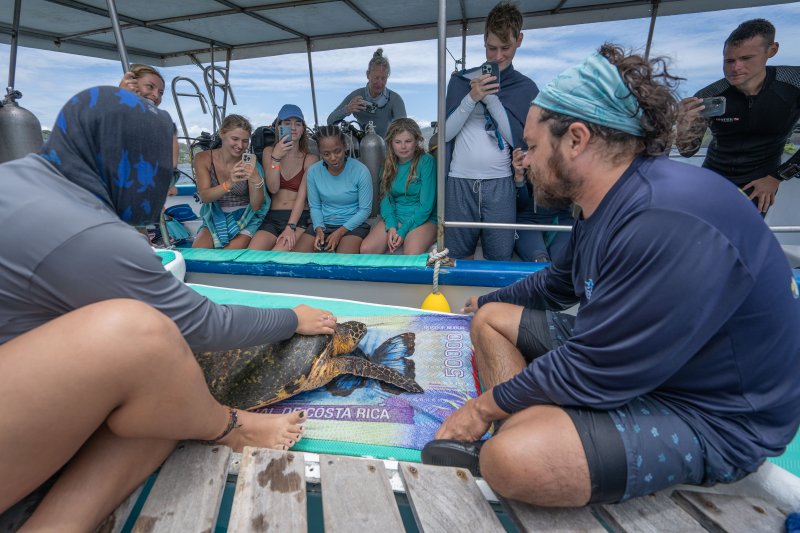
Students from Texas A&M University recently joined SSI Training Center Rich Coast Diving and conservation partners Turtle Trax and CREMA for three days of sea turtle research in the Gulf of Papagayo, Costa Rica. Across six dives, hours of snorkeling, and hands-on fieldwork, the students left the role of observers behind and took an active part in the research.
Table of Contents:
-
Beyond Recreational Diving: Sea Turtle Research in Action
-
From Fieldwork to Learning with SSI Blue Oceans and Sea Turtle Ecology
-
Sea Turtle Protection Does Not Stop at the Shore
-
Collaboration Turns Research Into Action
-
Conservation Is Something You Do
-
Dive Deeper
The students arrived with a strong academic background in marine science. Seeing the ocean from a classroom, however, is very different from slipping on a mask, entering the water, and waiting for a turtle to appear beneath you.
Working alongside experienced researchers and conservationists, the students became field assistants. Their work demanded patience and close teamwork. When a turtle was sighted, the team carefully coordinated to bring it to the surface, collect standardized biological data, and release it back into the ocean.
This was field science with salt water on the deck, fins underfoot, and everyone watching the same patch of blue. A turtle sighting turned patient observation into focused action.
CREMA
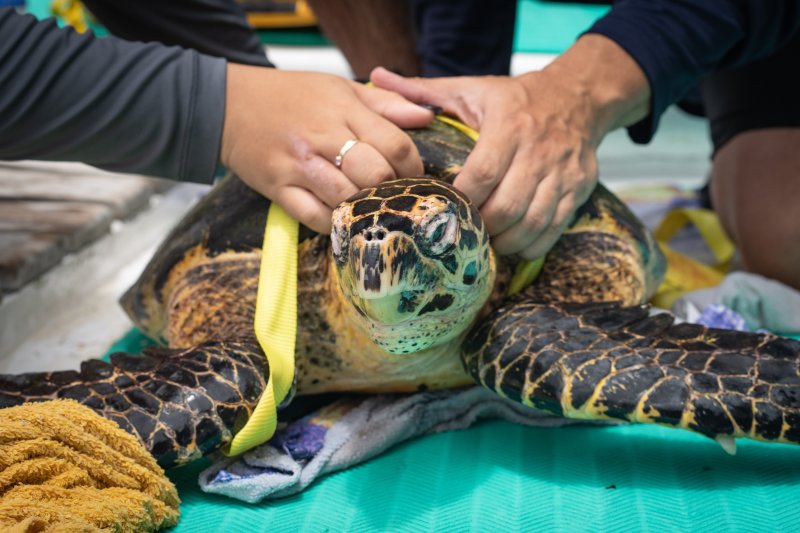
Each turtle went through the same research process before release:
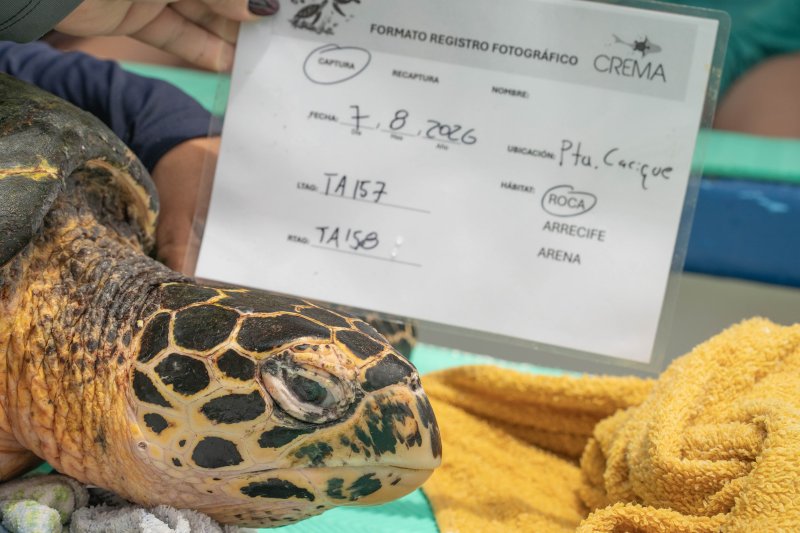
- Identification and tagging: Researchers recorded identifying features and applied official research tags.
- Biometrics: The team weighed the turtle and measured its shell and body.
- Sampling: Tissue samples were collected for genetic and health analysis.
- Documentation: Photographs and field notes were logged before the turtle returned to the ocean.
A measuring tape across the shell, numbers called out and recorded, photographs taken before release – every detail becomes part of the research record. Over time, sea turtle tagging and sea turtle monitoring help researchers recognize individuals, follow movement patterns, assess population health, and build a clearer picture of turtles in the Gulf of Papagayo.
CREMA
At Rich Coast Diving, education and conservation naturally meet in the water. The experience gave the Texas A&M students a chance to connect academic knowledge with the real conditions of sea turtle research. They worked from moving boats, adapted to changing conditions, had limited time with each animal, and relied on calm teamwork throughout the process.
SSI programs help divers build the knowledge behind experiences like these. The free SSI Blue Oceans program explores ocean conservation challenges and more sustainable choices in and around the water. The SSI Sea Turtle Ecology Specialty brings divers closer to sea turtle identification, biology, their role in marine ecosystems, and the threats they face.
Fieldwork adds another layer. Reading about a shell measurement is one thing. Watching a research team measure a living turtle and record the data, then seeing the animal swim back into the blue, makes the connection between science and sea turtle protection much harder to forget.
Turtle Trax and CREMA have supported community-based sea turtle conservation on nesting beaches in the southern Nicoya Peninsula, including San Miguel, Costa de Oro, Bejuco, and Corozalito. These projects protect nesting habitat and also connect conservation work with local communities.
Yet sea turtles spend most of their lives at sea. That is why monitoring turtles in their marine environment helps fill an important gap. Nesting beaches tell researchers what happens when turtles come ashore. Research in the water helps reveal more of what happens once they leave again.
For divers, that changes the way a turtle encounter feels. The animal passing over the reef is more than a beautiful sighting. It is part of a much larger life story stretching between feeding areas, migration routes, nesting beaches, and the open ocean.
What made these three days so inspiring was seeing different skills, experience, and local knowledge come together around the same goal.
Texas A&M University brought academic expertise and scientific methodology, strengthened by CREMA's long-standing sea turtle research and conservation experience. Turtle Trax connected the work with local communities and sustainable ecotourism. Rich Coast Diving made it possible to take that research into the water, providing boats, local knowledge, diving experience, and direct access to the turtles' marine environment.
In the field, scientific methods depend on the team being able to reach the turtles safely and collect the right information. Local dive knowledge makes that possible, and community-based conservation keeps the project connected to the people living along these coastlines.
For the Rich Coast Diving team, supporting researchers and students feels like a natural extension of everyday life on the water. They see the biodiversity of the Gulf of Papagayo up close, along with the pressures these marine ecosystems face.
Conservation can sound abstract until you are standing on a boat beside a living sea turtle, watching a research team record the final measurements before release.
It can mean collecting data, protecting nesting beaches, joining cleanups, reducing single-use plastics, supporting local communities, or helping new divers understand the animals they may meet underwater. For these students, it meant seeing sea turtle research in action, far beyond the classroom.
Then came the moment the whole team had been working toward – the release. Once the measurements, tags, samples, and notes were complete, each turtle was carefully released back into the Gulf of Papagayo.
The paperwork stayed on the boat. The turtle disappeared back into the blue.
For the students, researchers, and dive team, those three days became a powerful reminder that sea turtle protection is something you do, not just something you learn about. Every turtle monitored added valuable data, every student saw field research firsthand, and every release showed what conservation looks like when people get into the water and do the work.
Ready to learn more about the animals you meet underwater? Explore SSI Ecology programs and Blue Oceans, or connect with an SSI Professional near you to find training that brings marine life, science, and conservation closer together.