NOAA: Large dead zone predicted for the Gulf of Mexico
environmentmarine conservationoceanclimate changenoaa
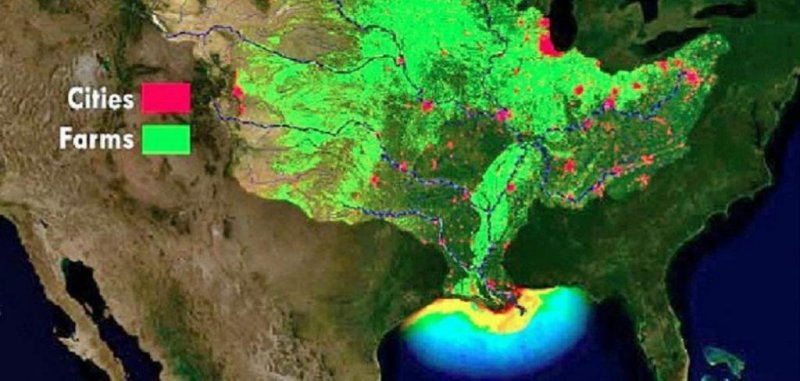
The Mississippi river system is used to introduce enormous amounts of nutrient into the Gulf of Mexico, where it causes algal blooms and, as a consequence, extensive dead zones. Graphics: (c) NOAA
The Gulf of Mexico "runs out of air" every summer
NOAA scientists forecast the hypoxic zone or dead zone in the Gulf of Mexico - an area of low to no oxygen content - in the summer of 2019 for about 7,829 square miles, which is roughly the size of the state of Massachusetts. The forecast for 2019 is close to the record size of 8,776 square miles in 2017 and above the 5-year average of 5,770 square miles.
The annual recurrent hypoxic zone in the Gulf of Mexico is mainly caused by excessive nutrient pollution from human activities such as urbanization and agriculture occurring throughout the Mississippi basin. Once the excess nutrients reach the Gulf, they stimulate enormous algae-blooms, which sink after they die and decompose in the water. The resulting low ground level oxygen levels are insufficient to support most marine life and have long-term effects on marine life that can not leave the area. The dead zone of the Gulf of Mexico is considered one of the largest in the world and occurs every summer.
A key factor in the large dead zone this year is the unusually high rainfall in many parts of the Mississippi River in the spring, which led to record floods and a much greater nutrient load in the Gulf of Mexico. Last May, outflows in the Mississippi and Atchafalaya Rivers were about 67% higher than the long-term average between 1980 and 2018. This above-average stream discharge flushed 156,000 tonnes of nitrate and 25,300 tonnes of phosphorus into the Gulf of Mexico alone in May. These nitrate levels were about 18% and the phosphorus loads about 49% higher than the long-term average.
The NOAA issues a dead zone forecast every year. The forecast is based on typical coastal weather conditions, but the measured size of the dead zone could be disturbed and its size could change as a result of larger wind events, hurricanes and tropical storms mingling with seawater, as was the case in 2018. A NOAA-supported surveillance investigation will confirm the size of the 2019 Deadband at the beginning of August, an important test for model accuracy.
"The models help predict how hypoxia in the Gulf of Mexico is associated with nutrient inputs from across the Mississippi River basin," says Dr. Steve Thur, Director of the NOAA National Centers for Coastal Ocean Science. "This year's historic and sustainable rainfall events will test the accuracy of these models under extreme conditions that are likely to increase in the future according to the latest national climate assessment, which forecasts an increase in the frequency of very heavy precipitation events in the Midwest, Great Plains and Southeastern, which would affect nutrient input into the northern Gulf of Mexico and size of the hypoxic zone."
Video: https://youtu.be/a8ae2vq45eA
Αυτό το άρθρο μεταφράστηκε αυτόματα και ενδέχεται να περιέχει μικρές ανακρίβειες. Σε περίπτωση αμφιβολίας, ανατρέξτε στην πρωτότυπη αγγλική έκδοση.