Live-Feed: Follow the autumn-migration of the humpback whales
environmentcaribbeanmarine researchwhale migrationbarents sea

Humpback Whales in singing position (c) NOAA
Whales from the Barents Sea are heading towards the Caribbean The humpback whales have started their autumn-migration, but where are they heading? Norwegian researchers have tagged some animals with transmitters / sensors in the Barents Sea and can follow their journey live. In September 2018, ten humpback whales were marked near Svenskeøya in the Barents Sea. Now the animals have started their autumn migration and everyone can follow their itineraries. The whales are being watched as part of the Whaletrack Project, a joint initiative of the Institute of Marine Research (IMR) and The Arctic University of Norway (UiT). A short trip to the Caribbean Researchers already know that these humpback whales migrate from the Barents Sea to the island of Hispaniola in the Caribbean in autumn. "These are a few thousand kilometres and the journey takes between two and three months each way - without any significant breaks," says Nils Øien, whale researcher at IMR. However, this does not mean that the whales stay in warmer climates for longer periods of time. "One of the whales we have been following for a long time set off for the Caribbean, turning the day he arrived and headed back to the Barents Sea immediately," said Øien. The researchers are interested in what that means. Why do the animals spend so much time and energy on a long hike just to turn back after a short while? "We do not really know the answer… These shores are a good place for feeding and breastfeeding, and we suspect that many of the whales are habitually dragging in. One might call it an evolutionary habit," Øien explains. Depth measurements can explain the dietary habits The researchers had two main objectives in tracking the whales. They've already figured out where the whales are going: to the Caribbean. The second goal is to find out how the humpback whales use the Barents Sea. How do they feed and from what? Also this question should be answered with the help of the sensors. "The transmitters can detect the depth of the whales, which in turn will help us to understand what they are eating," says Øien. Link to the humpback whale migration map: www.hi.no/en/.../whale-tracking
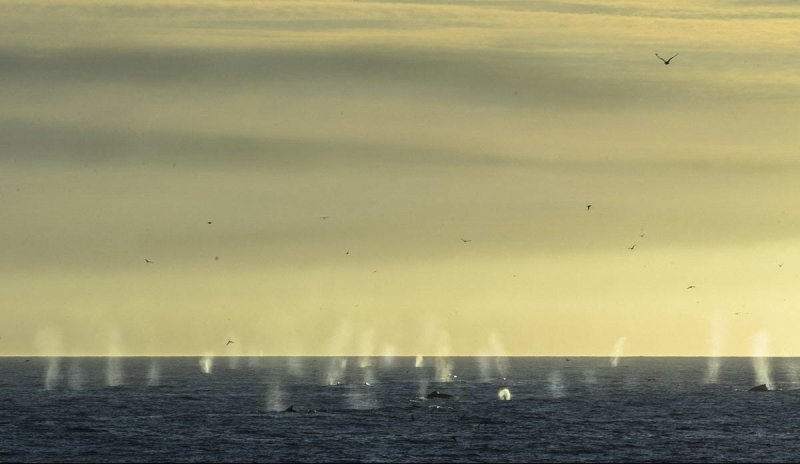
The humpback whales were marked at Svenskeøya in the Barents Sea in September, (c) Audun Rikardsen
Овај чланак је аутоматски преведен и може садржати мање нетачности; уколико имате недоумица, погледајте оригиналну енглеску верзију.