Futuristic diving helmet designed with augmented reality
scuba divingssifreedivingextended rangetechnologyaugmented realitydiving helmetus navy
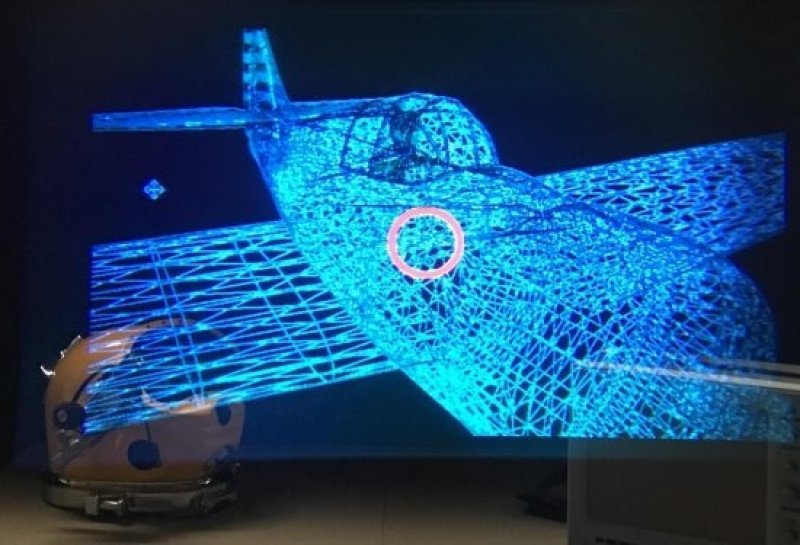
Laboratory simulation of the DAVD image of a plane on the seafloor. (c) Richard Manley/US Navy
Real-time data projected in diver's field of vision
US Navy divers may soon be wearing helmets equipped with a futuristic display showing them hi-resolution, real-time information to enable them to complete their missions more efficiently.
Called the Divers Augmented Vision Display (DAVD), it works by projecting images and information onto a display that is embedded inside a diving helmet, right in front of the diver's eyes. At the same time, the diver can see beyond the display (or even reposition it to another part of the screen or simply switch it off) to track his current surroundings.
Developed by the engineers from the Naval Surface Warfare Center Panama City Division in Florida, the diver can receive timely operational data like his or her position relative to the dive site or destination, text messages, diagrams, photographs and even augmented reality videos.
Such information enables divers to be more efficient and safer when on a mission, by raising their situational awareness and accuracy when making their way to a specific location. It can also be used during the routine repair or maintenance of ships, or during rescue operations. In time to come, the DAVD may become available to commercial divers.
Enhanced sensors such as miniaturised high-resolution sonar and optimised video system in the DAVD are being developed so divers can navigate within their surroundings even if water visibility is almost zero.
Currently, the development team is designing the components to complement both helmets and full-face masks. In-water testing of the DAVD is scheduled for October 2016.
Further information: http://www.navy.mil
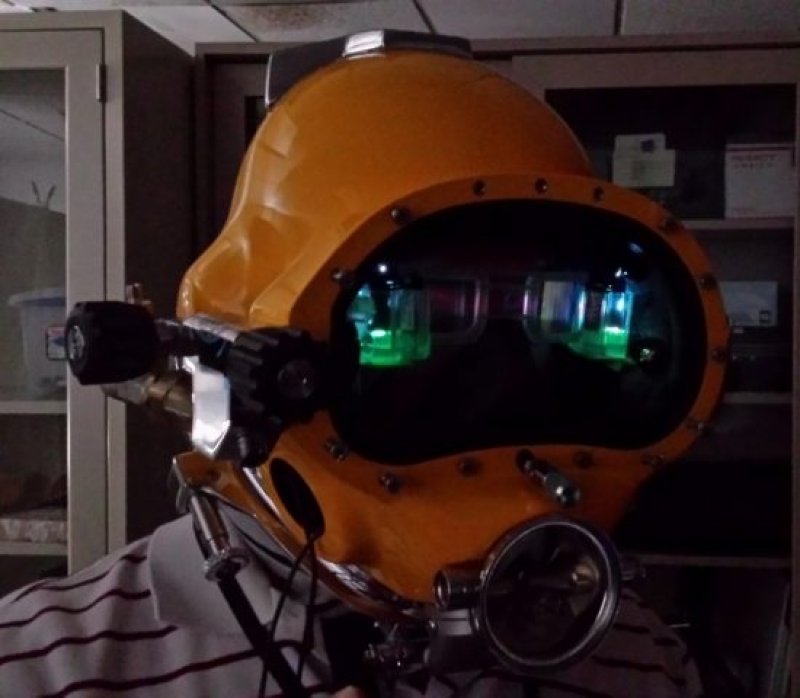
Senior engineer William Hughes III demonstrates the DAVD during a laboratory simulation. (c) Richard Manley/US Navy
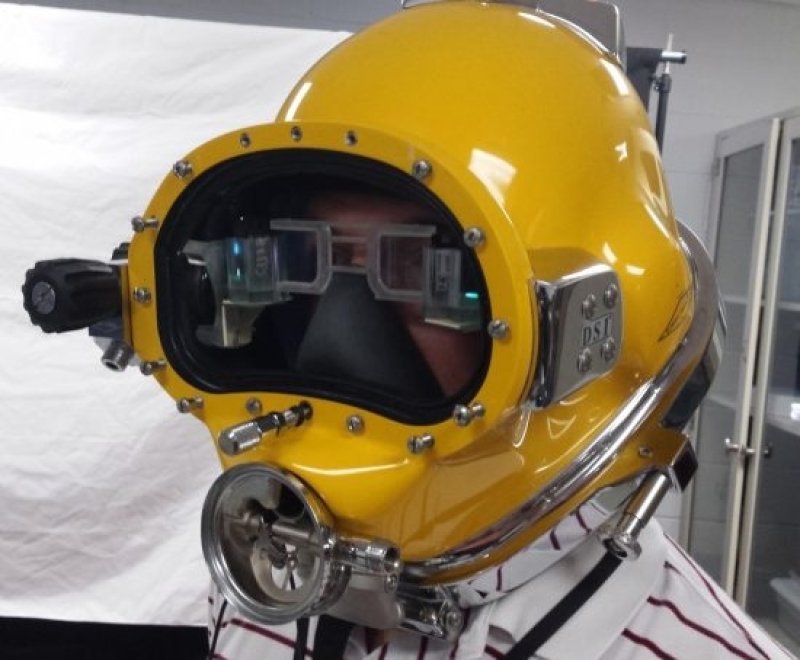
Prototype of DAVD positioned inside a dive helmet, to provide divers with real-time information to complete the mission. (c) Richard Manley/US Navy
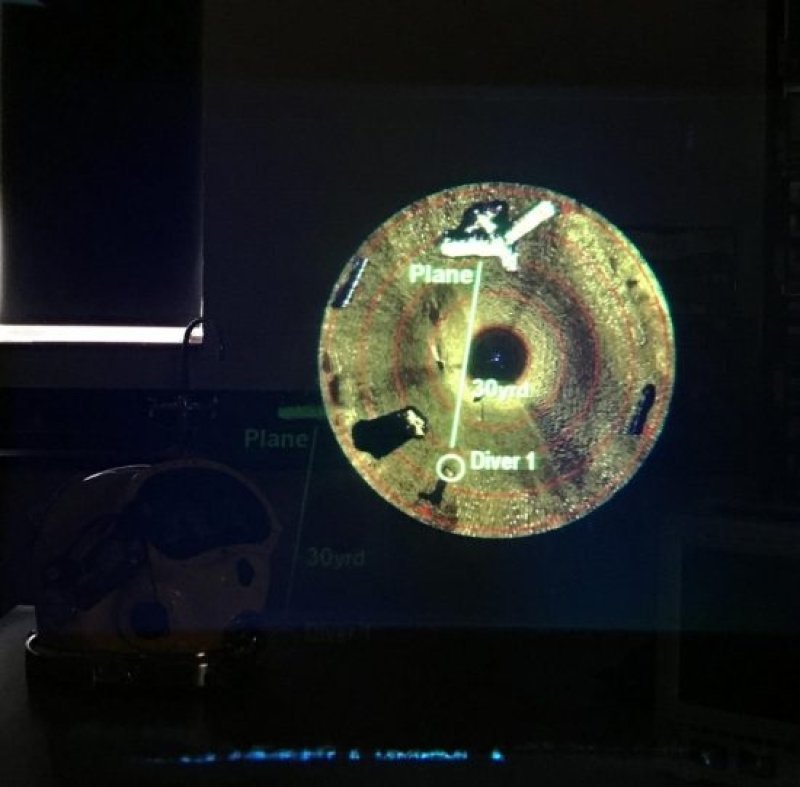
The DAVD in the diving helmet with information about sonar systems. (c) Richard Manley/US Navy
Овај чланак је аутоматски преведен и може садржати мање нетачности; уколико имате недоумица, погледајте оригиналну енглеску верзију.