Gulf Stream: Scientists calculate path of Greenland meltwater
environmentclimate changegreenlandocean currentsgulf stream
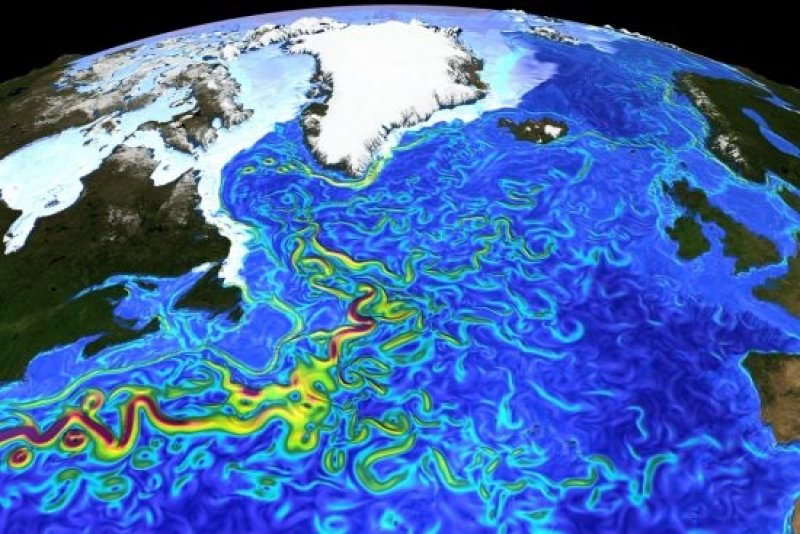
Increasing meltwater affects salinity of Gulf Stream
The salinity in the waters around Greenland plays an major role in driving the Gulf Stream in the North Atlantic. However, a progressive freshening (loss of salinity) caused by increasing amounts of melting ice from the Greenland ice sheet may affect and weaken the current system.
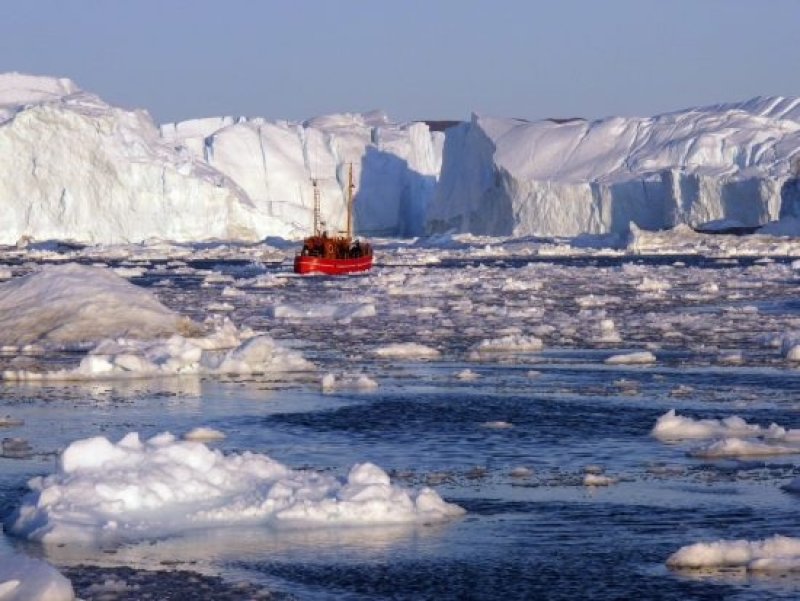
According to British researchers, the freshwater flowing into the North Atlantic from the melting of Greenland's glaciers has increased by 50 percent since 1990. As a result of the increased summer melt and the calving of outlet glaciers, more than 5,000 cubic kilometres of additional meltwater have been flowing into the sea. This is equivalent to a quarter of the volume of the Baltic Sea.
Where does all this freshwater end up? The answer to this question directly affects our understanding of the global system of ocean currents, of which the Gulf Stream is a part of. The density of the seawater in the North Atlantic has a large influence on ocean currents, with the salt content playing a decisive factor. For several years, scientists have wondered whether the influx of freshwater could reduce the water density in the North Atlantic and, at the very least, partially weaken the Gulf Stream.
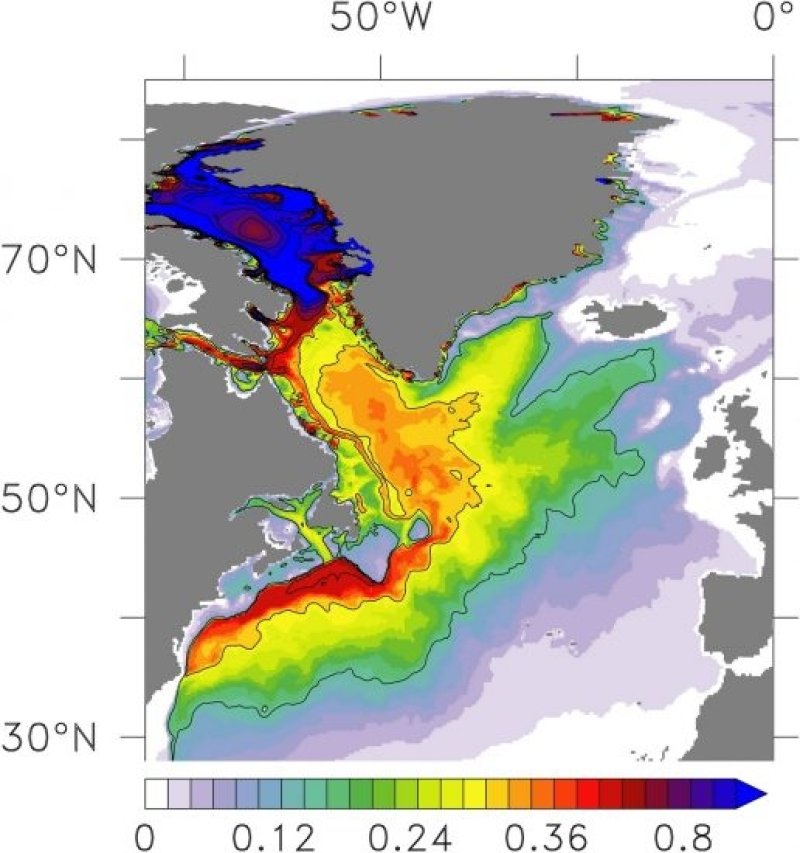
An international team of scientists, led by GEOMAR Helmholtz Centre for Ocean Research Kiel, has created a detailed computer model showing the pathways and effects of the additional meltwater. The results of their study were recently published in the Nature Geoscience journal. It suggests that much of the meltwater is effectively removed from the most sensitive areas by swift boundary currents.
"The effects of the melting Greenland glaciers initially remain smaller than expected, since a large part of the meltwater is effectively flushed out by fast, narrow currents along the coastline of North America. Thus changes in the critical, northern seas are delayed," said lead author Professor Dr Claus Böning, a GEOMAR researcher.
The computer model takes into account the regional differences in the Greenland meltwater trends and the very fine details of the ocean currents. This has allowed the researchers to more accurately assess the influences of the narrow boundary currents and the small-scale eddies in the water exchange between the flat Greenlandic coastal shelf and the deep ocean.
Based on the calculations, more than half of the meltwater makes its way southwards along the Canadian coast via the Labrador Current. Less than 20 percent remains in the area between Greenland and Labrador Sea. Hence, the model suggests that the amount of impact on ocean salinity caused by meltwater is just half as large as the natural fluctuations measured in the past decades.
The simulation also highlights a progressive trend in the freshening of the seawater."If we project the rise in Greenland melting rates into the future, we expect first noticeable changes in the Labrador Sea in two or three decades. In this sense, the Gulf Stream may just get some breathing space," said Professor Böning.
Further Information: www.geomar.de Link to study: dx.doi.org/10.1038/ngeo2740
Este artículo se ha traducido automáticamente y puede contener pequeñas inexactitudes; en caso de duda, consulta la versión original en inglés.