Scientists develop digital method of mapping coral reefs
scuba divingenvironmentmarine conservationcoral reefunderwater ecosystem
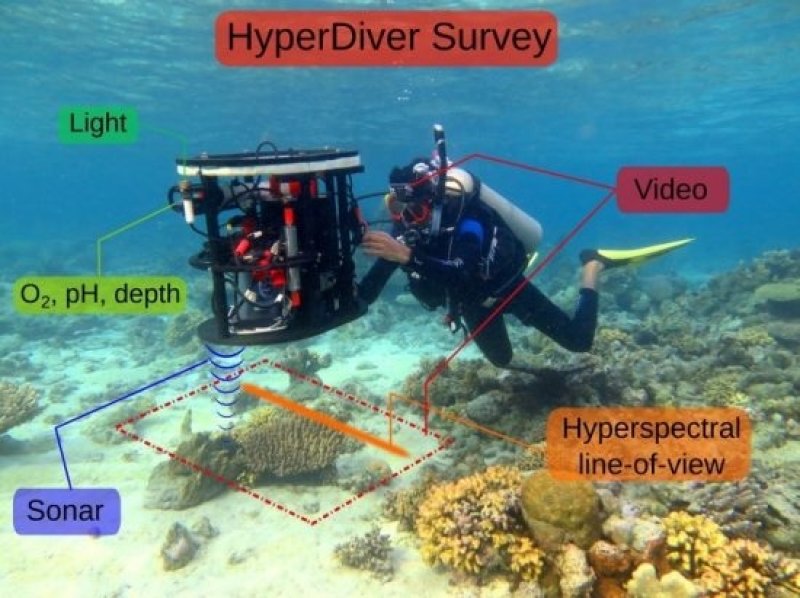
With the HyperDiver system, a diver can capture up to 40 square metres of reef every minute. (c) Max Planck Institute for Marine Microbiology
Climate change has affected many parts of the world, giving rise to ocean acidification in the oceans. Scientists have now developed a faster way of analysing the status of coral reefs. Coral reefs are complex ecosystems of high biodiversity. The usual method of surveying coral reefs is complicated, in which only a fraction of the reef can be covered. Now, physicist Dr Arjun Chennu and marine biologist Dr Joost den Haan from the Max
Planck Institute in Bremen, Germany have come up with a new way in which they can generate detailed maps of the underwater reef landscape. This is achieved using a special camera and an intelligent computer algorithm. Using this system, a diver can survey the reef, analyse the data and create a map of a large portion of the reef in a relatively short time. Fast and comprehensive mapping made possible Called the HyperDiver system (seen in action in the YouTube video below), this new system has been successfully tested in Papua New Guinea by the scientists. The test involved a coral reef located near natural sources of carbon dioxide. In such situations, the reef
exhibits signs of stress and damage – the perfect test site for the HyperDiver. The novel development is the collection of underwater spectral images and the analysis by a computer programme with a self-learning algorithm, said Dr Chennu. He added that they had programmed the system to identify reef organisms, similar to the way automated face recognition from video surveillance worked. This technique allows us to create a visual map of the biodiversity of coral reefs. The more coral reefs we map, the better the system
can distinguish the variety of coral species. Now it is possible to accurately detect the present condition of the reefs and to monitor any changes, said Dr den Hann.
The two researchers expressed satisfaction with the results of the initial testing. Although only a prototype exists at the moment, they hope that the HyperDiver would soon be utilised worldwide. Info: http://www.mpi-bremen.de Video: https://www.youtube.com/watch?v=v56hAf8SjYY
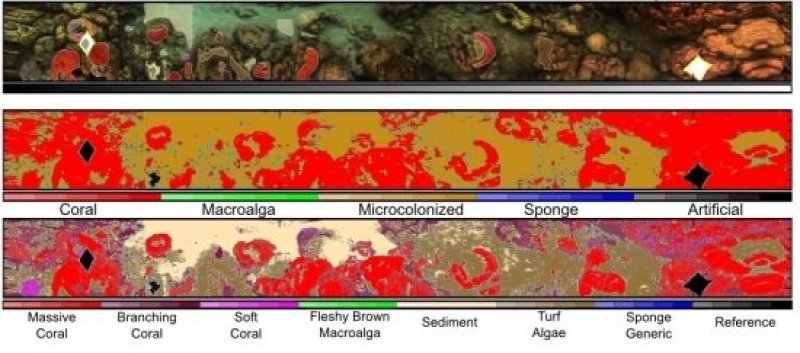
The result of the analysis is a map of the reef. (c) Dr Arjun Chennu, Max Planck Institute for Marine Microbiology