Making sense of the plankton puzzle
environmentmarine conservationcitizen sciencemarine biologyocean research
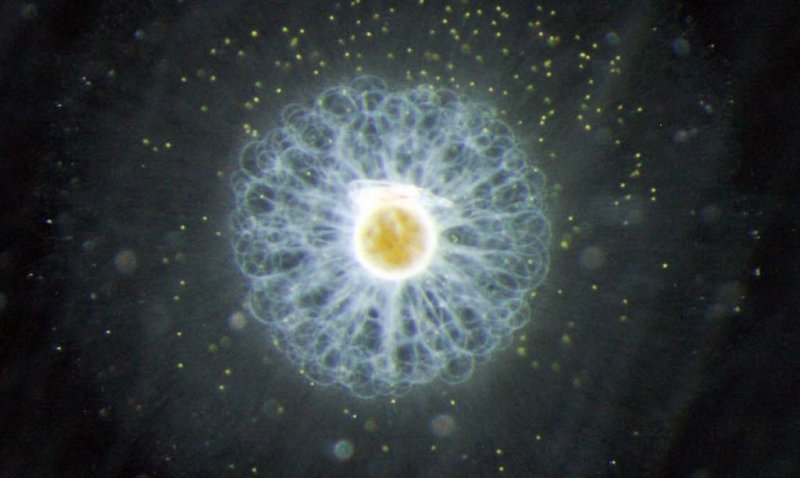
Thalassicolla caerulea, a unicellular planktonic organism.
(c) Tristan Biard, Scripps Institution of Oceanography, San Diego
Scientists call on public to help in compilation
In the course of their research work, marine biologists from GEOMAR Helmholtz Center for Ocean Research Kiel, Kiel University (CAU), and Observatoire Océanologique, Villefranche Sur Mer from France have accumulated images and information of more than 50,000 Rhizaria (unicellular planktonic organisms).
They are now calling for support from interested parties outside the scientific community – the public – to assist in the evaluation of the data derived from their research.
Interested parties can register online here to compare images, and allocate them to specific plankton groups, similar to a memory game. Information about their frequency and distribution are available as well. Computing processes in the background ensure that any error in provision would not affect the results.
An image must be selected at least ten times by different users before it is incorporated into the research. The website also contains background information and regular updates about the project.
"Prior knowledge is not necessary. Anyone with the interest can make a meaningful contribution to our research and become part of the discovery process," said Dr Rainer Kiko, marine biologist at GEOMAR and project coordinator of the new Citizen Science project, which is partly financed by the Cluster of Excellence " The Future Ocean ".
Rhizaria are unicellular zooplankton, and they are consumed by fish and other larger organisms. Like other plankton groups, they have other functions in the marine ecosystem. For instance, when they die and sink to the ocean depths, they transport carbon from the ocean surface to the deep sea, thus playing an important role in the earth's nutrient cycle. Their size varies from a few hundred micrometres and several centimetres.
Particularly distinctive are their small "feet" (pseudopodia), with which, according to the researchers, the Rhizaria use to move or ingest food.
However, many of their functions remain largely unknown, even though they comprise up to 81 percent of the zooplankton in some regions of the ocean.
"Research with new imaging techniques helps us to better understand ocean processes and identify changes. At present, there are more than 50,000 images of one Rhizaria group, which needs to be classified. Without the help of interested laypeople, it would take years to achieve this," said Dr Kiko.
Due to the fact that Rhizaria are highly sensitive and thus difficult to examine, the researchers are dependent on image material from the sea (particularly the deep sea).
The current database of around 9,000 images had been compiled as part of a citizen science project, which utilised a powerful underwater camera shooting between six and eleven images per second deployed in Angola and Namibia in November 2016.
More records were collected at Mauritania and Peru, and are being prepared for evaluation at planktonid.geomar.de

Project coordinators Dr Rainer Kiko and Svenja Christiansen from GEOMAR.
(c) Trystan Sanders, GEOMAR
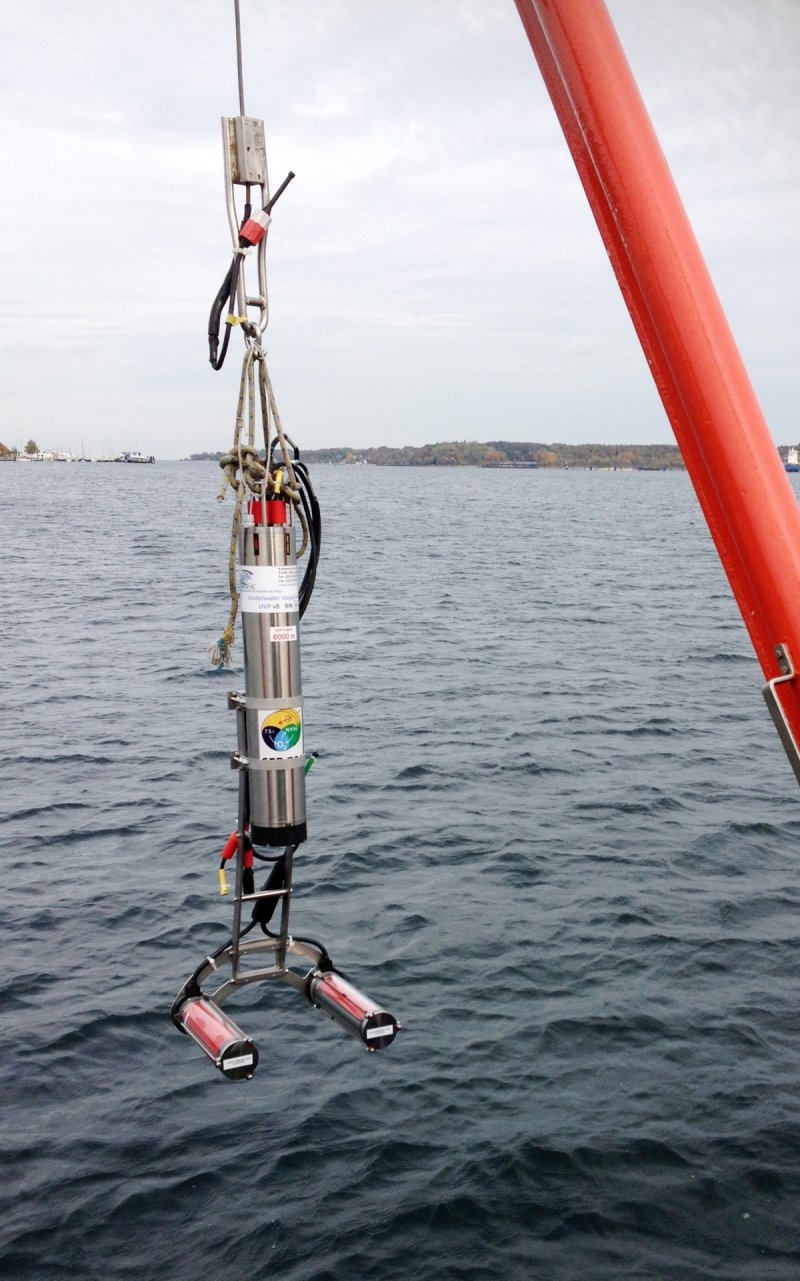
Using this Underwater Vision Profiler, numerous photos of Rhizaria were taken.
(c) Rainer Kiko, GEOMAR
Овај чланак је аутоматски преведен и може садржати мање нетачности; уколико имате недоумица, погледајте оригиналну енглеску верзију.