Researchers want to explore life under hundreds of feet of ice
environmentclimate changemarine ecosystemantarcticaresearch expedition

Aerial view of the A68 iceberg, which broke off in July 2017 from the Larsen C ice shelf in the Antarctic Weddell Sea. (c) Ali Rose, BAS
Antarctic expedition to the Larsen C ice shelf and iceberg A68 An international research team led by the Alfred Wegener Institute (AWI) will embark on a nine-week expedition to Antarctica on 9 February 2019 in Punta Arenas (Chile) with the research icebreaker Polarstern to explore a marine ecosystem hitherto hidden under ice shelves. The iceberg called A68, which has almost seven times the area of Berlin, calved in July 2017 from the Antarctic Larsen Ice Shelf. Now researchers are planning to travel to the region to take samples from the seabed. The demolition of the huge iceberg freed an area of about 5,800 square kilometres from the hundreds of meters thick ice layer. Two expeditions had tried in vain to reach the area. The mission is rushing: The ecosystem, probably covered by the ice for several thousand years, could change rapidly with the new light conditions. The AWI-led team will embark on a nine-week Antarctic expedition on 9 February 2019 in Punta Arenas, Chile, with the research icebreaker Polarstern. The use of satellite images supports sea-ice navigation to reach the remote region of the Larsen C ice shelf area east of the Antarctic Peninsula. "The expedition to the Larsen C Ice Shelf is a unique opportunity to conduct interdisciplinary research in this region affected by climate change," says the expedition's scientific director Boris Dorschel. "Larsen-C is really far to the south and even in times of minimal sea ice cover in the Antarctic there is a lot of ice. Getting there at the moment is very important because we hope to gain insight into the recently liberated world ". The scientists are supported by high-resolution satellite data and ice detection with the onboard helicopters of the Polarstern. "The calving of A68 is a unique opportunity to study marine life that is facing dramatic environmental change. A68 is one of the largest icebergs ever recorded and gives us an extraordinary chance to explore a world that we know virtually nothing about, which is normally hidden under hundreds of metres of ice," marine biologist Dr. Huw Griffiths of the British Antarctic Survey (BAS). He leads one of the research projects on biology at the seafloor. "This environment has been without sunlight for thousands of years and is likely to be home to a specially adapted community of animals that can cope with very little food. The break off of this enormous iceberg will have a similar effect to suddenly taking the roof off a cave. For the first time in thousands of years microscopic plants will be able to bloom at the surface, changing the food chain, and allowing different species to colonise and take over," explains Huw Griffiths. The expedition team will study animals, microorganisms, plankton, marine sediments and water samples. A variety of devices are used such as UW video cameras and a sled, which collects small animals on the seabed. The seabed is measured in detail using sonar systems.
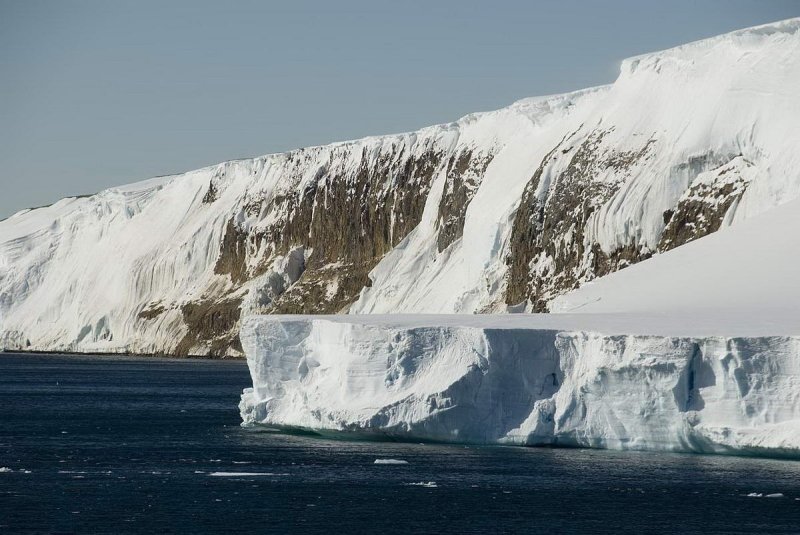
Part of the demolition edge of the Larsen-B ice shelf on the Antarctic Peninsula. Recorded on the Polarstern expedition ANTXXIII / 8 in the Weddell Sea 2006/07. (c) Gauthier Chapelle
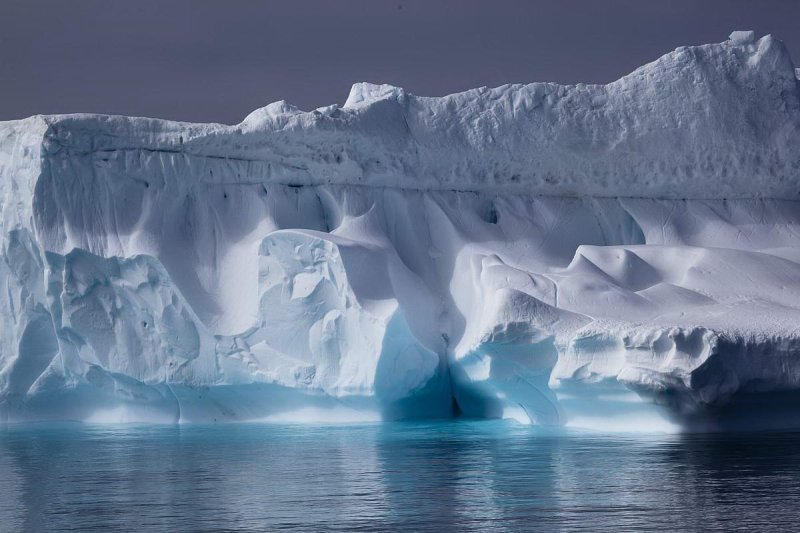
Antarctic ice landscape (c) Frank Rödel

Aerial view of the A68 iceberg that broke off in July 2017 from the Larsen C ice shelf in the Antarctic Weddell Sea. (c) Ali Rose, BAS
این مقاله به صورت خودکار ترجمه شده است و ممکن است حاوی اشتباهات جزئی باشد؛ در صورت هرگونه شک و تردید، لطفاً به نسخه اصلی انگلیسی مراجعه کنید.