Which Advanced Diver Course Should You Take First?
scuba divingtechnical divingtravel & tours
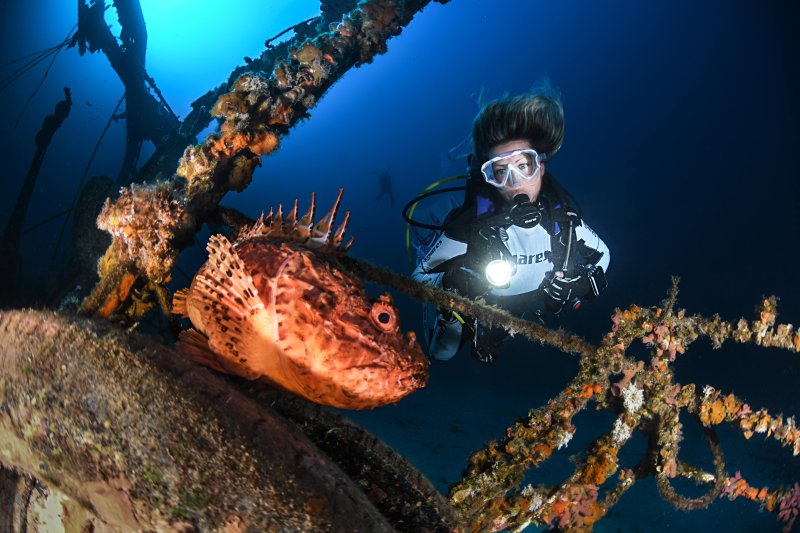
Janez-Kranjc
So, you have completed your SSI Open Water Diver course and fallen in love with the underwater world, but what comes next? Advanced diver courses are the perfect way to build on your foundation, gain confidence, and unlock new experiences beneath the surface. Whether you are dreaming of exploring deep wrecks, diving at night, or perfecting your buoyancy, there is a specialty course to help you get there. We are going to break down some of the most popular advanced diver courses, explain what they involve, and how they can take your diving to the next level, both in skill and in adventure.
Advanced diver training is about more than collecting certifications; it is about becoming a safer, more aware, and more versatile diver. With every specialty course, you refine techniques, gain experience in new environments, and grow more self-reliant.
You will learn to handle different conditions, manage stress underwater, and make informed decisions; all crucial for enjoying more challenging and rewarding dives. Most importantly, you will dive more often and with more purpose, which naturally improves your comfort and efficiency in the water.
Ever wanted to descend along a vertical wall, hover beside a giant manta ray, or explore the mysteries of deep wrecks? Deep diving unlocks some of the ocean's most awe-inspiring experiences.
The SSI Deep Diving specialty will teach you all you need to dive to depths between 18 and 40 meters, through a mixture of academic sessions and open water dives. You will learn to plan and safely complete your deep diving adventures and use computers and gas consumption calculations to get the most from your deep dives.
This essential advanced diver course gives you access to deeper dive sites, improved dive planning and air consumption strategies, and a better understanding of physiological effects at depth.
- Sipadan: Known for its deep walls and abundant marine life.
- Belize Blue Hole: A famous deep dive site with unique geological formations.
- Maldives: Offers deep channels and drop-offs teeming with pelagic species.
Have you got your diving license yet? Read this: Scuba Diving For Beginners: The Essential Guide
From drift dives to complex reef systems, knowing exactly where you are (and how to get back) transforms your confidence - and means no more frantic finning after a lost group.
In the Navigation advanced diver course, you will learn how to use a compass and natural navigation techniques, estimate distance, leave and return to a designated point, plus basic navigation patterns. You will also be taught how to combine navigation techniques to enhance your diving experience.
After this course, you will have stronger underwater orientation skills, reduced stress during dives, and better buddy/team communication.
- Bonaire: A shore diving paradise where navigation skills are essential.
- Diving in Egypt: Complex, vibrant reef systems require precise navigation.
- Local lakes and quarries: Often have limited visibility, making navigation crucial.
There is nothing like the thrill of bioluminescence lighting up your fins or seeing a shy octopus emerge from the shadows - night diving reveals a completely different underwater world.
In the SSI Night Diving program, you will be provided with all the knowledge and skills you need to safely and comfortably dive at night or in poor visibility conditions. With a combination of online learning and open water training dives, you will learn how to enter and exit the water, use specialized equipment, and how to communicate with your buddy easily at night or in limited visibility.
This fun advanced diver course expands your dive opportunities, enhances situational awareness, and opens up encounters with species only active at night.
LEARN MORE: See Why Tulamben Belongs On Your Dive List - glowing plankton, ghostly wrecks, reef life after dark.
Mastering buoyancy is the secret to diving like a pro - gliding effortlessly, conserving air, and protecting delicate coral with every kick.
The SSI Perfect Buoyancy specialty is the best way to improve your buoyancy and get the most from every dive. Buoyancy is an essential dive skill, but any diver will tell you it takes time to perfect. The Perfect Buoyancy specialty will teach you advanced buoyancy skills and techniques, so you can master your buoyancy more quickly and enjoy more relaxed dive adventures.
This essential advanced diver course extends bottom time, reduces air consumption, protects marine environments, and enhances underwater photography.
Whether you are exploring sunken warships, artificial reefs, or lost cargo vessels, wreck diving lets you step into history - and feel like an underwater explorer.
In the SSI Wreck Diving specialty, you will be taught how to safely conduct non-penetration dives around wrecks and artificial reefs, up to a depth of 30 meters. You will build awareness of entanglement risks, boost confidence in overhead environments, and open the door to exploring some of the world's most iconic wrecks.
- Truk Lagoon: This wreck diving mecca is home to numerous WWII wrecks in deep waters.
- Scapa Flow: This incredible dive spot is home to no less than 52 ships and submarines from World War I, right off the Orkney Islands.
- Florida Keys: Numerous accessible wrecks for training, warm waters, and year-round sunshine.
Get inspired with iconic shipwrecks - WWII giants to coral-covered legends. Check out: 4 Best Wreck Dives
If you are doing multiple dives a day - especially on liveaboards - Nitrox is a game-changer that helps you stay safer, recover faster, and spend more time underwater. In this Nitrox Diving program, you will learn new skills and increase your diving knowledge whilst learning how to safely plan and dive with enriched air mixtures of up to 40% oxygen.
This popular course gives you longer no-decompression limits, shorter surface intervals, and reduced nitrogen load, which is especially helpful for repetitive or deep dives.
- Liveaboards in Egypt: Multiple daily dives benefit from Nitrox.
- Maldives: Deep channels and frequent diving.
- Philippines: Rich dive sites with opportunities for extended bottom time.
Becoming the diver others can count on - calm, capable, and ready to respond – is not just empowering. It might one day make all the difference in an emergency. In this Rescue Diver course, you will learn how to identify stress, how to prevent accidents, and be taught practical techniques to conduct rescues and provide emergency care.
With a combination of pool and open water practice sessions, you will become well prepared and confident at handling emergency and rescue situations. Many divers say this is the best advanced diver course they have ever taken. It builds leadership skills, increases confidence, and prepares you for real-world dive incidents. A crucial step toward becoming a dive professional.
- Remote dive locations: Where immediate medical assistance is not available.
- Challenging dive sites: With strong currents or complex environments.
- Dive leadership roles: Essential for those pursuing Divemaster or Dive Instructor levels.
Log books are a key piece of dive gear. Here is why: Keeping Track: 8 Benefits of Maintaining a Dive Log Book
Understanding the reef means seeing more than just fish – it is about reading the rhythms of the ocean and becoming a more respectful, informed diver. In the SSI Marine Ecology specialty program, you will learn how ocean organisms interact with each other and their environments. You will be taught how energy flows through communities and the links between different ocean ecosystems.
This course really enhances your appreciation for the underwater world, supports ocean conservation, and encourages responsible diving.
From dropped GoPros to missing anchors, search and recovery dives are practical, fun, and build task-focused skills that challenge your coordination and problem-solving.
In this fascinating Search & Recovery program, you will learn all the skills you need to safely and confidently conduct search and recovery dives. You will be taught how to use search patterns, specialized dive plans, and equipment such as lift bags, lines, and reels.
You will also learn practical skills for dive teams, treasure hunting, and professional use. This course will also increase your comfort working in task-loaded situations.
- Lakes and rivers: Common sites for lost items.
- Training environments: Practice search patterns and recovery techniques.
- Areas with boat traffic: Recovering dropped equipment.
If you have ever wondered why you feel different at depth, or how your dive computer calculates deco time, this course deepens your understanding of the underwater world and your own physiology. Join the SSI Science of Diving specialty and you will develop a complete understanding of the underwater world and its effects on the human body.
You will build a strong theoretical foundation for safer diving, and this advanced diver course is required for professional pathways like Dive Guide or Instructor.
- Divers considering pro-level training: Essential knowledge base.
- Technical diving: Understanding decompression theory and gas management.
- Any diver seeking a deeper understanding: Enhances overall dive planning and safety
Choosing your next advanced diver course depends on your goals, interests, and comfort level. If you are drawn to deep wrecks, consider Deep Diving or Wreck Diving. Want to improve control underwater? Perfect Buoyancy is a great early step. Thinking about guiding or teaching? Diver Stress & Rescue and Science of Diving are key.
Talk to your local SSI dive center or instructor - they will help you choose based on your experience, future plans, and local conditions. Most specialties can be started right after your Open Water Diver certification and count towards your SSI Advanced Adventurer or Specialty Diver recognition.
Ready to take the next step? Use the SSI Center Locator to find your nearest dive center and chat with the team about your goals. Whether you want to dive with sharks, master buoyancy, or prepare to go pro, each specialty brings more confidence, more adventure, and more unforgettable dives.