Coral Reef Education: From Nurseries to Classrooms
ecology
The-Coral-Planters
How The Coral Planters, SSI, and Blue Oceans Are Inspiring the Next Generation of Reef Protectors
For divers, coral reefs are more than beautiful dive sites. They are living cities, shelter and nursery grounds for marine life, and some of the most complex ecosystems we can explore underwater. On every reef dive, the connections are everywhere: fish moving between coral heads, predators and prey holding a delicate balance, and tiny coral polyps building vast structures over generations. Countless species depend on healthy reefs for food, shelter, and survival.
But this underwater world is under pressure. Scientists warn that without significant action, up to 90% of coral reefs could disappear by 2050. Coral reefs support about 25% of marine species despite covering less than 1% of the ocean floor. For divers, these are not distant statistics. We see bleaching, pollution, anchor damage, sediment, and the effects of rising ocean temperatures and coastal development from one dive trip to the next.
Ocean protection cannot stop when a dive ends. It continues on the boat, in dive centers, across local communities, and increasingly in classrooms. Coral reef education helps turn what we witness underwater into knowledge and action on land.
The Coral Planters connects these worlds through restoration, science, and education.
Table of Contents:
-
Coral Nurseries: Restoring Reefs, One Coral at a Time
-
Introducing Edu'Coral: Bringing Coral Reef Education into the Classroom
-
Why Coral Reef Education Matters as Much as Restoration
-
How the Diving Community Can Support Coral Reef Protection
-
How You Can Support Edu'Coral
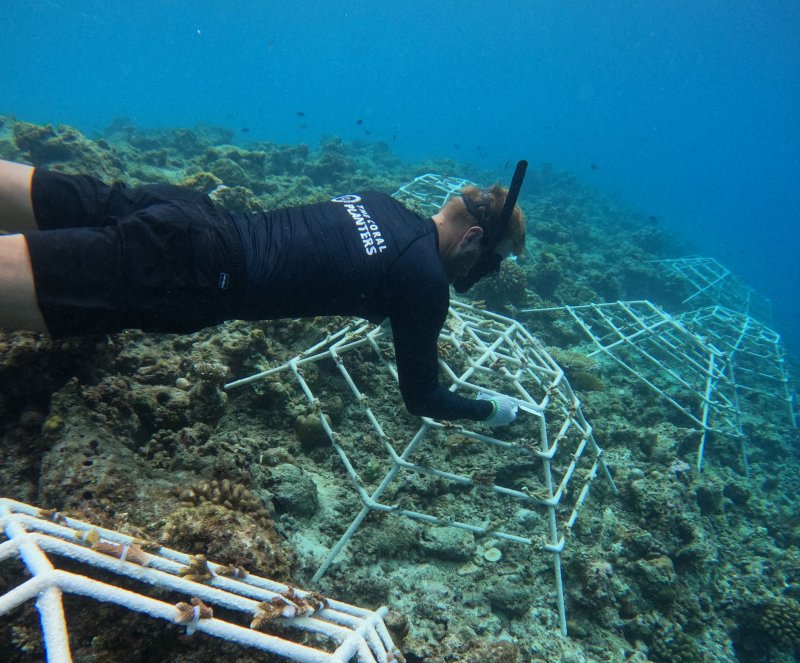
The Coral Planters is a French nonprofit organization dedicated to coral reef restoration and ocean awareness. Through coral nurseries, scientific monitoring, and restoration techniques, its teams rebuild damaged coral ecosystems. The mission combines science, field action, and education. Restoring a reef involves planting and monitoring corals, while helping people understand why these ecosystems matter and how all of us can protect them.
One of the organization's active restoration sites is located on Rodrigues Island, a remote and biodiverse part of the Indian Ocean where healthy reefs are closely tied to marine life, local communities, and the future of the surrounding waters.
In 2026, SSI and Blue Oceans began supporting The Coral Planters' work in Rodrigues. This collaboration reflects a shared belief: divers visit the underwater world, and they can also serve as ambassadors, role models, and active contributors to its protection.
Through Blue Oceans, SSI encourages divers, freedivers, snorkelers, dive professionals, and ocean lovers to understand the challenges facing aquatic environments and take responsible action. The free program gives anyone who cares about the water a practical place to begin learning about their impact and the choices that can help protect it.
The collaboration with The Coral Planters carries this commitment from reef restoration into long-term education.
Alongside its hands-on restoration work, The Coral Planters runs Edu'Coral, an educational program designed to raise children's awareness of marine biodiversity. Edu'Coral is built on a simple idea: we protect what we understand, and we care more deeply for what we learn to love.
Edu'Coral makes ocean conservation education practical for teachers and engaging for children. Its creative learning materials help young people discover coral reefs, understand marine ecosystems, and explore the part they can play in protecting the ocean. The program reaches beyond scientists, divers, and ocean professionals to young learners who may grow up to become ocean advocates, marine biologists, dive professionals, conservation leaders, or simply citizens who understand how their choices affect the sea.
A key part of the project's next phase is a free digital resource library for teachers. It will allow educators to introduce marine conservation education in their classrooms, wherever they are located. Ready-to-use materials can bring the ocean closer to children who may never have seen a coral reef for themselves.
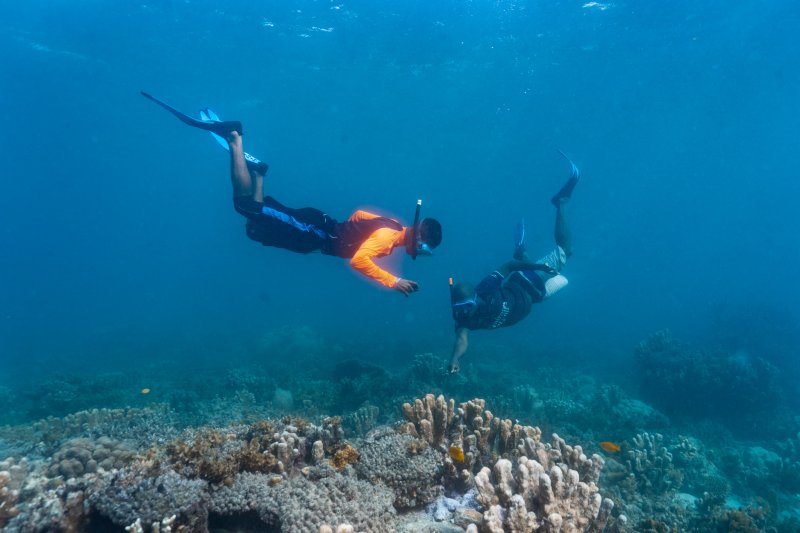
For divers, this is an exciting extension of what we experience underwater. Every dive shows us how a small lapse in buoyancy can damage coral, how stirred-up sediment can affect visibility and marine life, and how much more we notice when we slow down. Edu'Coral carries that same curiosity and spirit of discovery into the classroom.
Edges-of-Earth_Marla-Tomorug
Coral restoration is essential. Healthy reefs support biodiversity, protect coastlines, contribute to local livelihoods, and create some of the most memorable underwater experiences in the world. Yet restoration cannot succeed in the long term if the wider threats to reefs continue unchecked.
Coral reef education gives restoration a longer reach and is a powerful part of marine conservation. When children learn how reefs function, why corals are living animals, how fish and invertebrates depend on reef structures, and how human choices affect the ocean, they begin to see the sea differently. Awareness can grow into connection, care, and action.
This approach reflects SSI's own philosophy of education. Whether someone is learning to dive for the first time or expanding their knowledge through SSI Ecology Specialty programs, training builds confidence, awareness, and better decision-making in and around the water.
SSI offers Ecology Specialty programs including Marine Ecology, Coral Identification, Fish Identification, Sea Turtle Ecology, Shark Ecology, Manta & Ray Ecology, Marine Mammal Ecology, Marine Invertebrate Ecology, and Nudibranch Ecology. These programs help divers and ocean lovers understand the marine life they encounter and the role each species plays in its ecosystem.
For reef divers, Marine Ecology, Coral Identification, and Fish Identification can change the way a familiar dive site looks. The reef is no longer simply a colorful landscape; it becomes an interconnected system shaped by relationships, adaptations, and constant change. Recognizing those details makes each dive more meaningful.
Divers have a close relationship with the ocean because we see its beauty and its vulnerability firsthand. A healthy reef can pulse with color and movement, while a damaged site may show broken coral, plastic waste, anchor scars, or bleaching. That perspective gives the diving community an important voice.
By supporting initiatives such as Edu'Coral, divers can extend coral reef protection beyond their own dive logs. Responsible choices include avoiding contact with coral, improving buoyancy, collecting marine debris, choosing operators with credible environmental practices, and contributing to citizen science. That knowledge can also travel beyond the water when divers inspire friends, families, students, and local communities to care about the ocean.
The SSI Blue Oceans mindset is built on the belief that small actions gain strength when people share them. A more aware diver can influence buddies and family, while a dive center that promotes sustainable practices can reach hundreds or thousands of students. Educational programs that help children understand coral reefs can carry that impact far beyond a single restoration site.
The partnership between SSI, Blue Oceans, and The Coral Planters shows how coral reef education can connect restoration work in the field with education on land, ocean professionals with teachers, and immediate action with long-term awareness.
To further develop Edu'Coral and its educational resources, The Coral Planters is seeking additional support. The wider project aims to raise €15,000 to create new educational materials, including interactive tools for teachers to use in classrooms. These resources are designed to make marine biodiversity education more accessible, creative, and engaging for children.
Thanks to ENGIE's support, donations made during the matching period were doubled. That meant a €50 donation became €100 for children and ocean education.
You can learn more about the Edu'Coral campaign here: https://fr.ulule.com/campagne_educoral_2026/
Although the Ulule campaign has ended, you can still support The Coral Planters' educational work through its official donation page.
To begin your own Blue Oceans journey, explore SSI's free Blue Oceans program or continue learning through the SSI Ecology Specialty programs.
The future of coral reefs depends on more than restoration alone. It also depends on knowledge, connection, and action from divers, educators, children, and everyone who believes the ocean is worth protecting.
Reefs begin with tiny coral polyps, movements begin with people who care, and ocean protectors begin by learning why it matters.
Dive Deeper