Scientists study the ice algae-produced carbon in the Arctic
environmentarcticmarine researchice algaefood web
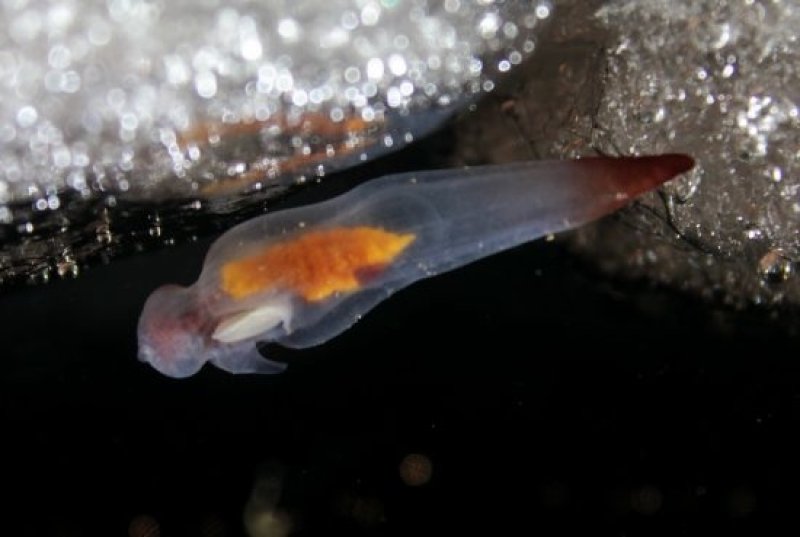
Arctic conch Clione limacina. (c) Hauke Flores
"Ice Algae" play a large role in the Arctic food cycle
Algae living in and under the sea ice play a much larger role in the Arctic food web than previously assumed. Biologists from the Alfred Wegener Institute, Helmholtz Centre for Polar and Marine Research have shown that organisms that live directly under the ice are not the only ones thriving on carbon produced by so-called ice algae. Their results have been published online in the Limnology & Oceanography journal.
Even species that mostly live at greater depths depend on the carbon from these algae. Considering this, the decline of the Arctic sea ice may have far-reaching consequences for the food web of the Arctic Ocean.
In their research, the research team examined copepods, amphipods, crustaceans and sea angels from the central Arctic Ocean and their dependence on ice algae. Many species of zooplankton are mobile and spend their lives underwater at depths of up to 1,000 metres and more. There are also other species live on the underside of the sea ice.
"We now know that ice algae play a much more important role for the pelagic food web than previously assumed. This finding also means that the decline of the ice could have a more profound impact on Arctic marine animals, including fish, seals and ultimately also polar bears, than hitherto suspected," said Doreen Kohlbach, lead author of the study.
Using fatty acids as biomarkers, she established the close relationship between zooplankton and ice algae. Because they are passed on unchanged in the food chain, the fatty acids in ice algae can determine whether an animal has ingested carbon from ice algae via food.
Kohlbach also conducted an isotope analysis of the biomarkers to measure the proportion of ice algae in the diet. She took advantage of the fact that ice algae inherently have a higher proportion of heavy carbon isotopes incorporated in their cells than the algae that float freely in the water. On the basis of the ratio of heavy to light carbon isotopes in the biomarkers, the exact proportion of carbon derived from ice algae in the organisms can be determined.
The findings of the research indicated that ice-associated animals obtained 60 to 90 percent of their carbon from the ice. For those animals living at greater depths, the percentages dropped to between 20 and 50, which was much higher than expected.
"Personally, I was most surprised by the percentage in the predatory amphipod Themisto libellula, which lives in the open waters and is not known to hunt under the surface of the ice. We now know that it obtains up to 45 percent of its carbon from ice algae, which had been eaten by its prey," said AWI sea ice ecologist and co-author Dr Hauke Flores.
According to her, they also discovered that pelagic copepods also obtained up to 50 percent from the algae, despite the previous assumption that they fed mainly on algae from the water column.
These figures showed that ice algae mainly grows in spring when little light penetrates the ice, which is still thick at that time of the year. The samples, however, were taken in the summer – at this time, the percentage of ice algae carbon in the food chain was still relatively high. The scientists now wonder how the figures would be like at other times of the year, as well as whether more distinction can be made between the various ice algae and whether perhaps there is a key alga.
This study is the first to quantify the flow of ice algae-produced carbon in the food web in the central Arctic during summer. Such values can be used by AWI biologists to predict the sea ice decline for the Arctic ecosystem in their model calculations.
Link to study: http://onlinelibrary.wiley.com/doi/10.1002/lno.10351/full
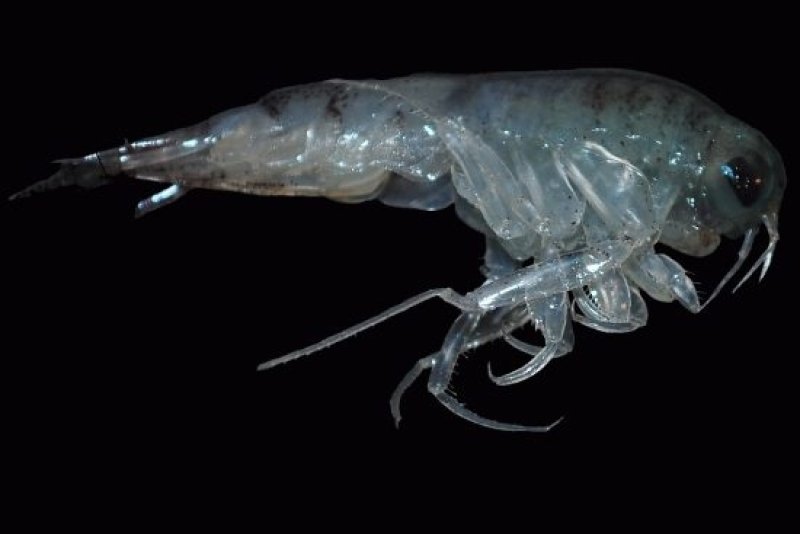
Arctic amphipod Themisto libellula (c) Angelina Kraft
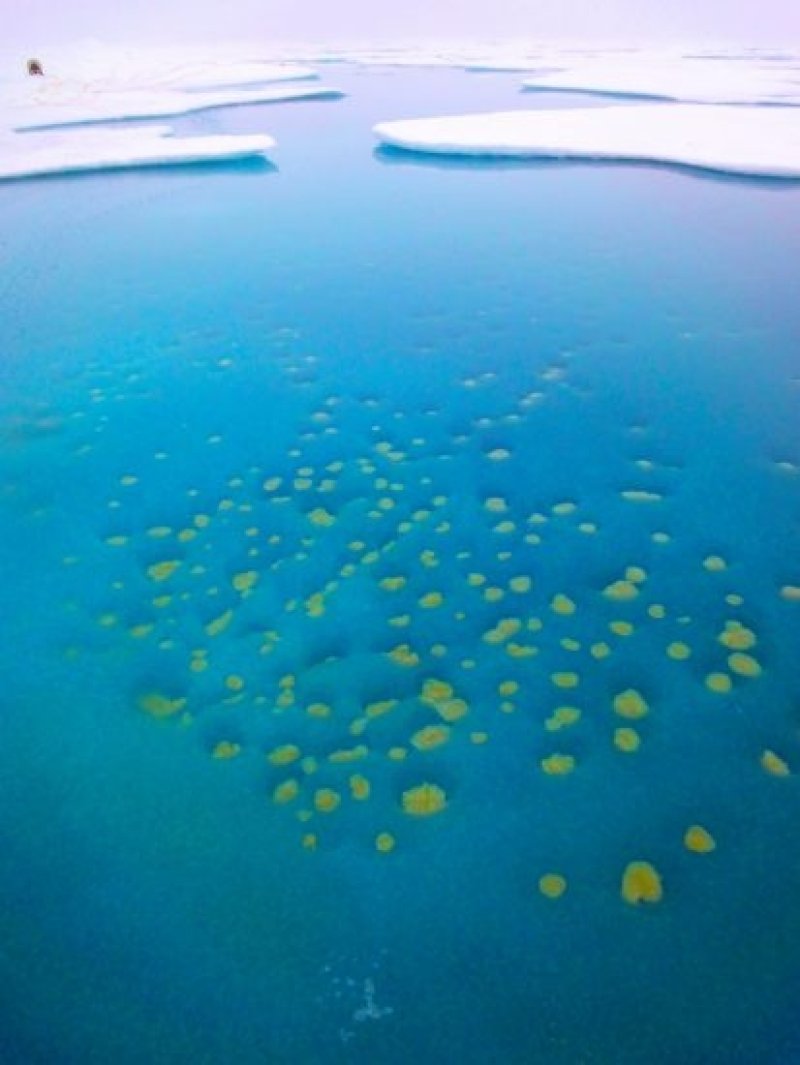
Ice algae growing in a meltwater pond on Arctic sea ice. (c) Mar Fernandez
Αυτό το άρθρο μεταφράστηκε αυτόματα και ενδέχεται να περιέχει μικρές ανακρίβειες. Σε περίπτωση αμφιβολίας, ανατρέξτε στην πρωτότυπη αγγλική έκδοση.