Diving the underwater geyser
scuba divingenvironmentmarine lifessifreedivingextended rangeicelandgeothermal vents
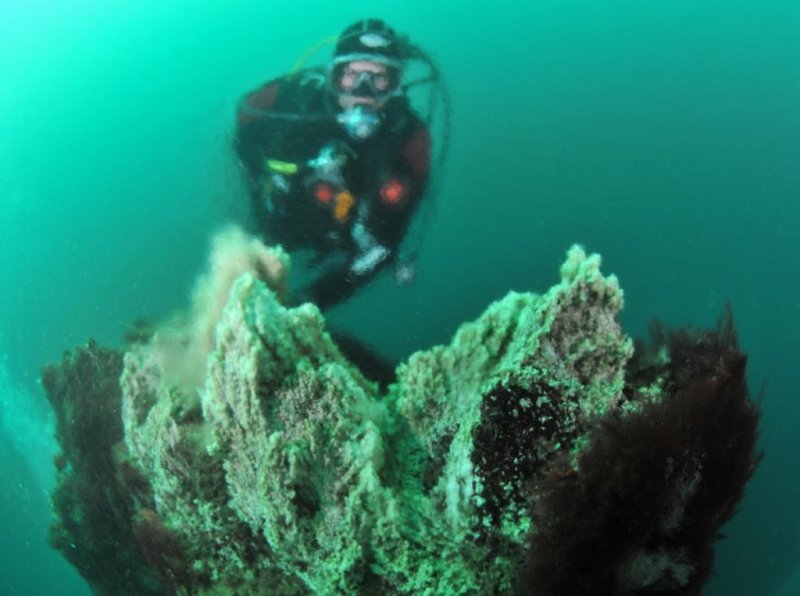
Diving the underwater geyser (c) Sven Gust
A very special dive site in Iceland Our dive trip starts on a chartered cutter. At the dive site we start with a big step overboard into the water of a fjord. We descend at a buoy. The rope leads strait to the bottom of the fjord, but at a depth of a bit more than 30 meters there is a connected rope leading directly to the geothermal vent named Strýtan. This one rises from a depth of about 70 meters up to 15 meters of water and "spits" hot water into the ice-cold Atlantic Ocean. We dive around the fascinating structure in circles. The vent looks like a stalagmite that is way too big. Swarms of cod and pollacks are here, and a colony of bright white plumose anemones is a real eye catcher. Slowly we dive our way up. At various points, warm water flows shimmering from the deposited rock. It gets really spectacular at the top. White mineral and sedimentary layers surround the outlet. No doubt, the vent is still growing inch by inch. The hot water bubbles out of the openings and creates a slight upward pull. Hot and cold right next to each other, there it is - the contrast that makes Iceland so very special. This time, however, in a place that has seen very few and will continue to be hidden from the vast majority of holidaymakers! Since about 30 years ago researchers began to explore the deep-sea habitat in a targeted way, many exciting discoveries have been made. Many strange fish and cephalopods was caught by the cameras of diving robots and submarines, and especially in the area of the undersea mountain range Mid-Atlantic Ridge so-called black smokers were discovered - geothermal vents that simmer boiling hot water and all kinds of highly concentrated minerals. To the great surprise of the scientists, these actually very hostile regions were by no means uninhabited - quite the contrary: Obviously, a highly specialized fauna had evolved specifically around these vents, which was able to make targeted use of the energy from within the Earth. Bacteria operated chemosynthesis, the equivalent of photosynthesis. Until now, the conversion of carbon dioxide from sunlight into biomass (plants) has, with some exceptions, been thought to be the only source of life on our planet. It was assumed that the deep sea also "hangs on the drip" of the light-flooded upper water layers, and only the waste that sinks down there is used there. Suddenly, however, the scientists were confronted with completely new aspects, because if down here bacteria were able to convert energy from sulfur directly and in turn served as a food source for shrimp, tube worms and other residents of hot water vents, then this would be defined as a biotope, which exists more or less independently of the rest of the world or independently of the part of the world that relies on sunlight. Apart from my thoughts, I just enjoy the dive, the weightlessness with which we can explore the steeply rising chimney, and the fantastic phenomenon of warm or even hot water gushing out of the ocean floor in the middle of an icy fjord in the Arctic. Later, however, I realize what an extraordinary place this is. It almost seems to me that the vent was an ambassador from the deep sea, growing up there to give us an idea of the wonders that can be found in the depths of the oceans.
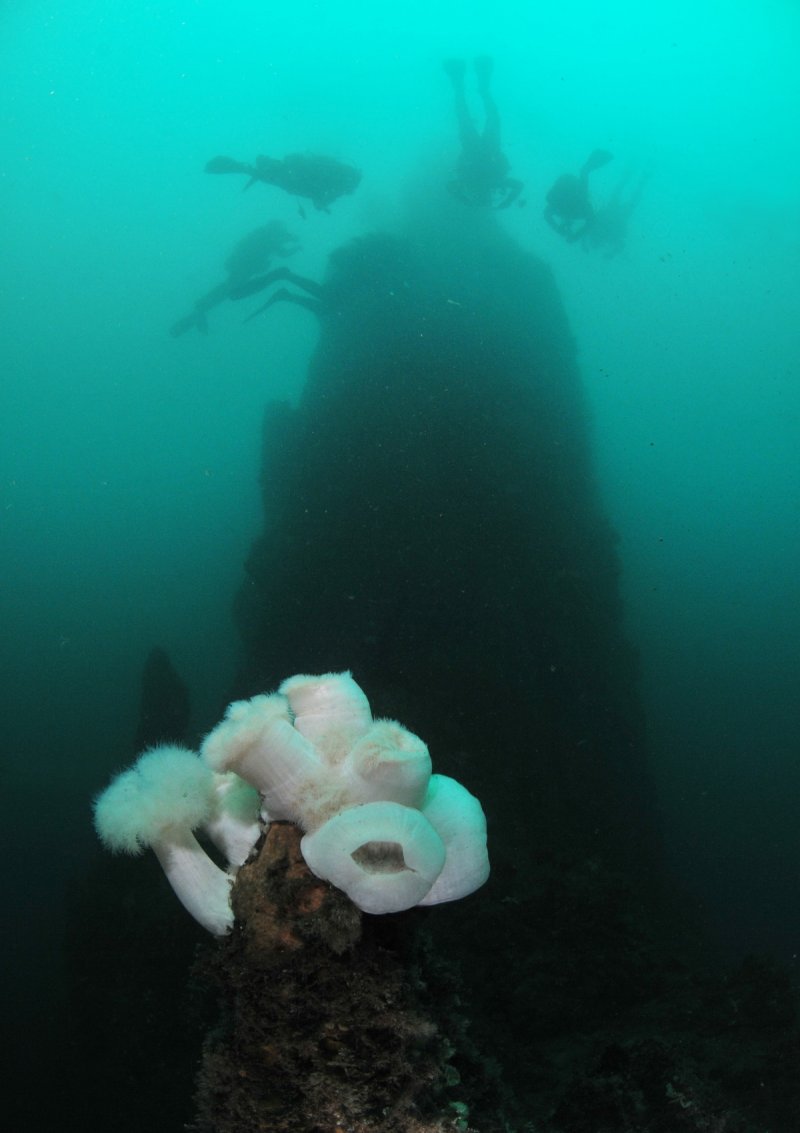
Diving the underwater geyser (c) Sven Gust
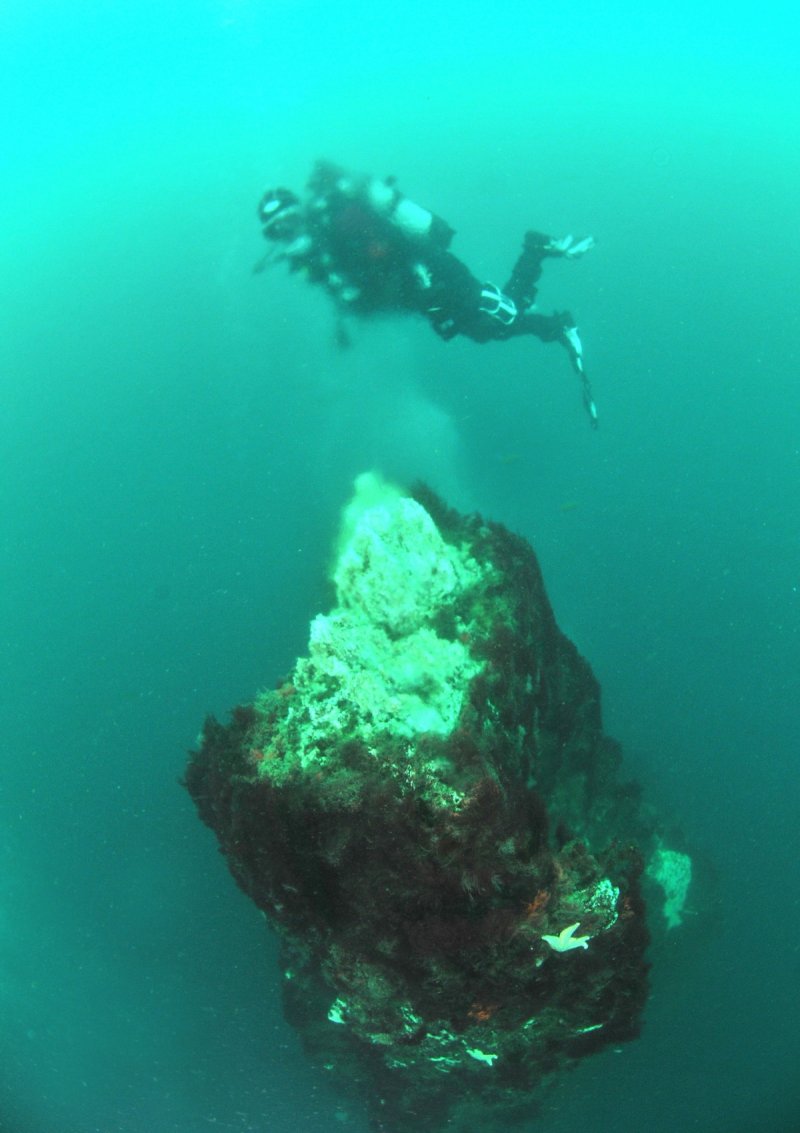
Diving the underwater geyser (c) Sven Gust
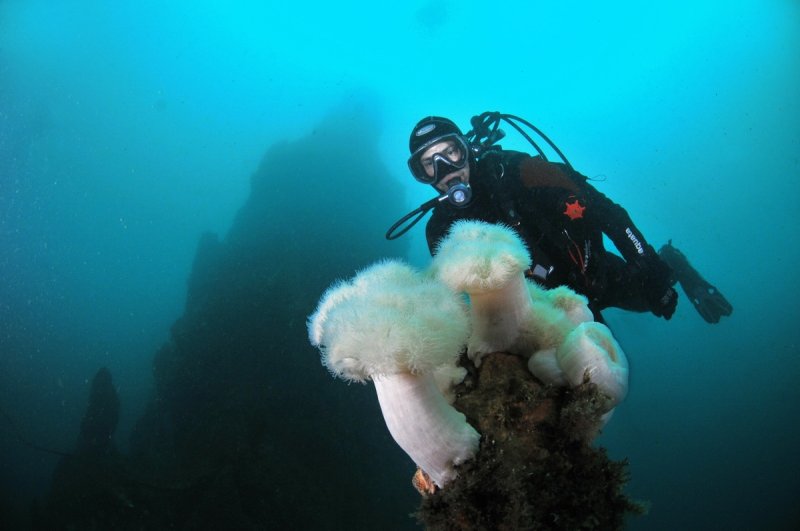
Diving the underwater geyser (c) Sven Gust