Freediving Without Fins: Technique, Training and Records
freediving
Shutterstock-Dudarev-Mikhail
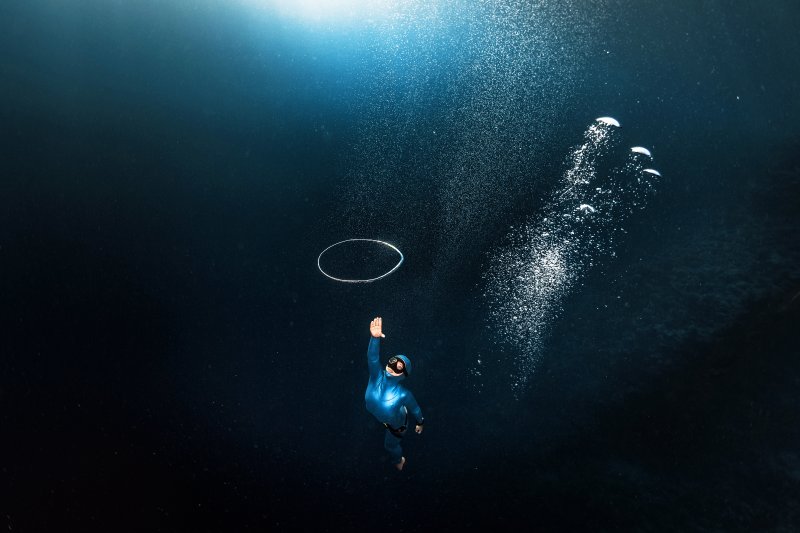
Of all competitive freediving disciplines, few command as much respect as freediving without fins. Officially known as Constant Weight No Fins (CNF), this discipline strips freediving back to its purest form. There is no monofin, no bifins, and no propulsion aid beyond your own body. Strength, technique, control, and mental focus work together. Watching an athlete slip beneath the surface, follow the line into darker water, and return using only controlled strokes can feel almost unreal. For many freedivers, freediving without fins represents the ultimate challenge, rewarding patience and efficiency over brute force.
Table of Contents:
-
What Is Constant Weight No Fins?
-
Why Freediving Without Fins Is Considered the Purest Discipline
-
The Techniques Behind Freediving Without Fins Success
-
Famous World Records and Freedivers
-
How Divers Train for Freediving Without Fins
-
The Benefits of CNF Training
-
Risks and Challenges of Freediving Without Fins
-
Why the Freediving Community Respects CNF
-
Dive Deeper
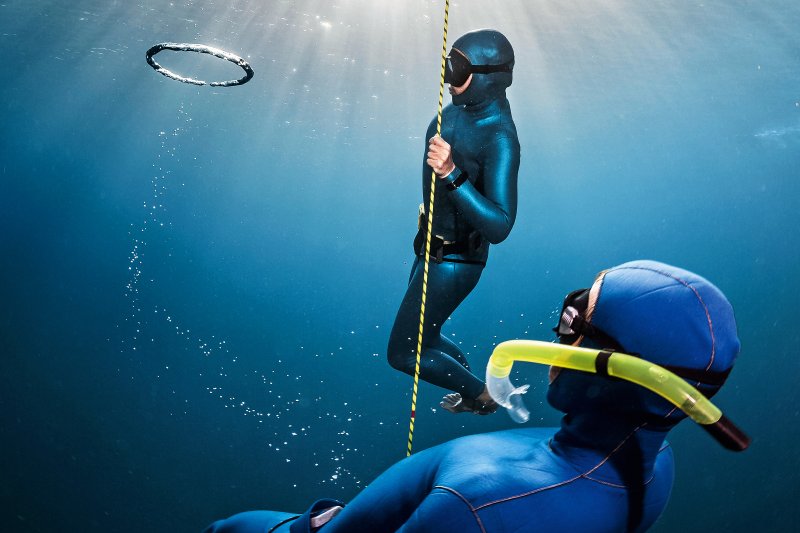
Constant Weight No Fins (CNF) is a freediving discipline where divers descend and ascend along a line without fins or propulsion devices. The line guides the dive rather than providing propulsion. Divers may touch or briefly hold it only within the permitted turn zone under the applicable competition rules but otherwise rely on swimming technique and body control.
“Constant weight” means divers complete the entire dive without changing their weight. Unlike variable weight disciplines, there are no sleds or lift bags.
In freediving without fins, the goal is depth combined with control. Divers typically use a breaststroke-style pull paired with a frog kick, creating propulsion while conserving oxygen.
Movement is slower and physically demanding, so every meter counts. Even experienced freedivers often find CNF much harder than diving with fins.
Ask experienced freedivers which discipline demands the most skill, and many will point to CNF.
Part of the respect comes from simplicity. Without fins for propulsion, success depends on technique, streamlining, flexibility, equalization, and mental control.
There is nowhere to hide inefficiency in CNF. Poor body position creates drag immediately. A rushed stroke burns oxygen, and even slight tension can make the water feel heavier.
Many freedivers describe CNF as meditative because rhythm becomes essential. The descent settles into a pattern of pull, kick, glide, and stillness before the next movement begins.
The discipline also removes much of the speed advantage seen in fin disciplines. Instead, freedivers rely on patience, precision, and efficiency.
For this reason, CNF is often described as the ultimate technical challenge within the sport.
Want to become a deep freediver? Read: Deep Freediving: All You Need to Know to Explore the Depths
Technique matters enormously in CNF, often more than physical fitness alone.
Most divers use a refined breaststroke pull with frog kicks. After each stroke, the body lengthens into a glide before the next movement begins. The rhythm stays deliberate and controlled, never rushed.
Streamlining is essential. Divers keep the body long and aligned to reduce drag, with their arms extended forward as they glide through the water.
Equalization also becomes more demanding. Because CNF dives progress more slowly than fin disciplines, divers spend longer under pressure and need well-developed equalization skills.
Relaxation matters just as much. Tension wastes oxygen, so CNF athletes practice breathing exercises, visualization, and mental calm.
Even the turn at depth matters. One rushed movement can waste energy that the diver will need during the ascent.
CNF rewards refinement over raw athleticism.
iStock-mihtiander
Some of the sport's most respected athletes have built remarkable reputations through freediving without fins.
Alexey Molchanov is widely recognized as one of the greatest freedivers in history and has pushed boundaries across multiple disciplines, including CNF with an official personal best of 100 meters (328 feet). His combination of technical precision and calm underwater efficiency has inspired countless freedivers.
Alessia Zecchini has become one of the standout names in women's freediving, earning multiple world records and demonstrating extraordinary strength in depth disciplines. Her CNF performances are especially admired because of the immense physical challenge involved. She has achieved 74 meters (243 feet) in CNF competition.
William Trubridge remains one of the most legendary names associated with CNF. In 2010, he became the first person to reach 100 meters (328 feet) in freediving without fins. He later extended the world record to 102 meters (335 feet) in 2016, using nothing but refined technique and physical control.
What makes these achievements even more impressive is the sheer workload involved. Unlike monofin disciplines, where propulsion is powerful and efficient, CNF divers must physically work for every meter of descent and ascent.
For many athletes, breaking records in freediving without fins represents one of the greatest accomplishments in the sport.
CNF training requires fitness, flexibility, breath control, and technical refinement.
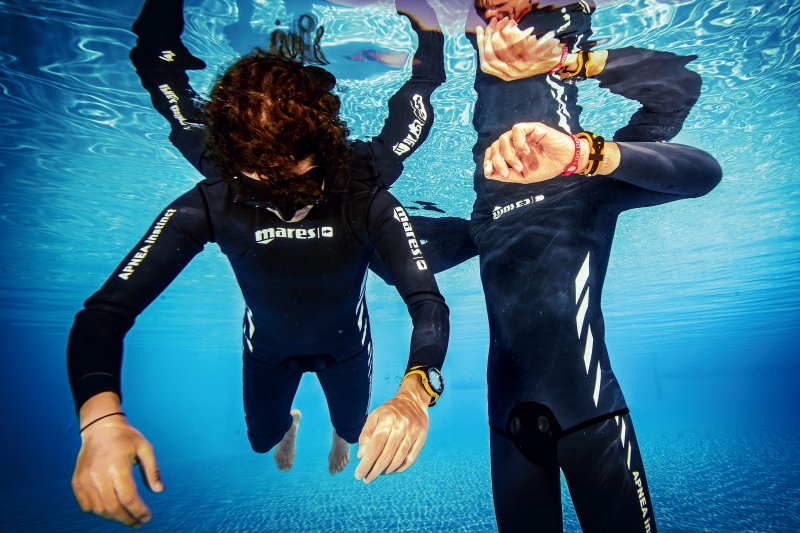
Pool sessions often focus on stroke efficiency. Freedivers practice controlled breaststroke movements, body alignment, and reducing unnecessary drag.
Dry training also matters. Flexibility work for the chest, diaphragm, ankles, and hips improves movement and equalization comfort. Yoga and mobility are common.
Breath-hold exercises may include dry statics and supervised dynamic apnea. More advanced freedivers may eventually incorporate oxygen and carbon dioxide tolerance training, but this should only happen with proper education and safety support.
Strength matters too, particularly in the legs and core. Since propulsion comes entirely from the body, movement must be powerful and efficient.
Many divers also work on mental conditioning because calmness directly affects oxygen consumption.
The SSI Freediver pathway provides an excellent framework for progressing safely toward freediving without fins, from beginner breath-hold skills to advanced depth techniques. Freedivers with an SSI Advanced Freediver certification or equivalent can continue with the SSI No-Fins Freediving specialty, which includes academic, pool or confined water, and open water training to refine coordination, awareness, and efficiency.
Using the SSI Center Locator is an easy way to find a qualified freediving professional who can help build these skills progressively and safely.
The right equipment can make all the difference in fin disciplines. Read: Best Freediving Fins for 2025: Top Picks for Every Freediver
Mares-Alberto-Balbi
Even divers who never plan to compete can gain a lot from CNF training.
One major benefit is efficiency. Because CNF exposes wasted movement, divers naturally become more streamlined and economical underwater.
Breath awareness often improves too. Freedivers become more conscious of relaxation, recovery breathing, and how physical effort affects oxygen use.
Many athletes also report better body awareness. Small technique changes become obvious underwater, revealing posture and movement differences.
Mental resilience is another advantage. CNF requires patience and discipline, helping freedivers develop confidence and calmness under pressure.
CNF training can also improve performance in other disciplines by strengthening technique fundamentals.
Although beautiful to watch, CNF comes with real risks and challenges.
Divers move more slowly and work harder, so oxygen consumption can be higher than in fin disciplines. Proper recovery, supervision, and conservative progression are essential.
Equalization can also become difficult at depth, especially without strong technique.
Fatigue is another factor. During a long ascent without fins, every stroke still has to move the diver closer to a surface that may feel far away. This demands strong conditioning and disciplined technique.
Like all freediving disciplines, blackout and loss of motor control remain serious risks if limits are pushed carelessly.
This is why proper education matters so much. Divers should never train alone and should always practice with qualified supervision or trained buddies who understand freediving rescue procedures. Learn more in The Ultimate Guide to Freediving Safety
Across the freediving world, freediving without fins carries a unique reputation.
Part of that respect comes from how honest the discipline feels. There is no equipment advantage or shortcut. Progress comes from patience, consistency, technique, and self-awareness.
CNF rewards precision rather than aggression. Divers who succeed are calm, technically refined, and mentally disciplined.
Elite freedivers admire CNF achievements because they understand how physically and mentally demanding the discipline can be.
For many, freediving without fins represents the ultimate expression of what freediving is really about: trust in your body, control of your mind, and complete harmony with the water.
There is something powerful about watching a freediver disappear down the line, then return toward the light using nothing but carefully timed strokes. That is what makes freediving without fins so captivating. It combines athleticism, patience, technical precision, and mental calm.
Whether you dream of exploring CNF yourself or simply want to understand why it inspires so much admiration, this discipline remains one of freediving's greatest tests of skill.
Ready to explore CNF with structured training? The SSI No-Fins Freediving specialty helps qualified freedivers refine technique, coordination, and efficiency under professional guidance.