Freediving Lessons: Prepare Safely for Your First Dive
freediving
predrag-vuckovic
Table of Contents:
-
Start With Relaxation
-
Learn Equalization First
-
Choose the Right Environment for Your Freediving Lessons
-
What to Expect From Your First Freediving Lesson
-
Practice Only With Supervision
-
Build Confidence Gradually
-
Use Equipment That Fits
-
Know When to Stop
-
Continue With Formal Freediving Lessons
-
Make Your First Freedive Enjoyable
-
Dive Deeper
Your first freediving lesson should feel exciting, not intimidating. Unlike scuba diving, freediving lets you explore the underwater world on a single breath, making relaxation and comfort just as important as physical skills. You do not need to be an experienced swimmer or have exceptional breath-hold abilities to get started. With the right preparation, environment, and supervision, you can learn the fundamentals safely, one step at a time. In this guide, you will discover what to expect from your first freediving lessons, how to prepare beforehand, and how to build the confidence to keep developing your skills.
predrag-vuckovic
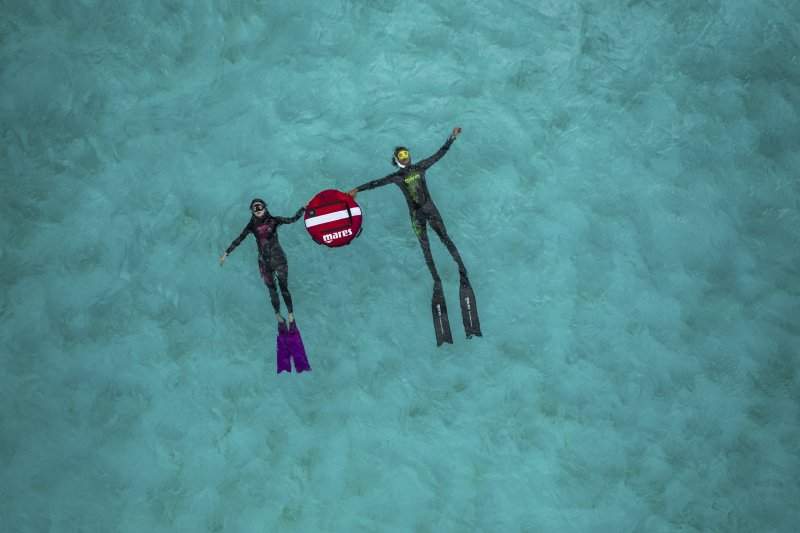
Relaxation is an essential skill to develop before your first freediving lesson. When nerves take over, your muscles tighten and your breathing becomes faster and shallower. This uses energy and can make being underwater feel more challenging.
Before entering the water, sit comfortably for a few minutes and breathe normally. Let your shoulders drop, relax your jaw, and notice any tension in your body. Your instructor can introduce simple relaxation techniques and explain how to establish a calm breathing pattern before you step into the water.
Relaxation is not a competition. There is no need to force an extremely deep breath or a long breath-hold. Instead, focus on becoming comfortable with the sensations of being still, quiet, and submerged.
Freediving equalization is another essential skill to learn. As you descend, increasing water pressure affects the air spaces in your ears and sinuses. Equalizing helps balance this pressure and prevent discomfort.
During freediving lessons, your instructor will demonstrate an appropriate equalization technique and explain when to use it. Equalize early and frequently as you descend, rather than waiting for ear pain. If equalizing becomes difficult or painful, stop your descent and head back toward the surface.
Never force equalization. If you feel pain, stop rather than trying to push through it. Your instructor can help you identify whether your position, timing, or technique is making equalization more difficult.
Your first freediving lesson should take place in an environment suited to learning. Calm, controlled conditions let you focus on your technique without having to manage waves, currents, boat traffic, or unfamiliar surroundings.
Pool sessions offer an excellent introduction. In a predictable environment, you can get comfortable with equipment and basic movements before progressing to deeper water. When you move into open water, choose a location with suitable conditions and trained supervision.
Increase depth gradually as your comfort and skills develop. Swimming comfortably at the surface does not necessarily mean you are ready to freedive deeper. Your instructor will assess your experience, technique, and ability before introducing greater depth.
Mares
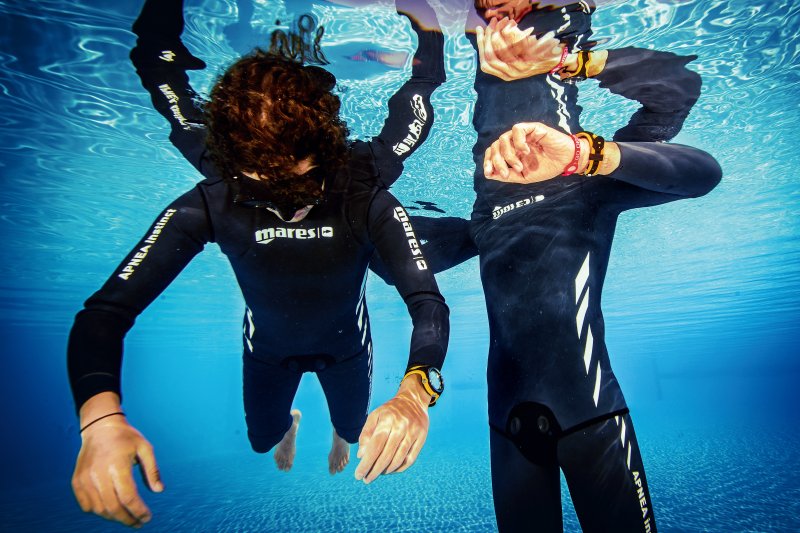
Your first freediving lessons are not about testing how long you can hold your breath. Instead, you will learn essential skills step by step in a controlled environment.
Your instructor may begin by introducing equipment, breathing, and relaxation before guiding you through basic underwater movements. You may practice a streamlined body position, finning technique, equalization, and safe descents and ascents. You will also learn to communicate with your buddy and recognize when to end a dive.
A good beginner freediving lesson should leave you feeling capable of doing more. The goal is to build control and awareness, not to push your limits during your first experience.
A fundamental rule when learning to freedive is never to practice breath-hold diving alone. A buddy who understands freediving safety must be present and actively supervise the dive.
This matters because a freediver may appear completely comfortable just before a problem occurs. Proper supervision means your buddy knows where to position themselves, what to watch for, and how to respond if you need help.
During your first freediving lessons, a qualified instructor provides this supervision. As your training progresses, learn proper buddy procedures rather than assuming another swimmer nearby is enough to keep you safe.
Explore the Ultimate Guide to Freediving Safety for more on staying safe underwater.
Freediving can feel surprisingly different from ordinary swimming. The underwater silence, the increase in pressure, and the sensation of moving on a single breath may take some getting used to.
Take your time as you progress. If you feel uncomfortable at a certain depth, do not push farther down. Return to a depth where you feel relaxed, and practice the skills again until they feel more natural.
Confidence grows through repetition, not by pushing yourself into situations that make you anxious. Gradually expanding your comfort zone at your own pace helps you develop greater awareness and control underwater.
Ready to explore another freediving discipline? Discover how technique, body control, and patience come together in Freediving Without Fins: Technique, Training and Records.
The right equipment can make your first freediving experience more comfortable. A properly fitted mask should seal without feeling overly tight, while long freediving fins can help you move efficiently through the water once you have learned the correct technique.
A wetsuit can also provide thermal protection and buoyancy, but its thickness and fit should match the water temperature and activity. Your instructor can help you choose and adjust suitable equipment, so you do not need to arrive with specialist gear.
There is no need to buy all your equipment immediately. Many instructors and training centers can provide suitable gear for introductory sessions, giving you time to find what works before investing in your own setup.
Not sure which equipment you need? Discover the essential gear and what to consider before buying in Freediving Gear: 9 Must-Have Items for Every Freediver.
Recognizing your limits is part of becoming a better freediver. End a dive if you experience pain, dizziness, unusual discomfort, anxiety, or difficulty equalizing.
Avoid comparing yourself with other students. One person may feel comfortable descending, and another needs more time to adjust. Sleep, hydration, stress, congestion, and previous experience can all influence how you feel during a freediving session.
Your instructor should encourage open communication. Saying you want to stop shows that you are listening to your body and making a sensible decision.
predrag-vuckovic
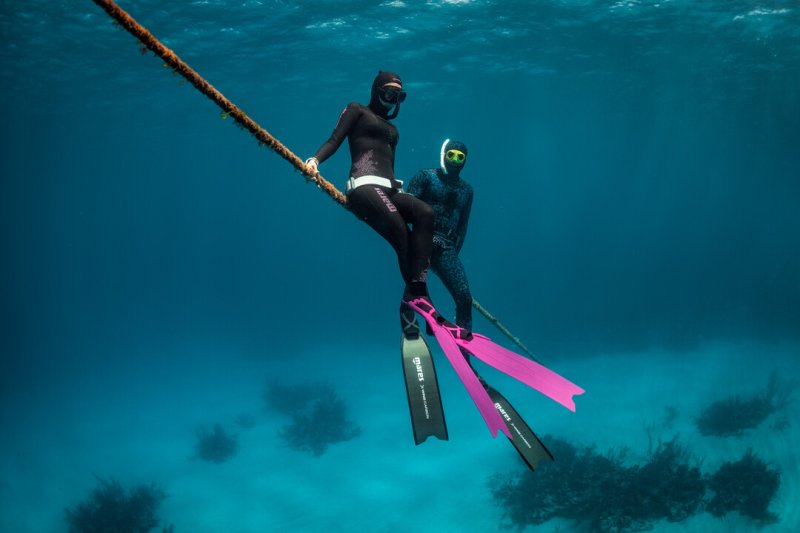
After enjoying your first freediving experience, formal training can help you develop your skills step by step. SSI offers a range of freediving programs that guide divers from their first introduction toward more advanced techniques.
The SSI Basic Freediver program is a natural next step if you want to explore freediving beyond your first introduction. You will learn about breathing, relaxation, equalization, equipment, safety, and buddy procedures, building a stronger foundation before progressing to further training.
From there, the SSI Freediver program and more advanced training can help you gradually improve depth, distance, and breath-hold ability. The goal is not simply to reach a bigger number, but to become more relaxed, efficient, and aware underwater.
The best freediving lessons should leave you curious about what you might discover next, rather than focused on how far you descended. Choose a suitable environment, follow your instructor's guidance, practice under qualified supervision, and give your skills the time they need to develop.
With patience and consistent training, freediving can become a wonderfully peaceful way to explore the underwater world. Your first session is just the beginning.
Ready to experience the underwater world on a single breath? Your first freediving lessons can be the beginning of a new underwater adventure. Start your journey with professional guidance and a focus on safety, relaxation, and confidence.