Pushing Limits: Where are the Most Extreme Rebreather Dive Sites?
extended range
mares
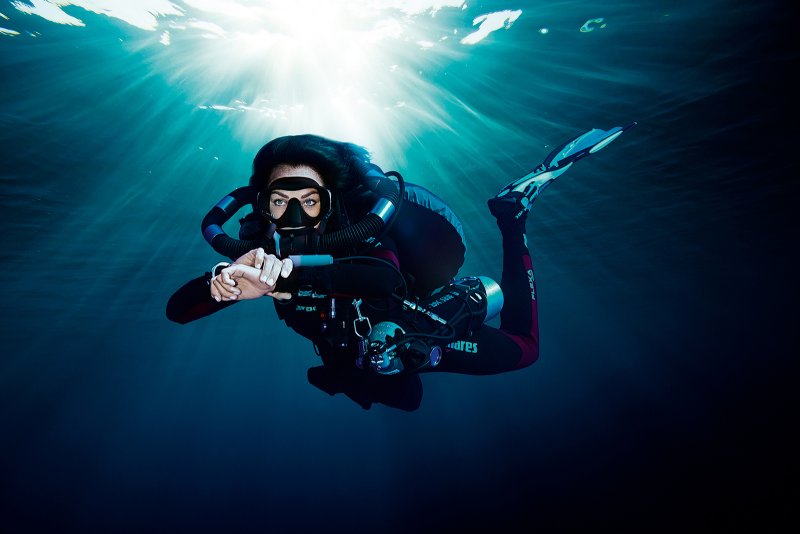
Rebreather diving represents the pinnacle of technical diving, offering the opportunity to explore depths and environments beyond the reach of traditional open-circuit scuba systems. By recycling exhaled gases, rebreather dive systems provide extended bottom times, reduced gas consumption, and a bubble-free experience, making them ideal for deep, long, and challenging dives.
This quiet, efficient way of diving also opens the door to encounters with elusive marine life and access to some of the world’s most extreme and fascinating underwater environments. For divers looking to push their limits, rebreather diving is not just a tool—it is a ticket to a whole new world.
Rebreather dive systems open the door to longer, quieter, and deeper dives. Whether you are venturing into caves, deep wrecks, or remote sinkholes, the advantages of rebreathers go far beyond gas efficiency.
The advantages of rebreather systems are numerous:
- Extended Bottom Time: Rebreathers optimize gas usage by recycling exhaled breath, allowing divers to remain submerged longer without the need for large gas supplies. This efficiency is particularly beneficial during deep or lengthy dives where carrying multiple tanks would be cumbersome.
- Gas Efficiency: Unlike open-circuit systems that expel exhaled gas, rebreathers retain and reuse it. This results in significant gas savings, especially when using expensive mixes like helium for deep dives.
- Stealth and Environmental Integration: The absence of bubbles makes rebreather diving exceptionally quiet, allowing divers to approach marine life without disturbance. This feature is invaluable for underwater photography, scientific research, and military operations.
- Optimized Decompression: Rebreathers can maintain an optimal oxygen partial pressure throughout the dive, reducing nitrogen absorption and thereby minimizing decompression obligations. This capability enables divers to undertake deeper dives with shorter decompression times compared to open-circuit systems.
Curious about rebreathers? Check out SSI’s Try SCR and Try CCR programs to experience a new way of diving.
Are you curious about how far rebreather diving can take you? These dive sites offer some of the most challenging and fascinating rebreather dive experiences in the world:
Known as the "Diver's Cemetery," the Blue Hole in Dahab is a sinkhole descending to over 100 meters. The infamous Arch, a tunnel at 56 meters connecting the hole to the open sea, poses significant risks due to its depth and potential for nitrogen narcosis. Rebreather divers are drawn to this site for the allure of navigating the Arch, but it demands the highest level of training and caution.
The Eagle's Nest is a complex underwater cave system reaching depths exceeding 90 meters. Its labyrinthine passages and depth make it suitable only for highly experienced technical divers specializing in cave exploration. The site's remote location and challenging navigation add to its peril and allure.
Samaesan Hole is the deepest known dive site in the Gulf of Thailand, plunging to approximately 85 meters. This site is renowned for its considerable depth, strong currents, and the presence of unexploded ordnance on the seabed. Due to its depth, the site is recommended exclusively for divers with full Trimix certification - whether on open-circuit or closed-circuit rebreathers.
Need more inspiration? Check out The World’s Best Ultra-Deep Technical Dive Sites
The Diepolder Caves—comprising Diepolder II, and III—are located within the Sand Hill Scout Reservation in Florida and are among the deepest and most challenging cave systems in the United States.
Diepolder II is renowned for its extreme depth, reaching approximately 360 feet (110 meters), and features expansive underwater rooms. Diepolder III is slightly shallower, with depths around 300 feet (91 meters), and is characterized by large chambers and complex passageways.
Both sites are located on the Sand Hill Scout Reservation in Hernando County, Florida, and access is highly restricted. Divers must obtain special permission and meet stringent certification requirements due to the challenging nature of these dives.
One of the deepest freshwater cave dives in the world, Boesmansgat in South Africa reaches depths of over 270 meters (886 feet). Located at a high altitude (over 1,500 meters above sea level), it adds complexity due to altitude dive planning and extreme depth.
This site is reserved for elite-level rebreather divers with advanced cave and trimix training. In 2022, Karen van den Oever broke her own world record for the deepest scuba dive by a woman, reaching a depth of 246.65 meters (809 feet) at Boesmansgat. Her previous record, set in 2021 at the same site, was 236.04 meters (774 feet).
While not as deep as others on the list (100 meters maximum), Molnar Janos Cave is one of the most interesting urban cave dives renowned for its thermal waters and intricate passages.
This stunning warm-water cave system lies beneath an unassuming old building in the city of Budapest and features complex passages, crystal-clear water, and long penetrations. All dives there are conducted under the supervision of experienced guides familiar with the cave's layout and safety protocols.
Located near Salses-le-Château in southern France, Font Estramar is renowned for its depth and complexity. This submerged cave system has been the site of record-breaking dives, including Xavier Méniscus's descent to 312 meters (1,024 feet) in January 2024. The cave's narrow passages and extreme depths make it suitable only for highly trained technical divers.
8. HMHS Britannic, Kea Island, Greece
Lying at around 120 meters (400 feet) off the coast of Kea Island in Greece, the Britannic is the Titanic’s lesser-known but fascinating sister ship. This massive World War I hospital ship sank in 1916 and rests almost fully intact on her side.
Dives here are logistically complex and require special permits, mixed gas, and advanced CCR (closed-circuit rebreather) training. The scale, history, and depth make it a true bucket-list rebreather dive.
RELATED: Diving The HMHS Britannic: The Everest of Technical Diving
If you are ready to take the plunge into the world of rebreather diving, SSI offers a structured training pathway through its Extended Range (XR) programs. These courses are designed to help divers safely explore deeper depths and more challenging environments using rebreather technology.
- SSI SCR Diving: This course is a great starting point for divers who want to transition from open-circuit to rebreather systems. You will learn how to safely dive with semi-closed rebreathers (SCR) in recreational depth limits, including emergency procedures and dive planning.
- SSI CCR Diving: Often the next step after mastering SCR, this course introduces divers to the use of closed-circuit rebreathers (CCR). You will learn how to set up and use a CCR unit safely, manage oxygen levels, and practice basic bailout procedures—all within recreational limits.
- SSI Extended Range Programs: SSI offers a range of other technical diving courses, with further training in cave diving, mine diving, Extended Range Trimix, and more.
Embarking on rebreather diving through SSI requires a commitment to precision, training, and a deep respect for the technology. But for those who are ready, it unlocks a level of underwater exploration few divers ever experience.
Find an SSI-certified Training Center near you and take the first step on your rebreather dive journey.