Must-have-utrustning för undervattensfotografering för nybörjare
scuba diving
adobe-stock-frantisek-hojdysz
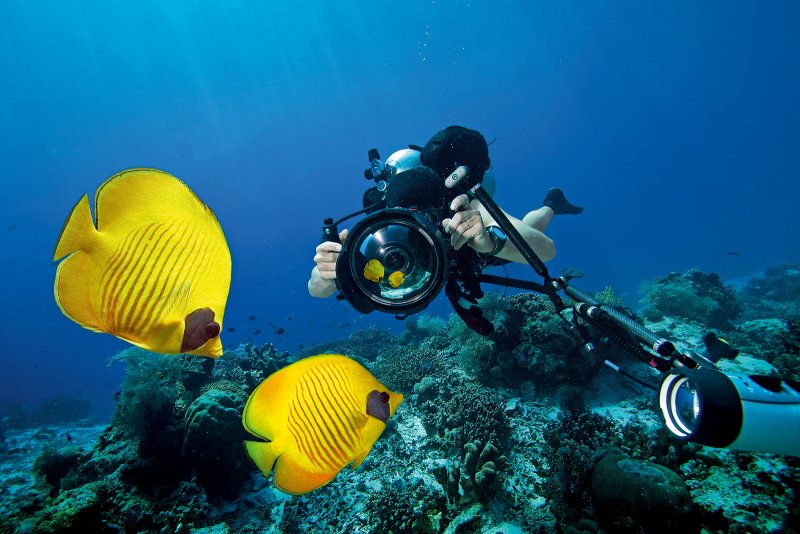
Att fånga undervattensvärlden är en av de mest givande delarna av sportdykning. Från nyfikna sköldpaddor till livfulla korallrev, fotografering gör att du kan återuppleva dina dyk och dela dessa ögonblick med andra. Men havet är en utmanande miljö och framgångsrik undervattensfotografering är beroende av att du använder rätt utrustning. I den här guiden går vi igenom den viktigaste utrustningen för undervattensfotografering för nya dykare - så att du kan dyka med självförtroende, skydda din kamera och komma tillbaka med klara, färgglada bilder som du är stolt över att dela med dig av.
Innehållsförteckning:
-
Viktig utrustning för undervattensfotografering för nya dykare
-
Kompakt undervattenskamera
-
Vattentätt hölje
-
Rött filter
-
Bricka och handtag
-
Stroboskop eller videolampor
-
Fuktabsorbenter
-
Linsduk eller avimningsspray
-
Nyckelband och klämmor
-
Minneskort och reservdelar
-
Skyddsfodral
-
Lär dig undervattensfotografering på rätt sätt med SSI
Att välja rätt utrustning för undervattensfotografering från början hjälper nya dykare att fokusera på flytkraft, komposition och det marina livet - i stället för att kämpa med utrustningen under vattnet.
Den enklaste startpunkten för nya fotografer är en kompakt undervattenskamera. Dessa små, lätta modeller är enkla att använda, resevänliga och kan producera utmärkta bilder med minimal installation. Alternativ som Olympus Tough TG-7 eller SeaLife Micro 3.0 är populära eftersom de är vattentäta, hållbara och intuitiva.
Med en kompaktkamera kan du fokusera på inramning och komposition i stället för att kämpa med manuella inställningar. Den är idealisk för dykare som vill fånga allt från korallnärbilder till revmiljöer samtidigt som de vill ha en hanterbar utrustning under vattnet.
jakob-owens-unsplash
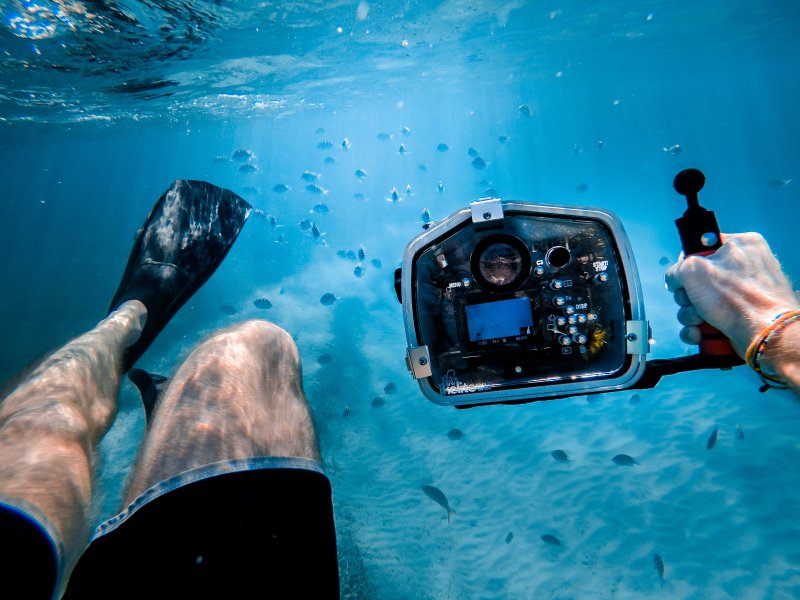
En komplett kamerainstallation hjälper dykare att öva stabila fotograferingstekniker, men det är en bra idé att börja med en kompaktkamera.
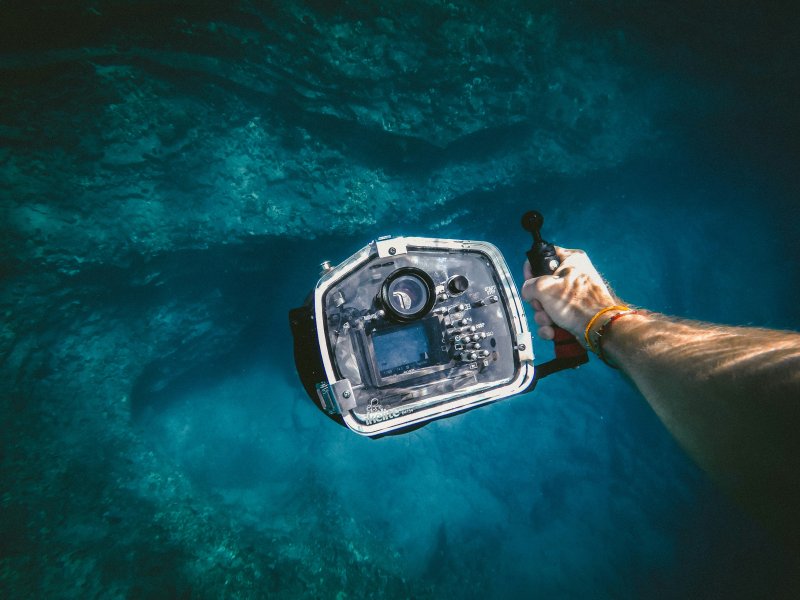
Även om din kamera är vattentät behöver du ett ordentligt undervattenshus för att kunna ta den på djup under 10 meter (33 fot). Ett vattentätt hölje skyddar kameran mot läckage och tryck samtidigt som du kommer åt viktiga reglage. För nybörjare är det bäst att köpa ett hus som är särskilt utformat för din kameramodell; märken som Ikelite och Nauticam är pålitliga val.
Bostaden öppnar också upp för framtida möjligheter att lägga till tillbehör som stroboskop, vidvinkellinser eller filter när dina färdigheter förbättras. Kom ihåg att alltid kontrollera O-ringarna för sand eller hår innan du förseglar dem inför ett dyk.
Vill du bli en professionell dykare men är osäker på hur du ska undervisa? Läs då detta: 10 jobb inom Scuba Diver-industrin för dykare som inte vill undervisa
Färger försvinner snabbt under vattnet: röda först, sedan orangea och gula, vilket gör att bilderna ser alltför blå eller gröna ut. Ett rödfilter korrigerar denna färgförlust genom att återställa värme och naturliga toner, särskilt på djup på 5 till 15 meter (16 till 50 fot). Filter är prisvärda, lätta att montera på kamerahuset eller objektivet och perfekta för dykare som ännu inte använder externa lampor.
Till exempel erbjuder Backscatter och Kraken Sports högkvalitativa filter för kompakta system. Ett rödfilter är en viktig del av utrustningen för undervattensfotografering som hjälper nybörjare att få balanserade, verklighetstrogna bilder utan efterredigering.
jakob-owens-unsplash
Ett rött filter hjälper till att återställa naturliga färger vid undervattensfotografering utan blixtar eller videolampor.
När du lägger till ett hölje kommer du snabbt att inse att stabiliteten är viktig. En bricka med dubbla handtag ger dig bättre kontroll över kamerainställningen, minskar skakningar och gör det lättare att placera lampor eller blixtar. Det hjälper också till med flytkraften, vilket ger dina händer ett bekvämt och säkert grepp även i ström.
Varumärken som Ultralight Camera Systems och SeaLife tillverkar hållbara aluminiumbrickor som är kompatibla med de flesta kamerahus. Nybörjare upptäcker ofta att en kombination av bricka och handtag gör stor skillnad när det gäller att hålla bilderna stadiga, särskilt vid videofilmning under vattnet.
Ljus är det viktigaste verktyget för undervattensfotografering. Stroboskop (för stillbilder) och kontinuerlig videobelysning (för video) ersätter solljuset som absorberas på djupet. Bra belysning återställer färger, minskar skuggor och framhäver detaljer. Beginner I med ett enda blixtljus eller videoljus för att lära sig positionering innan man uppgraderar till två.
Instegsalternativ inkluderar Sea & Sea YS-03 stroboskop eller Bigblue AL1200 videolampa. Använd belysning särskilt för makrofotografering eller vid dykning under 15 meter (50 fot), där det naturliga ljuset försvinner snabbt.
LÄR DIG MER: Dykfotografering - Är jag redo att börja dyka med en kamera?
mael-balland-unsplash
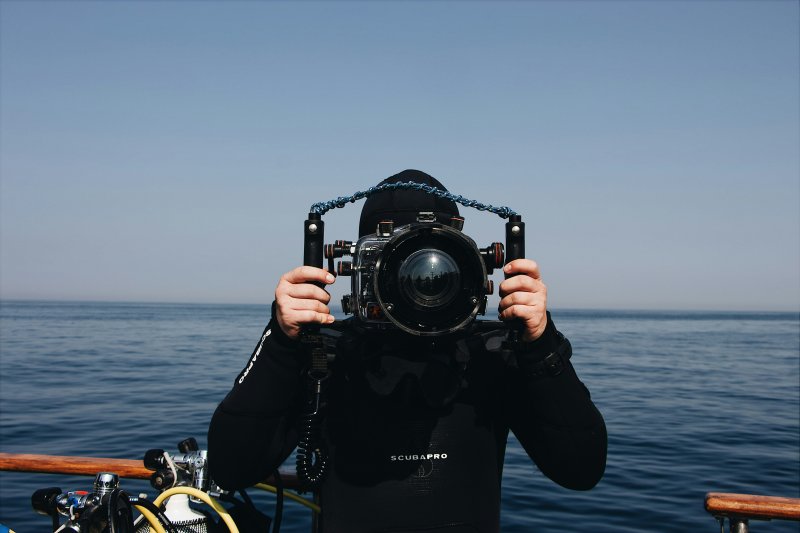
Att kontrollera fotoutrustningen före varje dyk är ett viktigt steg för att skydda din investering.
Fukt som stängs in i kamerahuset kan snabbt få linsen att imma igen och förstöra annars fantastiska bilder. Fuktabsorbenter eller antidiminsatser, t.ex. SeaLife Moisture Munchers, förhindrar kondens genom att hålla luften i höljet torr. De är små, billiga och lätta att byta ut.
Förvara alltid extramaterial i kameraväskan, särskilt om du dyker i varma tropiska klimat eller om du växlar mellan luftkonditionerade rum och fuktiga utomhusförhållanden. Enkla försiktighetsåtgärder som dessa förlänger livslängden på din utrustning för undervattensfotografering och räddar dina bilder från frustration.
En klar lins är avgörande för skarpa bilder, och inget förstör en bild snabbare än fläckar eller dimma. Ha alltid med dig en linsduk av mikrofiber för att försiktigt rengöra höljets port och använd en avimningsspray för att förhindra kondens på sökaren. Dessa små tillbehör kan verka obetydliga, men de gör en enorm skillnad i synlighet.
Produkter som ZEISS linsdukar eller Sea Drops avfuktningslösning är pålitliga, kompakta alternativ för dykresor. Gör rengöringen av kamerahuset till en del av din ritual före dyket för att säkerställa att varje foto blir skarpt och tydligt.
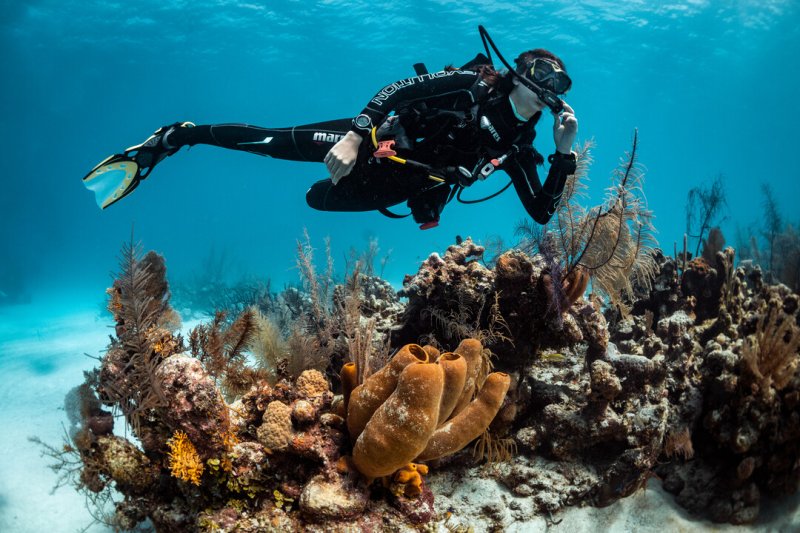
predrag-vuckovic
God kontroll över flytkraften och stabil positionering är viktiga färdigheter för att kunna fotografera rev utan att skada miljön.
Att förlora sin kamera under dykning är varje fotografs mardröm. Nyckelband, infällbara linor och bultlås fäster kameran vid din BCD så att du har händerna fria när det behövs. Välj korrosionsbeständiga material som rostfritt stål eller nylonbelagda kablar som håller i saltvatten.
Kraken och XS Sportdykning tillverkar utmärkta linor som är utformade för användning under vatten. Nyckelband är särskilt användbara för nybörjare som fortfarande håller på att förfina kontrollen av flytkraften eller anpassa sig till att hantera kamerautrustning under vattnet.
Att få slut på lagringsutrymme halvvägs genom en dykresa är ett misstag som är lätt att undvika. Höghastighetsminneskort garanterar smidig videoinspelning och snabb bildlagring. Varumärken som SanDisk och Lexar erbjuder hållbara kort som är byggda för att klara tryck och fuktförändringar.
Ta med minst två reservdelar och förvara dem i ett vattentätt fodral. När du blir bättre på att fotografera ger fotografering i RAW-format dig mer flexibilitet för redigering, men det kräver också kort med större kapacitet; 64 GB eller mer är ett säkert val.
Flytkraft är en viktig färdighet för undervattensfotografering: Få 5 tips för att göra din flytkraft Perfect Buoyancy
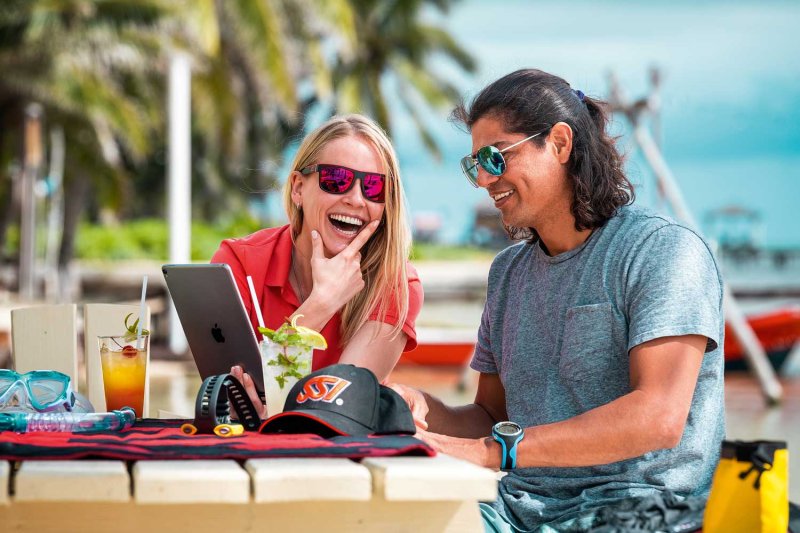
predrag-vuckovic
Kontrollfrågor efter ett dyk hjälper nybörjare att förstå belysning, färgbalans och hur deras utrustning fungerade.
Att skydda din investering på land är lika viktigt som att skydda den under vattnet. Ett robust skyddsfodral, som en Pelican eller Nanuk hård väska, håller din utrustning för undervattensfotografering organiserad och skyddad från stötar, damm och fukt. Välj en med anpassade skuminsatser eller avdelare för att skydda ömtåliga föremål som blixtar, objektiv och huskomponenter.
För resor kan hårda fodral checkas in som bagage eller bäras som handbagage, beroende på flygbolagets storleksbegränsningar. Efter varje resa ska alla delar sköljas och torkas noggrant innan de packas för att undvika korrosion.
Bra utrustning är bra, men det är kunskapen om hur man använder den som verkligen förändrar dina bilder. SSIPhoto & Video Specialty visar hur du arbetar med ljus, komposition och kamerainställningar samtidigt som du behåller utmärkt flytkraft och medvetenhet om revet.
Bygg upp självförtroendet, skydda miljön och börja ta bilder som du verkligen är stolt över.
Hitta ditt närmaste SSI Utbildningscenter
Den här artikeln har översatts automatiskt och kan innehålla mindre felaktigheter; se den engelska originalversionen om du är osäker.