Microplastic even at Pole of inaccessibility
environmentoceanmarine researchmicroplasticsoceanography

During the Volvo Ocean Race 2017/18 the yachts "Turn the Tide on Plastic" and "AkzoNobel" had collected many valuable data
(c) Ainhoa Sanches / Volvo Ocean Race
Volvo Ocean Race provided valuable data for science In The Hague (Netherlands) the Volvo Ocean Race 2017/2018 ended. The Kiel Cluster of Excellence "The Future Ocean" and the GEOMAR Helmholtz Center for Ocean Research Kiel supplied two of the participating boats with sensors that measured oceanographic data and the distribution of microplastic particles along the regatta course around the world. Eight months and 45,000 nautical miles (about 83,000 kilometers) after the start in Alicante (Spain), Team Dongfeng won the Volvo Ocean Race around the world last weekend - only 100 nautical miles before the finish line in The Hague (Netherlands). But no matter how the individual placements have been at the end - for the marine chemist Toste Tanhua from the GEOMAR Helmholtz Center for Ocean Research Kiel, the race was definitely a big success. With the support of the Cluster of Excellence "Ocean of the Future", Dr. Ing. Tanhua convinced two of the participating yachts, the boat "Turn the Tide on Plastic" and the boat "AkzoNobel", to act as measuring platforms that collected important environmental data during the race in the remotest corners of the oceans. " Among other things, we can track the distribution of microplastics in the ocean along the entire course of the regatta, including regions that have not yet been searched for, " says Dr. Tanhua at the conclusion of the race. The preliminary analysis of the data shows that even at the furthest point to the next land, the so-called Southern Pole of inaccessibility in the South Pacific, microplastics can now be found in seawater. " However, one has to say that the concentration of the particles varies greatly from region to region ", emphasizes Dr.-Ing. Sören Gutekunst from the "Ocean of the Future", who provided technical support for the project over the past few months. The highest concentrations were found along the boat race course in the Mediterranean and the western Pacific. In addition to the search for microplastic particles, the focus of the project was the collection of oceanographic data such as salinity, water temperatures, carbon dioxide content and the amount of chlorophyll. " Despite all modern measuring techniques, we still get much less environmental data from the oceans than from measuring stations on land. That's why we've broken new ground with this project to fill in more gaps. " Tanhua. So the Volvo Ocean Race 2017/2018 was also a test. On-the-go measurements are actually routine for the Kiel oceanographers. For a number of years, for example, they have equipped a cargo ship regularly commuting between Europe and the USA with sensors. " But ocean-going racing yachts are sports equipment trimmed for maximum speed. So we had to build our sensors for the VOR so much smaller and lighter than is necessary with a freighter, " explains Dr. Tanhua. With financial support from Volvo Cars, the subcontractor Kiel SubCtech has rebuilt existing sensors that not only defy the harsh conditions of a high sea regatta, but also unnecessarily restrict the already scarce space in a racing yacht. The first boat to be equipped with the flag of the United Nations "Turn the Tide on Plastic" was equipped with the British skipper Dee Caffari as a measuring station. " It worked so well that after the sixth stage in Auckland we were also able to retrofit the AkzoNobel boat, " reports Sören Gutekunst. Of course, the data collected during the regatta must still be evaluated in detail and published scientifically before definitive statements can be made. " In any case, they will help to improve ocean models and to clarify our ideas on the fate of the plastic in the oceans, " Dr. Tanhua. After the success of the Volvo Ocean Race, the marine chemist plans to equip more sailboats with sensors. " We already have talks with other circumnavigators and maybe we'll be there again at the next Volvo Ocean Race, " he says.
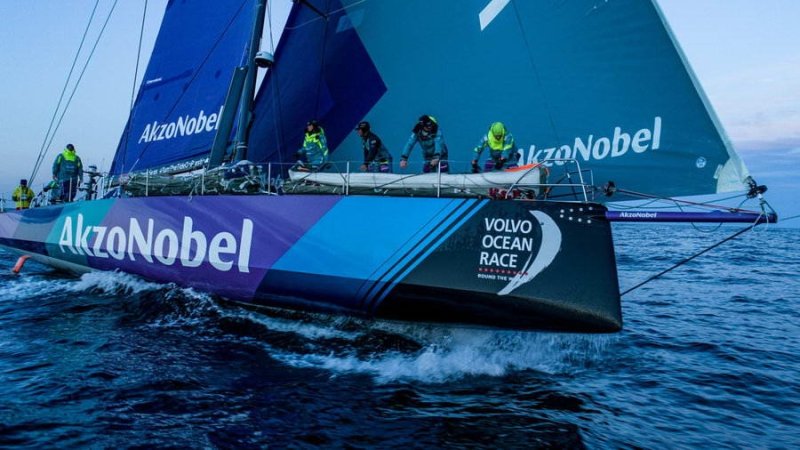
The "AkzoNobel" was supplied with the Kiel sensors in Auckland
(c) James Blake / Volvo Ocean Race
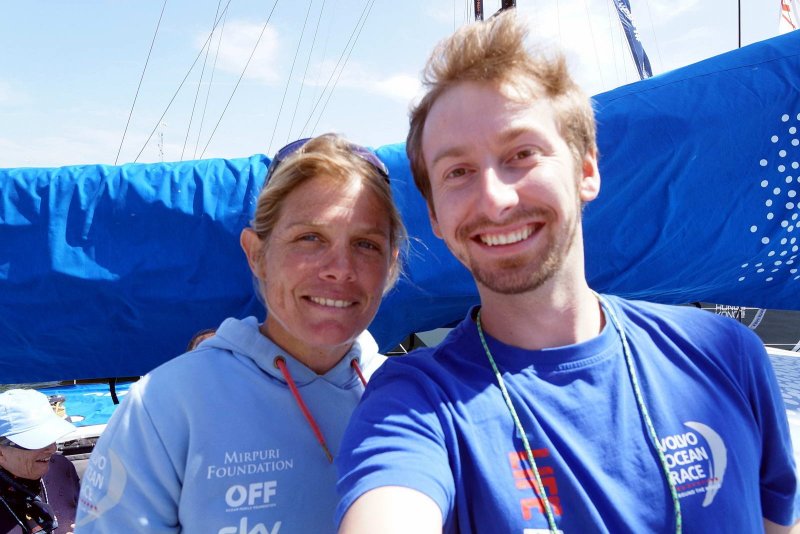
At sea, Boat Captain Liz Wardly was responsible for the operation of the sensors in the team "Turn the Tide on Plastic" (here with Sören Gutekunst from the "Ocean of the Future") - in addition to the already demanding tasks during the race.
(c) Sören Gutekunst / Ozean the future
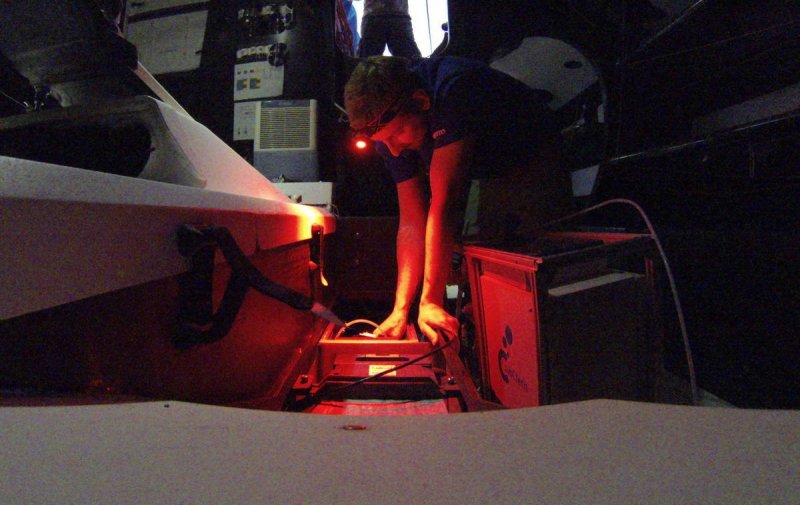
Sören Gutekunst installs a sensor in the hull of the yacht "AkzoNobel"
(c) Sören Gutekunst / Ocean of the Future
Bài viết này được dịch tự động và có thể chứa một số lỗi nhỏ; vui lòng tham khảo bản gốc tiếng Anh nếu có thắc mắc.