Divers thwart scourge of ghost nets in North Sea reserve
scuba divingenvironmentmarine conservationgreenpeaceghost nets
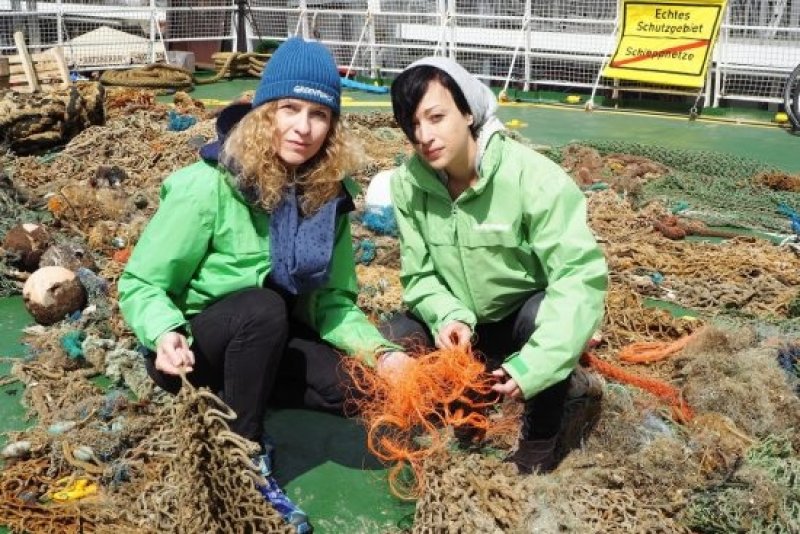
Greenpeace marine expert Sandra Schöttner (left) and spokesperson Melanie Aldrian in the midst of the recovered ghost nets. Among the nets are the particularly dangerous orange dolly ropes. (c) Olaf Klodt
More than one ton of fishing nets have been recovered near Sylt in the North Sea by divers from Ghost Fishing Foundation during a ten-day clean-up operation recently.
Operating aboard the Greenpeace ship Arctic Sunrise, the divers retrieved torn, abandoned or discarded fishing nets (called 'ghost nets') at the Sylt Outer Reef. If left out in the ocean, these ghost nets become death traps for fish and other marine animals that get entangled in them. Germany currently does not come under the EU legislation that regulates the salvage and disposal of such nets. "Federal Fisheries Minister Christian Schmidt must no longer look the other way: ghost nets are real and a threat to the sea. It's his job to protect our seas," said Greenpeace marine expert Thilo Maack in German.
EU regulations state that it is illegal to dispose of fishing gear at sea. If nets are lost, they must be reported and the authorities in charge of fisheries are then responsible to recover them. It comes under the Common Fisheries Policy (CFP) of the EU, which is legally binding for Germany. However, this portion of the CFP has not been implemented in Germany.
Kilometres of ghost nets threaten lives of marine creatures
According to a FAO (Food and Agricultural Organization) study, up to 25,000 fishing nets end up in European waters every year. They either fall off fishing vessels during rough weather, or are deliberately discarded. Either way, they lead to fatal consequences for the marine life that are entangled and subsequently perish in the kilometre-long nets. In European waters alone, such nets can span up to 1,250 kilometres in total every year – this is almost the distance from Hamburg to Rome.
The plastic nets may take up to 600 years to decompose. Over time, the nets gradually disintegrate into smaller fragments called microplastics that further degrade the marine environment and are hazardous to marine life that consume them. Besides killing the marine creatures, the microplastics also enter the food chain and may end up on our dinner plates. "The sea is not a garbage dump. Fisheries whose business depends on healthy oceans should be aware of this and act accordingly," said Maack. Up to 13 million tons of plastic waste enters the oceans. About one-tenth of more than a million tonnes is generated by fisheries. This is the equivalent to the weight of about 5,000 adult blue whales.
Finding out more about the ghost nets
To learn more about the results of the salvage operation, we went aboard the ArcticSunrise during the Whitsun weekend when it arrived in the Port of Hamburg from the operations in the Hanseatic city. Some of the salvaged ghost nets could be seen on board.
According to Greenpeace marine expert Sandra Schöttner, they had retrieved some particularly nasty plastic fibres amid the nets, like the dolly ropes which are attached to the bottom of fishing nets to prevent stones or mussel beds from damaging the nets. The problem with dolly ropes is that they tear easily upon contact with the seafloor, and end up at the bottom of the ocean. Marine creatures often choke on the dolly ropes, or are strangled or injured by them.
Last December, Greenpeace had embarked on a project to salvage plastic trash from the nests of birds at the Lummenfelsen nature reserve. Much of the trash consisted of the remnants of dolly ropes.
Solving the massive problem with a simple tool
Also on board the Arctic Sunrise was Cas Renooij from Ghost Fishing Foundation. Besides being the organisation's treasurer, he has also been involved in salvaging the ghost nets at Sylt Outer Reef. Sharing his experiences with us, he said that it was important to pay attention to the tides, as diving was only possible at the backwaters every six hours, due to the current. In all, eight divers had been involved in the operation, which involved three shipwrecks at depths of 25 to 30 metres.
When we asked if he used a dive computer, he smiled and said, "No, we use a dive table; a dive lasts about 30 to a maximum of 40 minutes. The only thing our men have is a bottom timer." Intrigued, we asked whether the divers used any special tools to cut through the nets. To this, Renooij replied with a smile: "We only need a very long knife with a serrated cutting edge, it can cut through a thick rope in seconds."
When asked about his future plans, Renooij said that he would support a small project in Spain to raise awareness about the ghost nets among the local divers there, so that they themselves can initiate recovery operations on their own.
For now, the Arctic Sunrise awaits its next valiant mission. As spokesperson Melanie Aldrian said, "Soon, it will return to the seas; when it comes to the protection of our marine protected areas – let us surprise you."
On 3 and 4 June 2016, the Arctic Sunrise will be in Bremen to educate the public about its current campaigns for marine protection.
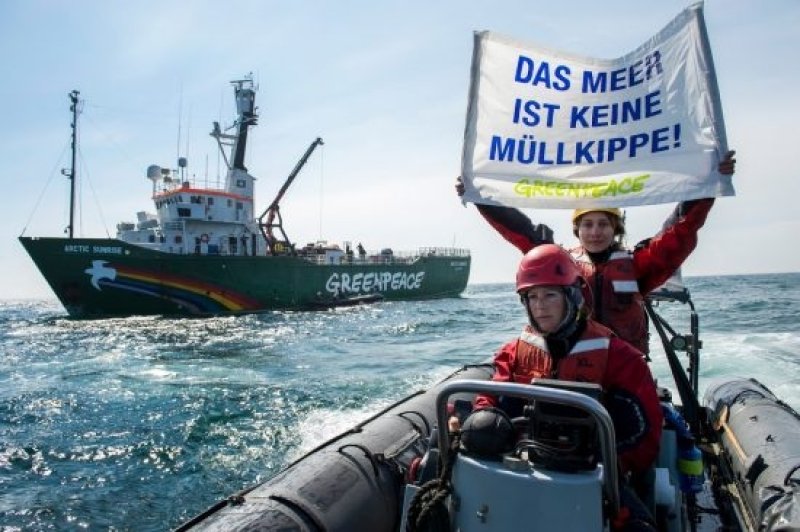
Greenpeace activists and divers from the Dutch organisation Ghost Fishing recovering lost fishing nets (ghostnets) in the North Sea Sanctuary (Sylter Aussenriff) off Sylt. (c) Bente Stachowske / Greenpeace
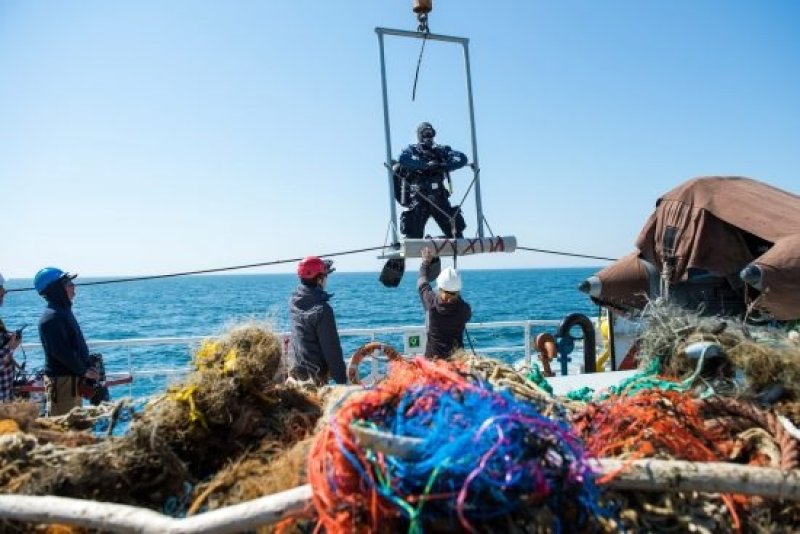
Greenpeace activists and divers from the Dutch organisation Ghost Fishing recovering lost fishing nets (ghostnets) in the North Sea Sanctuary (Sylter Aussenriff) off Sylt. (c) Bente Stachowske / Greenpeace
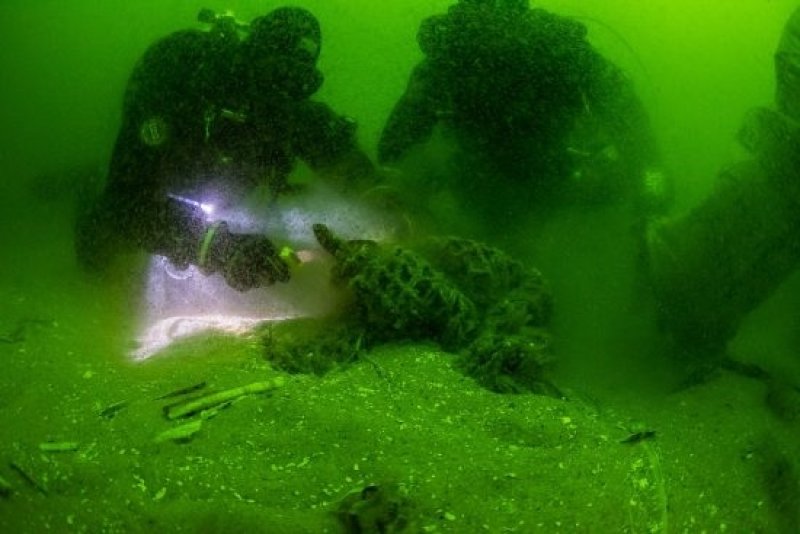
Greenpeace activists and divers from the Dutch organisation Ghost Fishing recovering lost fishing nets (ghostnets) in the North Sea Sanctu
Bài viết này được dịch tự động và có thể chứa một số lỗi nhỏ; vui lòng tham khảo bản gốc tiếng Anh nếu có thắc mắc.