Trade in whale products by Iceland and Norway escalates
environmentmarine conservationconservationendangered specieswhaling

Fin whale
(c) Fabian Ritter
Norway and Japan are doing all they can to escalate commercial whaling
Conservation and animal welfare organisations have confirmed that
Iceland had shipped more than 1,500 tons of Icelandic fin whale meat to
Japan in July 2016. This species is actually still very much under
threat. This announcement was made at the start of the 17th Convention
on International Trade in Endangered Species of Wild Fauna and Flora
(CITES) in Johannesburg last week.
From July to September 2016, conservationists from the Whale and
Dolphin Conservation (WDC), OceanCare, Pro Wildlife, Animal Welfare
Institute (AWI) and Environmental Investigation Agency (EIA) tracked a
vessel named Winter Bay from Hafnarfjordur in Iceland to Osaka in
Japan. They suspected that it was transporting the meat of endangered
fin whales. This suspicion was confirmed after they checked the
Hagstofa (Icelandic trade database) and an Icelandic media report. Last
year, the same vessel had also transported 1,800 tonnes of fin whale
meat to Japan.
The CITES Secretariat has proposed that a decision related to the
conservation of whales – Decision 14.81 on Great Whales – be rescinded.
However, this could lead to the premature reclassification of the
protection status of many whale species and weaken the ban on the trade
in whale products.
Programme Director at WDC Astrid Fuchs said that it was
incomprehensible that CITES would consider removing the protection when
the trade in whale products by Iceland, Japan and Norway has escalated,
despite the trade ban and moratorium on commercial whaling.
Parties to CITES must ensure that Decision 14.81 is retained as is, "
said Sigrid Lüber, President of OceanCare. " Should this decision be
rescinded, we could eventually see a return to the days when
international trade fuelled an out-of-control whaling industry. "
In mid-September, a company in Norway received an export permit to ship
up to 195 metric tons of minke whale meat to Japan. This would be the
largest single Norwegian shipment of whale meat since the international
ban on whaling came into effect 30 years ago.
Susan Millward, Managing Director of AWI, expressed concern: " Norway
and Japan are doing all they can to escalate commercial whaling and
trade in whale products. CITES must support the IWC moratorium, and
address the issue of whale trade under reservation. Iceland, Norway and Japan have appealed against the ban on the trade in
fin whale and minke whale products, and currently utilise their
individual countries’ reservation to the listing to continue trading
among one another.
There’s no excuse for Iceland to continue to slaughter whales in
violation of the 30-year old commercial whaling moratorium agreed to by
the International Whaling Commission. The international community must
now step in, " said Clare Perry, head of EIA’s Oceans Campaign.
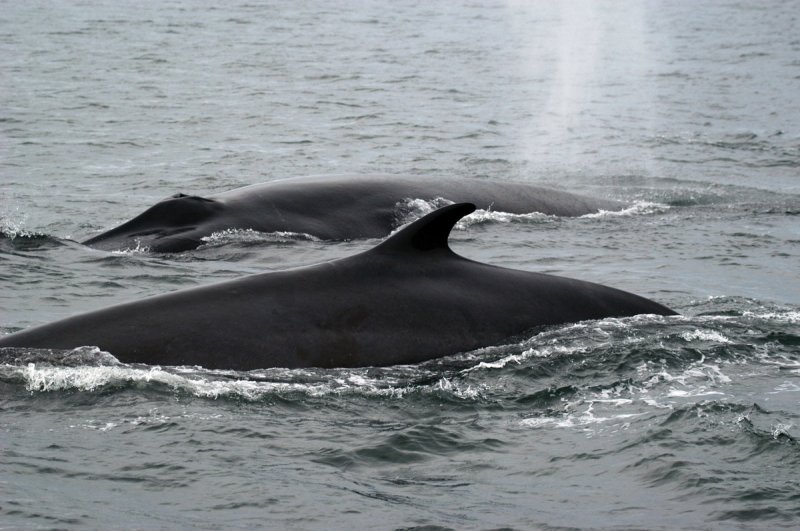
Fin whales
(c) GREMM
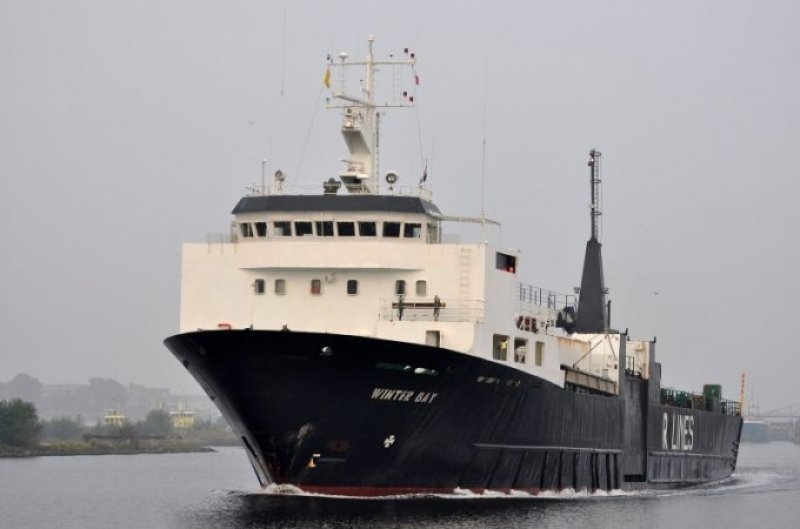
Vessel "Winter Bay" transporting the meat of endangered fin whales.
Данная статья была переведена автоматически и может содержать незначительные неточности; в случае сомнений, пожалуйста, обратитесь к оригинальной английской версии.