Sowing corals: how we could pave the way for effective coral reef restoration
environmentmarine conservationssireef restorationcoral restorationinnovative techniques
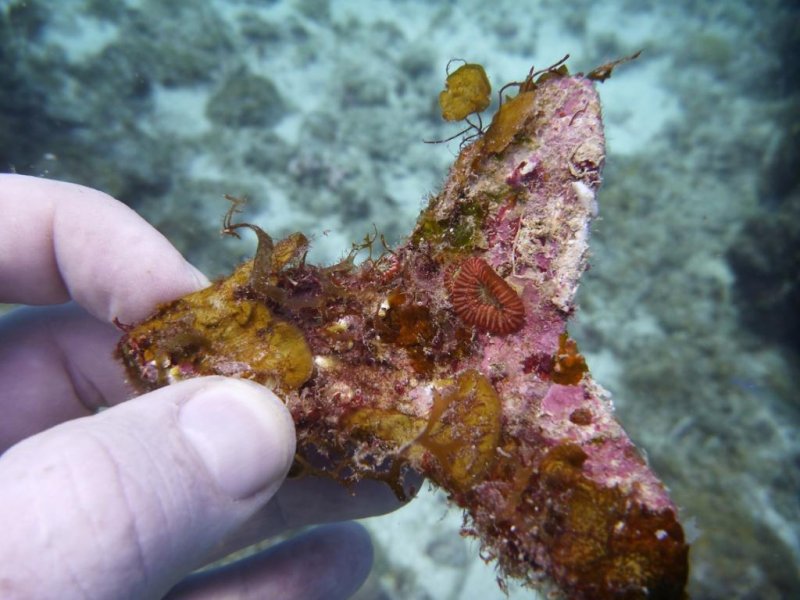
Close-up Seeding Unit with settler and by Valerie Chamberland
In a study led by SECORE Internationl , scientists pioneered the development of a novel approach to
simply sow coral recruits onto degraded reefs like farmers scatter seedlings on a field. Formerly, handling of coral outplants have been truly costly and time-consuming. With this innovative approach, handling and cost can be minimized and it may therefore allow for effective large-scale reef restoration. In the last decade, the troubling loss of coral reefs worldwide has prompted scientists and conservationists to assist the reefs’ recovery through active restoration approaches. Thereby, corals are transplanted on degraded reefs to help them to recover. Until now, actual restoration has been done manually by divers, who had to attach each coral, whether a fragment or a coral recruit settled on a substrate, individually.
Today, reef degradation occurs at a scale of hundreds and thousands of square kilometers. In contrast, restoration activities happen on less than one hectare in scale; limited by the labor-intensive, and therefore costly, techniques that are currently available.
How does it work? "If we want restoration to play a more meaningful role in coral reef conservation, we need to think in new directions. We have developed our sowing approach to allow the handling of large numbers of corals in a very short amount of time at significantly lower costs. This is an important step towards making coral restoration happen on a meaningful scale", says Dr. Dirk Petersen, Executive Director SECORE International. In the sowing approach, coral larvae are settled on specifically designed substrates, coral and substrate together called 'Seeding Units'. Those Seeding Units are sown on the reef by simply wedging them in crevices as they self-stabilize due to their shape and do not require manual attachment. After a while, they become attached to the reef via natural processes, for instance, cemented to the ground by Crustose Coralline Algae (CCA). In the future, the Seeding Units could be sown from a boat or by a drone.
To give an example: transplanting 10,000 individual corals on one hectare using common methods requires several hundred to a few thousand person-hours. "Sowing the same number of corals could be achieved in less than 50 person-hours, a time saving of over 90 percent.
Additionally, material costs could be reduced up to one third, representing a substantial advance for future restoration work", says SECORE’s Research Director Dr. Margaret Miller.
Corals' sexual reproduction & genetic diversity On Curaçao, the team collected larvae released by colonies of golf ball corals (Favia fragum). "Shortly after collection, we settled
larvae on specially designed tetrapod-shaped substrates made of cement", explains Dr. Valérie Chamberland, who led the field research for this study on Curaçao. Working with sexually propagated corals maintains genetic diversity. Different gene combinations, so-called genotypes, arise within the population by recombination―the reshuffling of the genetic characteristics of parents among their offspring. New genetic combinations may then equip some coral offspring with capabilities to better cope with today's and future conditions than their struggling parents. "This is of vital importance for any coral species in the face of climate change. In this way, we may get corals that, for example, are more resilient to raising water temperatures", says Dirk Petersen. Three weeks later, the settled coral larvae had turned into initial coral polyps and the units were sown on the reef in front of the Curaçao Sea Aquarium. "The specific shape of the tetrapod substrates allowed us to simply wedge the Seeding Units into natural crevices of the reef. Most Seeding Units were stable within a few weeks, either secured in crevices or naturally cemented on the reef’s framework", says Valérie Chamberland. Helping baby corals to survive The design of the substrates not only promotes the attachment on the reef, but i t also enhances the survival of the coral settlers. On the substrates, the little baby corals can find a sheltered place to settle. "The different orientations of the Seeding Units’ surfaces and their integrated grooves create micro-habitats for coral settlers. There, competition and predation affecting the young and very fragile corals is reduced compared to when larvae settle directly on the reef.
This is crucial, as our results show that the early post-settlement life stage is the bottleneck for the survival of young corals", says Dirk Petersen. In the twelve months following the sowing, the scientists closely monitored substrate attachment to the reef and the survival rates of coral settlers. "We settled between 20-30 larvae on each substrate to ideally have one coral established per Seeding Unit
in the long term. After one year, more than half of the units were recovered and still harbored at least one coral, meeting this target required to eventually yield a successful restoration outcome", explains Valerie Chamberland. Taking the next step So far, sowing settled corals was tested in a research pilot―now it needs to be tested on a much larger scale. The processing of 50,000 to 100,000 substrates within a single location and spawning season will involve major logistical and engineering challenges. SECORE and partners are currently working to overcome these challenges in the course of the recently launched Global Coral Restoration Project Original
study in Nature's Scientific Reports: New Seeding Approach Reduces Costs and Time to Outplant Sexually Propagated Corals for Reef Restoration Author:Dr. Carin Jantzen
Communication
and Public Relations
SECORE International, Inc.
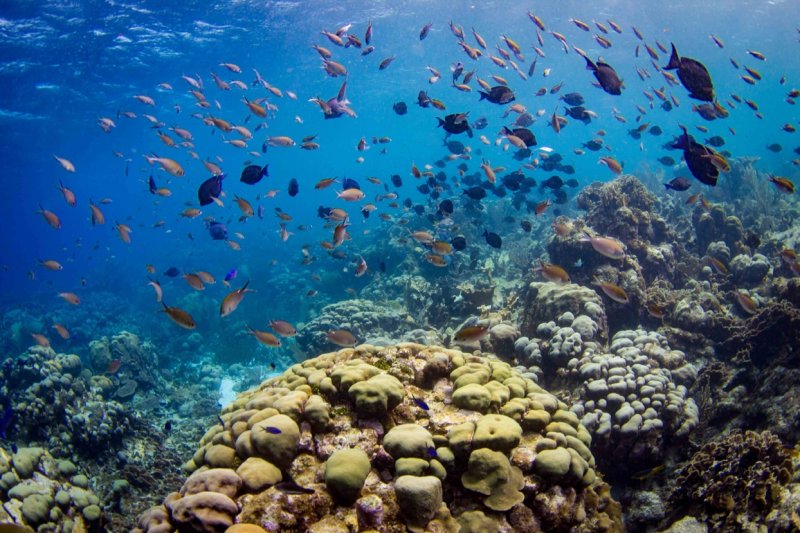
Healthy Reef site on Curaçao by Tom Moore

Dead elkhorn coral skeletons on Curacao by Valerie Chamberland
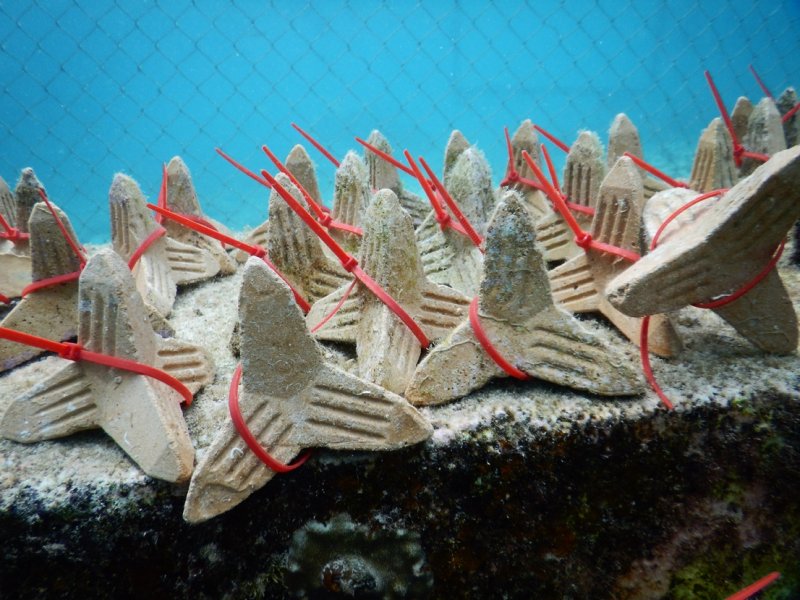
Seeding UNits ready to be outplanted by Kelly Latijnhouwers
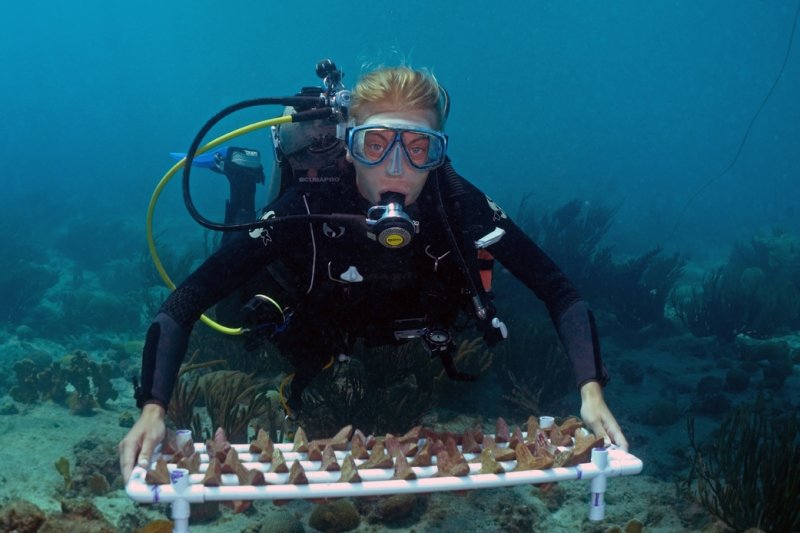
Ready to go by Benjamin Mueller

Outplanting corals in a study transect on Curaca
이 기사는 자동 번역되었으며 약간의 오류가 포함될 수 있습니다. 의심스러운 점이 있으면 원문 영어 버전을 참조하십시오.