Ocean acidification: herring could benefit
environmentmarine lifeocean acidificationfish larvaecarbon dioxide
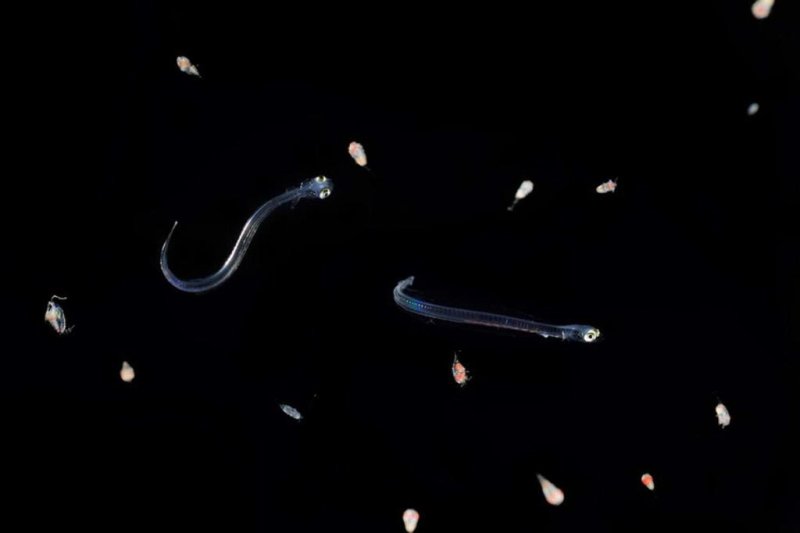
Herring larvae along with copepods belonging to zooplankton, photo: Solvin Zankl, www.solvinzankl.com
Studies show complex effects of carbon dioxide on fish stocks
The larvae of many fish species are sensitive to ocean acidification -
studies have already shown. Acidification is caused by large amounts of
carbon dioxide (CO2), which enter the seawater from the atmosphere.
This CO2 also affects the food supply for the larvae. Researchers at
the GEOMAR Helmholtz Center for Ocean Research Kiel have been studying
herring larvae to see how both effects can have a combined effect on
young fish
As soon as they start life, it's about survival for young fish. They
must learn to eat and escape enemies. At the same time, they are the
most sensitive to environmental factors such as temperature, oxygen and
the pH of the water at this stage of their lives. Exactly these factors
are currently changing globally: temperatures are rising and oxygen is
being lost to the oceans. In addition, more and more carbon dioxide
(CO2) from the atmosphere gets into the seawater, where it forms
carbonic acid and causes the pH to drop. But not only directly, but
also indirectly, additional CO2 influences the chances of survival of
fish larvae, because it can also change their food supply.
Researchers from Germany, Sweden and Norway led by GEOMAR have now used
herring larvae to investigate how these two effects of ocean
acidification combined can affect the survival and growth of juvenile
fish. Recent experiments in the international journal Nature Ecology
and Evolution showed that herring could benefit from an acidified food
web. "Perhaps they will have an advantage over other, more sensitive
species in a more acidic ocean of the future," says Dr. Michael Sswat
from GEOMAR, first author of the study.
To test the response of the young herring to ocean acidification, the
team allowed them to grow up in a complete food web under present and
future CO2 conditions. For this purpose, it used the Kiel KOSMOS
offshore mesocosms, which were anchored in 2013 for a long-term test in
the Swedish Gullmarsfjord. "The mesocosms isolate 50 cubic meters of
seawater with all the plankton organisms occurring in it, just like in
a huge test tube," explains Prof. Dr. med. Ulf Riebesell from GEOMAR,
co-author of the study. Five of the mesocosms were enriched with CO2 to
simulate concentrations predicted for the end of the century. Five
mesocosms were kept at current CO2 levels for comparison.
In mesocosms with elevated CO2 concentrations, natural algal blooms
increased between February and June. "As a result, animal plankton also
grew better, and the herring larvae then profited from this increased
food supply," explains Dr. med. Michael Sswat. Six weeks after
hatching, nearly 20 percent more herring larvae survived under future
CO2 conditions. "This overall positive effect of ocean acidification on
herring larvae was initially surprising, as previous studies have shown
negative direct effects of acidification on larval survival for many
other fish species," adds Dr. Catriona Clemmesen from GEOMAR, also
co-author of the study.
One explanation for the surprising results was found in a parallel
laboratory study, which showed that herring larvae are generally more
resistant to pH changes. "Siblings of the herring larvae in the
mesocosms were raised in the laboratory at comparable CO2 levels,
without changes in the feed supply. Thus we were able to separate the
direct effect of carbon dioxide on the herring larvae from the indirect
influence via the food chain ", explains Dr. med. Sswat, who is also
the first author of the laboratory study, which appeared in late
January 2018 in the journal PLOS ONE.
The tolerance of herring larvae to pH changes could be due to the way
of life of the fish. "Herring spawn mostly near the ground, where
naturally high CO2 levels prevail. They are therefore probably already
better adapted than other fish species such. the cod that spawns near
the surface of the water, "explains Dr. Clemmesen.
How the survival of the fish larvae and thus whole stocks changes in
the future depends on many factors. In addition to ocean acidification,
rising temperature and overfishing are also changing marine communities
around the world, and far from all of these consequences are
foreseeable. "But changes in the ecosystem are likely. Therefore, there
is a high risk that the direct and indirect consequences of unchecked
CO2 emissions will have a negative impact on overall fish stocks,
"concludes Ulf Riebesell. Links to the studies: http://dx.doi.org/10.1038/s41559-018-0514-6 and https://doi.org/10.1371/journal.pone.0191947
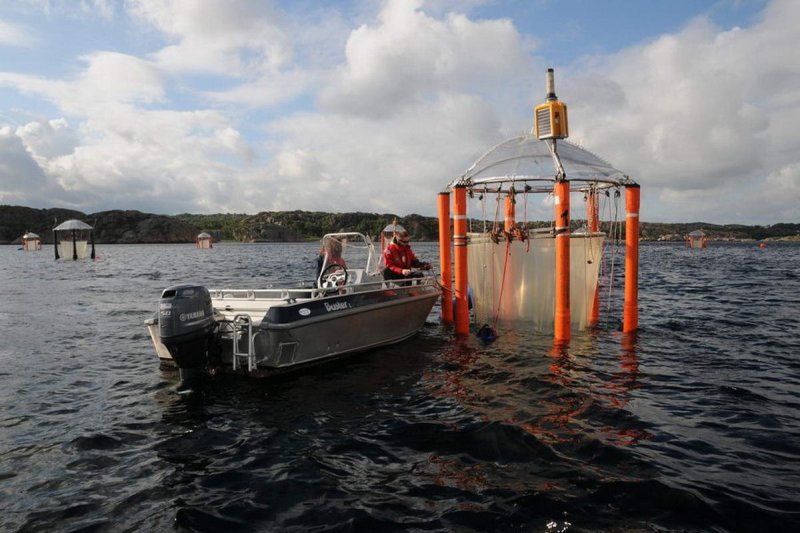
In 2013, scientists from Kiel exposed herring larvae in the Swedish town of Gullmarsfjord in the KOSMOS mesocosms to future CO2 conditions, Photo: © Maike Nicolai (CC BY 4.0)
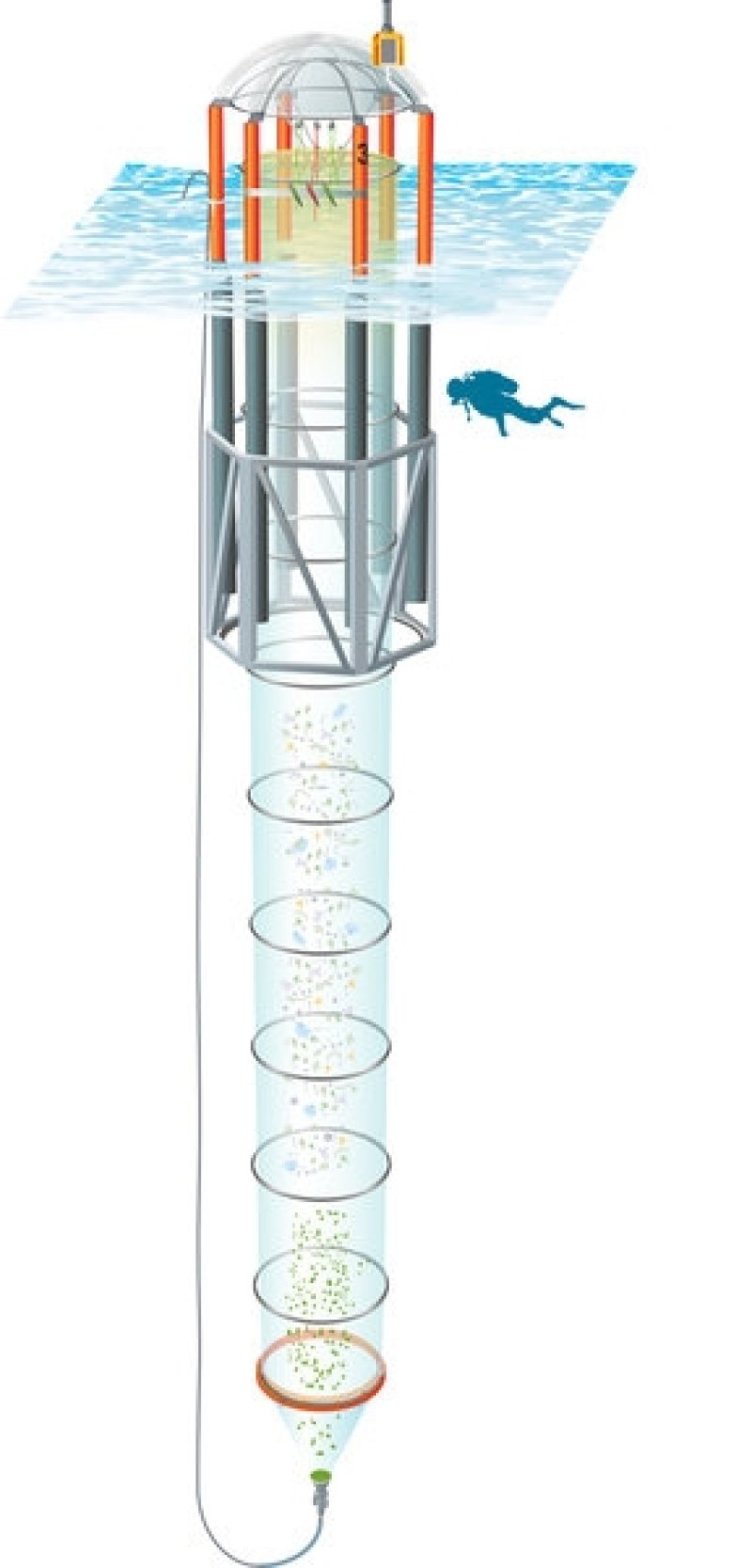
The KOSMOS mesocosms isolate 50 cubic meters of seawater with all the plankton organisms occurring in it, as in a huge test tube. Graphic: © Rita Erven / GEOMAR
Questo articolo è stato tradotto automaticamente e potrebbe contenere piccole imprecisioni; in caso di dubbi, consulta la versione originale in inglese.