11 Incredible Tech Dive Sites in Lakes, Mines, and Sinkholes
technical divingtravel & tours
mares
From crystal-clear freshwater caverns to vertical shafts, the oceans, lakes, sinkholes, and flooded mines of the world offer some of the most extreme and fascinating environments in technical diving. These tech dive sites are not only geologically spectacular—they push the limits of skill, planning, and underwater exploration. In this guide, we explore 11 of the most incredible tech dives across the globe.
The Dahab Blue Hole is a legendary sinkhole plunging over 100 meters into the Red Sea. Its most iconic feature, The Arch, is a horizontal tunnel at 56 meters that leads from the sinkhole to the open sea.
Divers navigating this passage must manage overhead and inert gas narcosis risks and carefully plan gas usage. The access directly from the shore makes this site ideal for deep trimix dives and staged decompression, with narrow, huge descents and hauntingly beautiful vertical walls.
Access info: Accessible to the public. Dives must be arranged through dive centers in Dahab.
El Zacatón in Mexico is one of the deepest known water-filled sinkholes on Earth, descending to around 319 meters. Its vertical shaft is thermally stratified by geothermal activity, creating unique temperature layers.
The scale of the site requires precise depth planning, multiple stages of differing gas mixes, and long decompression stops. The mineral-rich waters and unexplored subterranean features make Zacatón a magnet for expedition-style dives and advanced rebreather exploration.
Access info: Access may be restricted to this dive site; divers should seek permission from local authorities and ensure compliance with regulations.
Home to more than 10 kilometers of mapped underwater cave passages, Peacock Springs in Florida is one of the most extensive tech dive sites in North America. It is a sidemount and backmount diver’s paradise, featuring restrictions, high-flow systems, and complex junctions that demand complex line navigation.
With multiple entry points like Peacock I and II, Orange Grove Sink, and Challenge Sink, this site supports advanced surveying, and exploration dives with a focus on team protocols and environmental preservation.
Access info: Accessible to the public. Divers must be certified cave divers and register at the park.
READ MORE: SSI x Edges of Earth: Welcome to Blackwater Diving
Located in the heart of Florida’s cave country, the Devil’s Cave System in Ginnie Springs —comprised of Devil’s Eye, Devil’s Ear, and Devil’s Spring—is one of the most iconic and accessible cave diving systems in the world.
This karst formation offers deep, high-flow cave passages ideal for advanced technical dives using sidemount or backmount configurations, rebreathers, and multi-stage setups.
With powerful currents, crystal-clear water, and complex navigation, the system challenges divers with long penetrations, tight restrictions, and photogenic passages that are popular for mapping and documentation.
Access info: Diving the Devil’s Cave System requires Full Cave Diving certification. Ginnie Springs is privately owned and permits are required; divers must check in, show proof of certification, and follow site rules.
The Mount Gambier region in Australia is a hotspot for freshwater sinkholes and cave diving, with multiple world-renowned tech dive sites. Notable sinkholes include:
- Kilsby Sinkhole is famed for its clear water and light effects.
- Hell’s Hole is a dramatic forest-surrounded drop accessed via rope entry.
- Engelbrecht Cave features a submerged cave system beneath the town itself.
Each site offers a distinct dive environment—from wide-open caverns to complex passages—making Mount Gambier a must-visit for fans of freshwater technical diving.
Access info: Access to the Mount Gambier Sinkholes is regulated; divers need to obtain permits through theCave Divers Association of Australia.
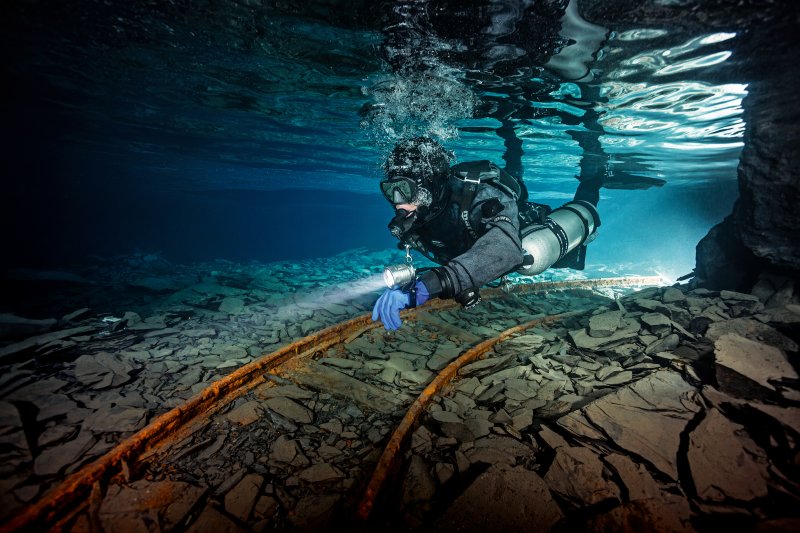
The Slovak Opal Mines near Červenica offer a unique diving experience within a historic opal mining complex. This labyrinthine network extends over 22 kilometers with multiple levels, some descending to depths of 150 meters, and is one of the most stunning tech dive sites.
Divers can navigate through flooded tunnels adorned with vibrant mineral deposits, witnessing firsthand the remnants of centuries-old mining operations. The water temperature remains around 3-5°C, necessitating appropriate thermal protection.
Exploring these mines provides a rare glimpse into subterranean history combined with the allure of technical diving.
Access info: Access to the Slovak Opal Mines is restricted; divers must obtain special permits and coordinate with local authorities.
Get a visual on this stunning mine: Deep Inside the Gem - Diving the Slovak Opal Mines
Boesmansgat in South Africa is a deep sinkhole extending to approximately 270 meters, and it is one of the deepest submerged freshwater caves in the world. Unique technical features include high-altitude dive planning and thermoclines.
Divers often require redundant life support systems, multiple bailout tanks, and dive computers capable of managing extended decompression. Low visibility and a lack of reference points add to the challenge, creating a legendary site for deep exploration.
Access info: Access to Boesmansgat may require permission from landowners; divers should coordinate with local dive clubs or authorities.
Emerging from the base of Takaka Hill, the Riwaka Caverns in New Zealand feature underwater passages and a small, dry air chamber. Divers pass through cool freshwater passages with submerged rock formations at this unique dive site.
This cave system is tight and shallow and offers a short but challenging cave dive with narrow spaces and sometimes limited visibility – it is one of the more unusual tech dive sites in the Southern Hemisphere.
Access info: Access may be limited to the Riwaka Caverns; divers should contact local dive centers to find out what permissions are required.
Hranice Abyss is the deepest known underwater cave in the world, with a confirmed depth of over 404 meters - and the bottom has still not been reached. Formed within a collapsed karst sinkhole, its vertical shafts are filled with mineral-rich, stratified water that presents dramatic layering.
While early expeditions used deep trimix and closed-circuit rebreathers to explore the upper sections, modern depth records have been set using remotely operated vehicles (ROVs) due to the extreme risk.
Access info: Access is restricted and must be arranged through local scientific and diving organizations.
Love cave diving? Check out: 16 Best Cave Diving Spots In The World
Home to the largest known subterranean lake in the world, Dragon’s Breath Cave in Namibia is one of the most elusive and extreme tech dive sites on Earth. The lake lies more than 100 meters below the surface, accessible only via a dry caving descent through complex passages.
The underwater portion remains largely unexplored, due to logistical challenges, limited visibility, and unknown depth. A handful of expedition dives have used advanced technical setups, including trimix and closed-circuit rebreather diving.
Access info: Access is strictly regulated and limited to scientific or exploratory teams - making this site a true frontier for tech diving.
With over 350 kilometers of mapped passages, Sistema Sac Actun in the Yucatan Peninsula is one of the longest and most intricate underwater cave systems on Earth. This sprawling network of cenotes and submerged tunnels features haloclines, tight restrictions, fossil formations, and ancient geological structures.
All of which makes it an ideal tech dive site for sidemount cave diving, photogrammetry, and conservation mapping. Archaeological finds, including Ice Age human remains, add immense scientific value to exploration efforts.
Access info: Divers must be fully cave certified and book through authorized local guides or dive centers, with most entrances located on private land.
These tech dive sites exemplify the allure and challenges inherent in technical diving. Each location offers a distinct environment, from the historical tunnels of the Slovak Opal Mines to the profound depths of the Hranice Abyss. Exploring these sites not only tests a diver's skill and preparation but also rewards them with unparalleled dive experiences.
Are you inspired to explore the world’s most fascinating tech dive sites? Whether you are planning your next expedition or looking to upgrade your skills, you can find trusted technical diving instructors and facilities through SSI’s global network.
Find your nearest SSI Training Center today!