Best Shark Dives: 15 Places to See Sharks in 2026
scuba divingfreedivingtravel
Alamy-Christian Zappel
Few underwater encounters compare with watching a shark glide silently through the blue, its tail moving in slow, powerful strokes. From enormous whale sharks and tiger sharks to schooling hammerheads and oceanic whitetips, the oceans offer remarkable chances to see these animals in the wild.
The best shark dives are not about getting as close as possible, but about understanding shark behavior, choosing responsible operators, and respecting their space. From remote Pacific islands to accessible reefs, these 15 locations offer memorable encounters and show why protecting shark habitats matters.
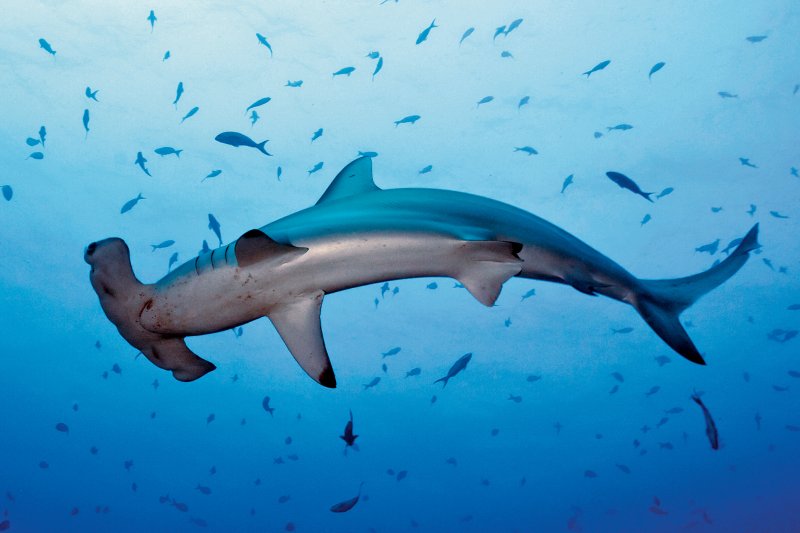
At Cocos Island, vast schools of scalloped hammerheads emerge from the blue, making the journey worthwhile. Its nutrient-rich waters and seamounts attract pelagic species. Hammerheads are the star attraction, but silky sharks, whitetip reef sharks, whale sharks, and manta rays may also appear.
The best time for hammerheads is generally June through November, although conditions vary. Strong currents and deeper blue-water sites suit experienced divers, and the liveaboard journey is part of the adventure. Far offshore, the focus stays on wild encounters rather than staged interactions.
Darwin and Wolf in the northern Galápagos are famous for scalloped hammerheads. Divers can sometimes watch schools of hundreds sweep through the blue. Whale sharks, Galápagos sharks, sea lions, rays, and turtles share these waters.
Hammerheads appear year-round, although numbers vary by season, location, and conditions. Strong currents and exposed blue-water sites make these islands better suited to experienced divers. The Galápagos Marine Reserve offers sharks and rays an important refuge, making respectful diving especially important here.
AdobeStock-G-Russel-Childress
Interested in rays? Discover 6 Breathtaking Destinations to Dive with Manta Rays.
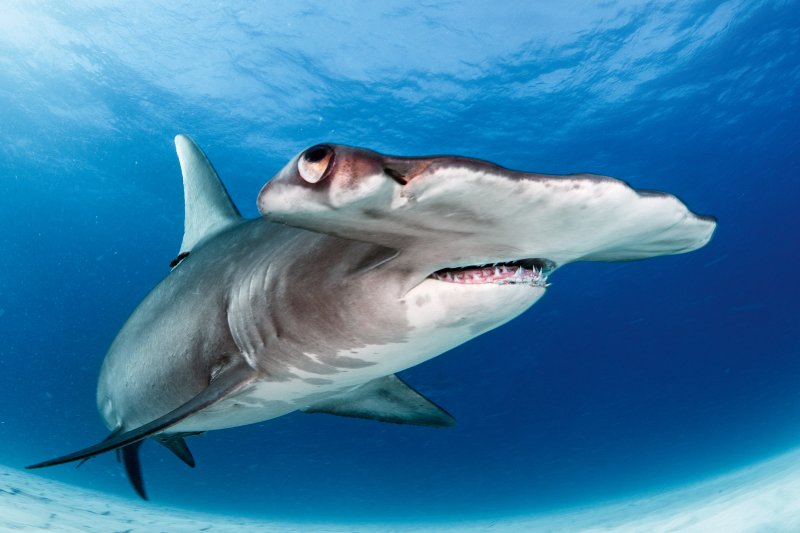
Bimini offers a different kind of shark encounter. In the cooler months, especially December through March, great hammerheads may glide across the island's shallow banks. Larger than scalloped hammerheads, these powerful sharks usually appear alone rather than in huge schools.
The shallow setting offers striking photo opportunities, but divers should follow local briefings and avoid approaching or chasing sharks. Easier to reach than remote liveaboard destinations, Bimini appeals to divers seeking a dedicated hammerhead trip in the Bahamas without spending days at sea.
Far offshore in the eastern Pacific, Malpelo attracts divers with schools of hammerheads. Scalloped hammerheads can gather around submerged pinnacles, their silhouettes filling the blue, with silky sharks and other pelagic species nearby.
Most arrive by liveaboard; strong currents make Malpelo's shark dives better suited to experienced divers than first-time shark divers. Across the Eastern Tropical Pacific, hammerheads travel between protected areas around Galápagos, Cocos, and Malpelo.
Layang Layang is a remote atoll in the South China Sea, long prized for seasonal shark encounters. Scalloped hammerheads can gather along the outer reef and steep drop-offs, sometimes in groups.
Strong currents flow along the walls, testing buoyancy and situational awareness. Hammerhead sightings historically peaked in April and May, though encounters were never guaranteed. The island's only resort remains closed, and advertised liveaboard expeditions require verification of access before booking.
Socorro Island and the Revillagigedo Archipelago attract divers with giant Pacific manta rays, dolphins, and whales, but scalloped hammerheads are another reason to visit. At Roca Partida, shark schools may emerge from open water.
The main dive season runs November through May, with conditions varying between islands. Currents and exposed blue-water sites demand strong buoyancy and open-water experience. Liveaboards reach these remote sites, home to sharks and other pelagic wildlife.
For other wild dolphin destinations and responsible viewing tips, explore SSI's 4 Best Places to See Dolphins in the Wild.
The Brothers are two isolated islands in the Egyptian Red Sea, where large oceanic whitetips patrol the blue, their white-tipped fins unmistakable. Hammerheads may also appear at depth.
Steep walls plunge into deep water, and currents can change quickly. October through December is often a good time for oceanic whitetip sightings, although encounters remain unpredictable. These exposed sites call for experienced divers with appropriate training and a cautious approach to currents and depth.
Explore Red Sea diving on Scubago for offshore dive-site and liveaboard options.
Daedalus is another offshore Red Sea reef where oceanic whitetips patrol the blue and hammerheads appear seasonally. Rising sharply from deep water, the reef attracts large pelagic predators.
Summer may bring hammerhead schools; oceanic whitetips attract divers later in the year. Strong currents and exposed conditions make Daedalus a dive for experienced divers.
SSI's Waves, Tides and Currents Specialty helps divers assess moving water. Liveaboards reach this remote reef.

iStock-June-Jacobsen
Fuvahmulah stands apart from other Maldivian destinations for its concentration of large pelagic animals. Depending on season and conditions, divers may encounter tiger sharks, thresher sharks, whale sharks, and hammerheads.
Early-morning blue-water shark dives can reveal scalloped hammerheads, particularly from October to April. Deep water and sometimes strong currents demand solid buoyancy control and careful attention to local briefings. For more on tiger shark encounters, explore SSI's Fuvahmulah diving guide.
South Ari is renowned for whale sharks. These enormous filter feeders do not hunt like other sharks, yet watching one glide past, its spotted back stretching through the blue, is unforgettable.
A resident population makes sightings possible year-round. Divers and snorkelers should keep their distance, never touch the sharks, and leave their path clear. Shark and ray tourism draws visitors to the Maldives, so respectful behavior helps keep these encounters sustainable. Explore South Ari Atoll on Scubago for local dive sites and centers.
Off KwaZulu-Natal, Aliwal Shoal offers shark encounters that change with the seasons. Tiger sharks, bull sharks, whitetip reef sharks, and other species may cruise past divers.
Current and surge can make some reef sites more demanding. Warmer months favor tiger shark sightings; winter brings gatherings of ragged-tooth sharks. Choose dives that match your experience, keeping depth, gas, and current limits in mind even when a shark appears.
Fiji's Beqa Lagoon is famous for shark dives with bull sharks and other reef-associated species cruising through warm tropical water. Colorful reefs provide a striking backdrop for encounters with several shark species.
Shark diving has a long history here, but responsible operators prioritize animal welfare, clear briefings, and conservation. Before booking, ask how encounters work and choose dives that minimize disturbance rather than push for close approaches.
Cabo Pulmo pairs shark encounters with a remarkable conservation story. Its national park protects a thriving reef in the southern Gulf of California, where divers may spot reef sharks, rays, and turtles beside swirling schools of fish.
Water is warmer in summer and fall, though visibility shifts with the seasons. Cabo Pulmo shows how marine protection benefits the entire reef, not just its best-known animals, making each shark encounter part of a much bigger conservation story.
At Fakarava's southern pass, gray reef sharks gather in impressive numbers. Their silhouettes stream through the current, filling the blue with a moving wall of sharks and creating an unforgettable spectacle.
Powerful tidal currents make diving the pass a challenge even for experienced divers. Follow local guidance on entry and exit procedures, then position yourself safely instead of chasing sharks. Let them move naturally through the channel around you.
Stock-HakBak1979
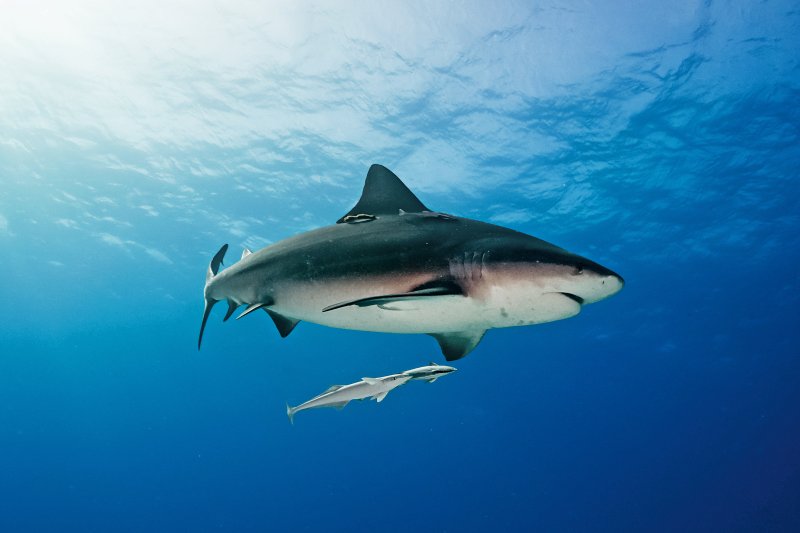
At Protea Banks, bull sharks, tiger sharks, hammerheads, and other pelagic species may cruise out of the blue. Exposed to the open ocean, these South African dive sites can feel far removed from calm tropical reefs as conditions shift around you.
Currents, depth, and surf make Protea Banks better suited to experienced divers. Local operators choose sites to match the day's conditions and the group's experience, helping keep shark encounters responsible. Explore Protea Banks on Scubago for dive-site details and seasonal shark sightings.
The best shark dives happen on the shark's terms. Let it glide past or turn away without blocking its path. Never chase, touch, corner, or try to ride a shark. Move calmly, maintain good buoyancy, and follow your dive professional's briefing.
Keep flash away from sharks' eyes, streamline your gear, and leave them a clear route to swim away. If an operator encourages touching, chasing, or provoking sharks for photos, choose another operator.
Responsible shark tourism can support conservation. Choosing operators that support local marine protection, follow wildlife guidelines, and prioritize education helps create an economic reason to keep sharks alive and their habitats healthy.
Before booking shark dives, explore the SSI Shark Ecology Specialty. Learning about shark biology, behavior, identification, and conservation helps you understand what a shark is doing in the water and why its habitat deserves protection.
The most memorable shark encounter is not necessarily the closest. It is watching a wild shark glide past, then disappear into the blue, knowing sharks have inhabited these oceans long before us. With thoughtful planning, appropriate training, and respect for their space, shark dives can turn fascination into genuine appreciation for these remarkable animals.
Use the SSI Center Locator to find SSI Training Centers and professionals who can help you build the skills for your chosen destination.