Fish distracted by motorboat noise become easy prey
environmentmarine lifemarine conservationcoral reefnoise pollution
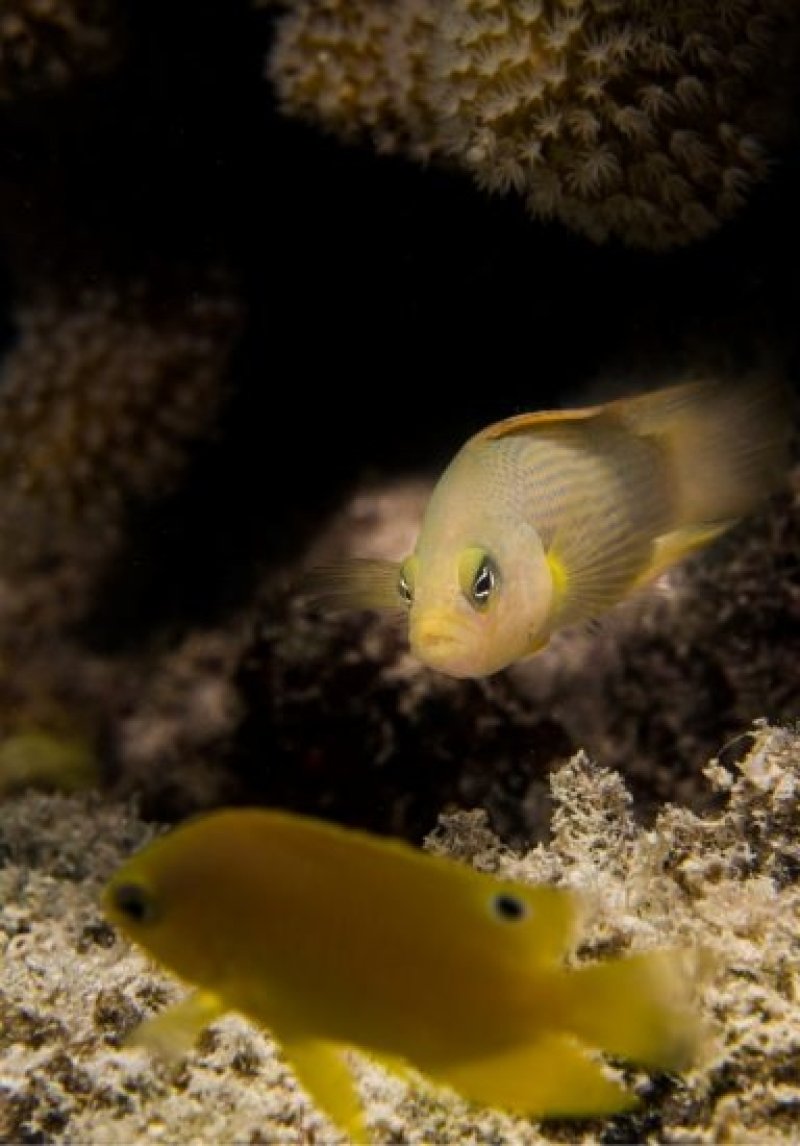
A dusky dottyback lurking on a Ambon Damselfish. (c) Christopher Mirbach
In areas where motorboats regularly operate, prey fishes have a higher tendency of being caught and eaten by other marine animals.
This was the conclusion drawn by researchers from the ARC Centre of Excellence for Coral Reef Studies at James Cook University. They were investigating the effects of noise on the survival of the young Ambon damselfish (a coral reef fish) in encounters with their natural enemy, the dusky dottyback.
Professor Mark McCormick, as part of an international research team, discovered that the noise generated by passing motorboats increases the stress levels of the Ambon damselfish and this lowers their ability to escape from the dusky dottyback. As a result, their chances of survival are halved.
To date, this study is the first to prove that noise in the sea has a direct impact on the survival of fish. "It shows that juvenile fish become distracted and stressed when exposed to motorboat noise and predators capitalise on their indecision," said Professor McCormick.
The researchers had complemented their fieldwork with laboratory experiments, using playbacks and real boat noise.
"We found that when real boats were motoring near to young damselfish in open water, they became stressed and were six times less likely to startle to simulated predator attacks compared to fish tested without boats nearby," said Dr Stephen Simpson from University of Exeter, which had led the study.
Managing the local environmental stresses like noise has been identified as an important first step in protecting the marine environment. Thus, the research team hopes that the results of their study can lead to improved management of environmental noise in coastal areas. "If you go to the Great Barrier Reef, there is a lot of noise from motorboats in some places. But unlike many pollutants we can more easily control noise. We can choose when and where we make it, and with new technologies, we can make less noise. For example, we could create marine quiet zones or buffer zones, and avoid known sensitive areas or times of year when juveniles are abundant," said Professor McCormick.
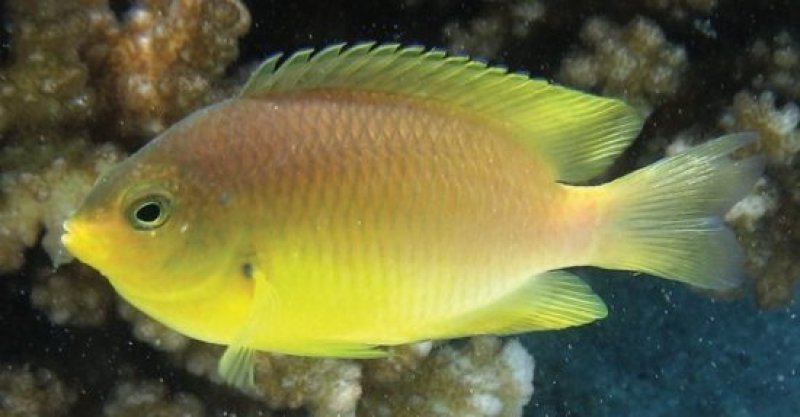
Ambon Damselfish. (c) Gagliano / Wikimedia
این مقاله به صورت خودکار ترجمه شده است و ممکن است حاوی اشتباهات جزئی باشد؛ در صورت هرگونه شک و تردید، لطفاً به نسخه اصلی انگلیسی مراجعه کنید.