“Seas and Oceans” theme for Year of Science 2016/17
environmentmarine conservationoceaneducationclimate
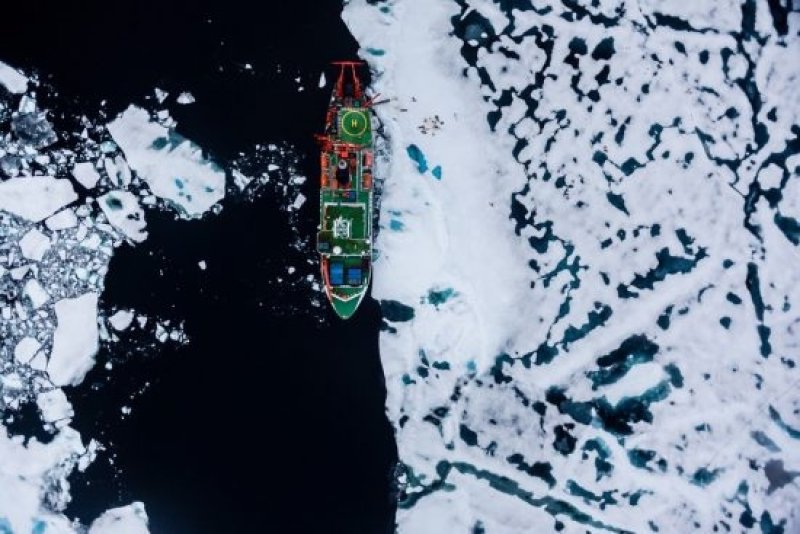
With a length of 118 metres, a cruising speed of 10.5 knots, and a maximum endurance of 75 days, the POLARSTERN is one of the most powerful research vessels in operation today. (c) Alfred-Wegener-Institut / Stefan Hendricks
The Federal Ministry of Education and Research (BMBF) announced the Year of Science 2016/17, with the motto "Seas and Oceans – discovering, using, protecting". Many activities will be held to educate the public about topics related to the ocean, starting from mid-2016 to the end of 2017.
The oceans cover about 70 percent of our planet, and are a valuable resource. More than half of the world's population live in coastal regions. One in every three persons use the resources of the sea as a food source. Many goods are transported via sea. There are large deposits of raw materials at the seafloor. The oceans absorb much of the carbon dioxide produced by us.
Recent studies show increasing pollution of the Arctic ice by microplastics and the acidification of the Arctic Ocean. As a result of the dwindling sea ice due to global warming, new resources are needed, leading to additional strain on the Arctic. The sustainable use of this sensitive ecosystem is therefore an important part of polar research.
Under the "Seas and Oceans" theme, topics covered will range from the marine habitat as food source and economic areas, the importance of oceans in weather and climate to the social importance of the oceans and coastal regions as cultural spaces, places of longing and destinations. Hundreds of events, meetings, exhibitions and competitions will be held nationwide.
The Year of Science 2016/17 is supported by the BMBF, Science in Dialogue (KIS), Ozeaneum and other partner organisations.
The Federal Ministry of Education and Research (BMBF) announced the Year of Science 2016/17, with the motto "Seas and Oceans – discovering, using, protecting". Many activities will be held to educate the public about topics related to the ocean, starting from mid-2016 to the end of 2017.
The oceans cover about 70 percent of our planet, and are a valuable resource. More than half of the world's population live in coastal regions. One in every three persons use the resources of the sea as a food source. Many goods are transported via sea. There are large deposits of raw materials at the seafloor. The oceans absorb much of the carbon dioxide produced by us.
Recent studies show increasing pollution of the Arctic ice by microplastics and the acidification of the Arctic Ocean. As a result of the dwindling sea ice due to global warming, new resources are needed, leading to additional strain on the Arctic. The sustainable use of this sensitive ecosystem is therefore an important part of polar research.
Under the "Seas and Oceans" theme, topics covered will range from the marine habitat as food source and economic areas, the importance of oceans in weather and climate to the social importance of the oceans and coastal regions as cultural
spaces, places of longing and destinations. Hundreds of events, meetings, exhibitions and competitions will be held nationwide.
The Year of Science 2016/17 is supported by the BMBF, Science in Dialogue (KIS), Ozeaneum and other partner organisations.
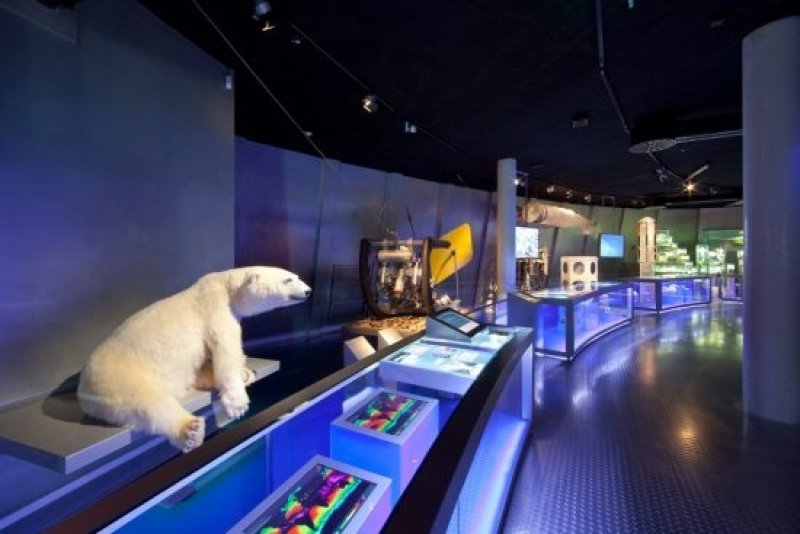
In the exhibition, the Ozeaneum will showcase exciting exhibits of marine research and exploration. (c) John Mary Schlorke