Scuba Diving in Bali: The Ultimate Guide to Diving in Paradise
scuba divingtravel
AdobeStock-Dudarev-Mikhail
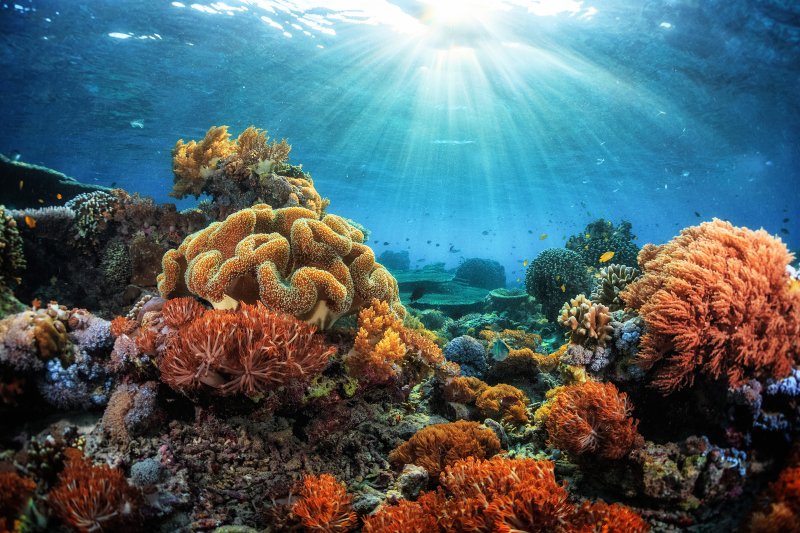
Few destinations match the variety and marine life you find when scuba diving in Bali. Volcanic coastlines meet vibrant reefs and world-famous wrecks, while nutrient-rich currents draw large pelagics through the blue. Warm hospitality, culture, and short distances between several dive regions help explain why divers return. From quiet shore dives to fast drifts and encounters with manta rays or mola mola, scuba in Bali can be as relaxed or challenging as you want it to be. This Bali diving guide covers the best regions, conditions, and travel tips.
Table of Contents:
-
Why Scuba in Bali Feels Like a Diving Paradise
-
Tulamben, Bali: The USAT Liberty Wreck
-
Amed: Relaxed Scuba in Bali and Colorful Reefs
-
Nusa Penida: Manta Rays and Mola Mola at Crystal Bay
-
Padang Bai: Coral Reefs and Macro Life
-
Menjangan Island: Clear Water and Wall Diving
-
Diving in Bali and Reef Conservation
-
Day Diving vs. Bali Liveaboards
-
Planning Scuba Diving in Bali
-
Best Time to Dive in Bali
-
Experience Level for Bali Dive Sites
-
SSI Courses for Scuba in Bali
-
Dive Deeper
Divers love scuba diving in Bali because so much variety fits into a relatively small island. In the morning, you can swim from a volcanic shore toward a historic shipwreck. The next day, a current may carry you along a coral wall; after that, you can slow down over black sand and search for rare macro life.
Water temperatures typically range from 24 to 29 degrees Celsius (75 to 84 degrees Fahrenheit), although cooler currents can push temperatures lower in some areas. Visibility often stretches from 15 to 30 meters (49 to 98 feet), depending on the season and location.
Several dive regions are reachable within 2 to 3 hours from Denpasar, so you can move from black-sand bays to coral walls in one trip. That flexibility suits short vacations and longer dive holidays.
Need more inspiration? Explore Best Scuba Diving in the World: 15 Incredible Destinations.
Tulamben, Bali is a highlight of scuba diving in Bali because the USAT Liberty wreck lies only a short swim from shore. The wreck extends across shallow and deeper sections, making it accessible to beginners and experienced divers.
Soft corals and sponges now cover the wreck from 3 to 30 meters (10 to 98 feet). Schools of jackfish circle the structure, bumphead parrotfish pass overhead, and reef fish move through the open framework.
Conditions are usually calm, with little current and visibility around 15 to 25 meters (49 to 82 feet). The gradual depth range leaves time to study the wreck and capture its coral-covered sections with your camera.
Just southeast of Tulamben, Amed shows a quieter side of scuba diving in Bali. Its laid-back atmosphere, beautiful coral reefs, and excellent shore diving set a slower pace.
Shallow coral gardens slope gently into deeper blue water. Turtles and reef fish move across the reef, with occasional reef sharks farther out, while nudibranchs, shrimp, and other small critters reward anyone who looks closely over the volcanic sand.
Water temperatures typically remain around 26 to 28 degrees Celsius (79 to 82 degrees Fahrenheit), while calm-period visibility often reaches 20 meters (65 feet). Amed is a good choice for unhurried dives, bright reef colors, and fewer crowds.
Alamy-BIOSPHOTO
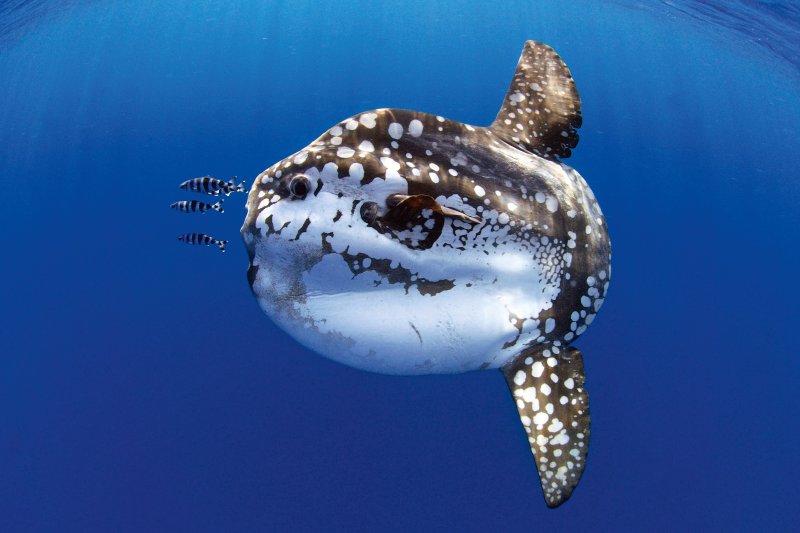
At Nusa Penida, scuba diving in Bali feels wilder and more open. Strong currents carry nutrient-rich water along the island, attracting manta rays and seasonal mola mola.
At Manta Point, reef manta rays glide above cleaning stations, their broad silhouettes clear against the water. Crystal Bay, Nusa Penida, is a favorite for mola mola encounters during the cooler months, typically between July and October.
These encounters come with demanding conditions. Upwellings can lower water temperatures to 20 degrees Celsius (68 degrees Fahrenheit), and currents can be strong. Visibility often exceeds 25 meters (82 feet).
Because of these conditions, Nusa Penida is usually best suited to divers with experience in currents and cooler water.
Padang Bai brings another side of scuba diving in Bali, with coral reefs, sandy slopes, and small bays only short boat rides apart.
Blue Lagoon often offers calmer water and colorful coral gardens filled with reef fish. On nearby sandy sites, slow down and look closely: frogfish, ghost pipefish, and nudibranchs can turn a quiet patch of seabed into the highlight of the dive.
Water temperatures usually range from 25 to 28 degrees Celsius (77 to 82 degrees Fahrenheit), with visibility between 10 and 20 meters (33 to 65 feet).
Padang Bai works well for beginners and photographers, while the SSI Photo & Video Specialty helps you build the skills to capture its tiny subjects and colorful reefs.
iStock-para827
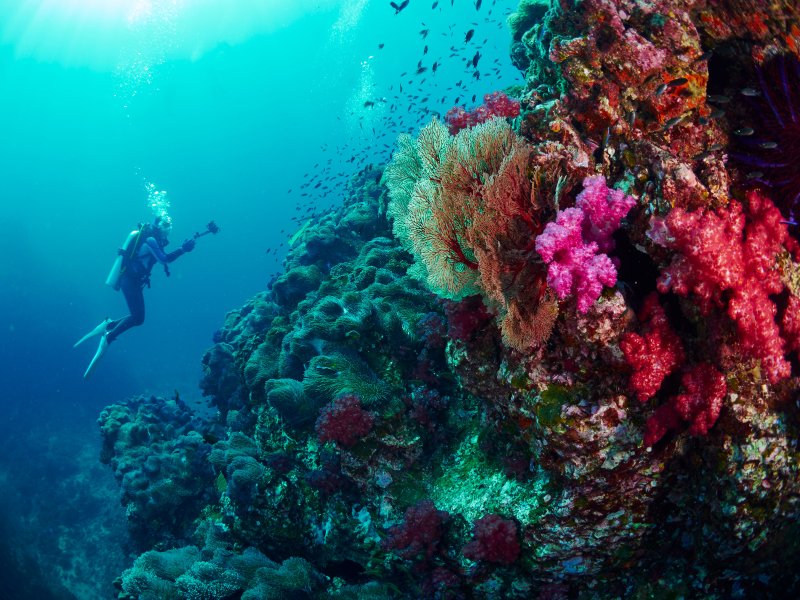
Menjangan Island reveals the calm, clear-water side of scuba diving in Bali. This protected area in northwest Bali features steep walls and vibrant coral growth.
Visibility can reach 30 meters (98 feet), giving wide-angle photographers room to capture the scale. From shallow reef tops at 5 meters (16 feet), coral walls fall away into deeper blue water.
Reef fish, turtles, and occasional pelagic visitors move along the walls. With generally mild currents, Menjangan works for divers across a broad range of experience levels.
Looking for more places beyond Bali's famous dive sites? Explore Hidden Dive Sites in Bali: Exploring Beyond the Famous Sites.
The Bali dive community places a strong emphasis on conservation and responsible practices. Many operators take part in reef cleanups, coral restoration, and sustainable tourism initiatives.
Around Tulamben, artificial reef projects create space for marine life to grow. Dive tourism also supports local communities and reef protection.
Maintain good buoyancy, keep your fins and hands clear of coral, and choose eco-responsible operators. These simple choices help preserve the biodiversity that makes diving in Bali so special.
Most visitors explore scuba diving in Bali through day trips from coastal towns. This keeps the schedule flexible and makes it easier to combine several regions in one vacation.
A Bali liveaboard changes the rhythm, with longer dive schedules and access to more remote sites. Some itineraries combine Bali with nearby islands, adding even more variety below the surface.
Day diving leaves room for island time. A liveaboard focuses on repeated dives, remote sites, and longer stretches at sea.
Planning a Bali dive trip is straightforward. International flights arrive at Denpasar, and transfers connect to major dive regions.
Accommodation ranges from budget guesthouses to upscale resorts, and many dive centers offer packages with lodging, equipment, and guided dives. Scubago helps you compare Bali dive centers and trip options.
Use the SSI Center Locator to find SSI Training Centers, courses, and local activities across the island. SSI partner DiveAssure can help you review dive and travel insurance options before departure.
The best conditions for scuba diving in Bali typically occur between April and November, when seas are often calmer and visibility improves, although conditions vary by region. Manta rays can be seen year-round, while mola mola sightings are most common between July and October.
Beginners can settle into sites such as Tulamben and Padang Bai, where many dives offer calmer conditions and manageable depths. Nusa Penida requires more confidence in strong currents and cooler water. Bali dive sites cover a broad range of experience levels.
Training before or during your trip can make each dive more comfortable. The SSI Perfect Buoyancy specialty helps you hover above coral with more control. The SSI Wreck Diving specialty builds skills for safe non-penetration wreck dives, while the SSI Deep Diving specialty prepares you for deeper wrecks and walls.
Build experience for more of Bali, then use the SSI Center Locator to find an SSI Professional near you and prepare for your trip.