Blue sharks use eddies for super-fast descents
environmentmarine lifemarine conservationblue sharksocean currents
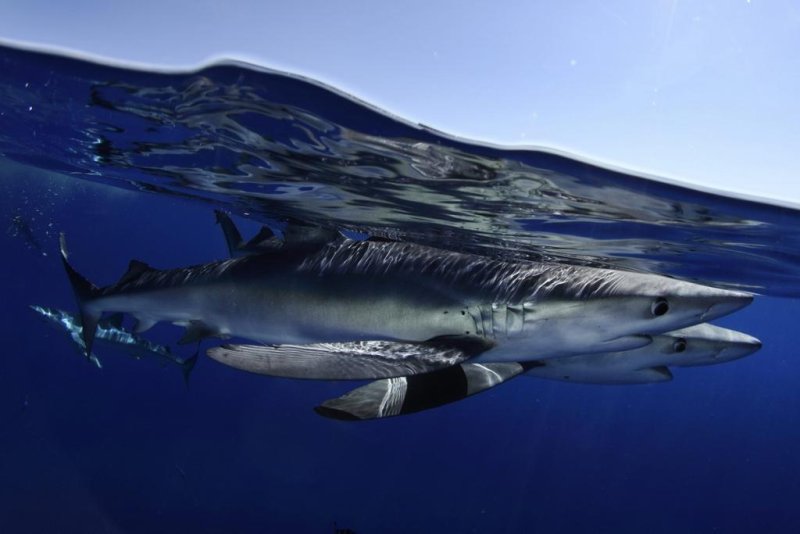
Blue sharks are considered "almost threatened" species, as the pressure on populations around the world is strong, (c) Nuna Sá
Swirling ocean currents support sharks as they descend into deep waters Blue sharks use large, swirling ocean currents – called eddies - to accelerate their way into the depths and feed themselves in the oceanic twilight zone. A layer of the ocean that lies between 200 and 1,000 meters deep and contains the most significant fish biomass on earth. Researchers tagged more than a dozen blue sharks off the US northeast coast and monitored them for nine months. The transmitters passed the data over to the researchers via satellite and showed that the sharks had spent most of their days diving into the twilight zone of the ocean in these swirling warm waters - hundreds of meters below the surface. There they spent about an hour searching for food such as small fish and squid, before returning to the surface to warm up before diving again. The dives were rarer at night when many dawn animals make their daily hike on the surface to earn their food. Camrin Braun, a marine ecologist at the University of Washington (UW) and lead author of the new study, now published in the Proceedings of the National Academy of Sciences, says diving for the sharks in the evening is simply not worth it. The sharks' behavior, Brown continues, is generally similar to that of white sharks the team observed in a previous study over the past year. Regarding the water temperature, however, the two species had different preferences. White sharks, which are warm-blooded animals, used a combination of warm and cold water whirls as an "elevator" to the twilight zone, while the cold-blooded blue sharks use only hot water swirls. "Blue sharks can not regulate their body temperature internally to stay warmer than the surrounding seawater, such as white sharks," said Braun. "We think that's why they show a clear preference for hot water vortices - it eliminates thermal limitations in deep-diving." Blue sharks are considered an "almost threatened" species as the pressure on populations around the world is strong. The new research helps to close essential knowledge gaps about where to go and why. Besides, the study highlights the importance of the oceanic twilight zone as a critical biomass resource. "The twilight zone is prone to overfishing," explains Simon Thorrold, co-author of the study. "If we harvest low-value fish in this area at the cost of fish such as blue sharks and other pelagic predators, this for sure is not a good compromise." Short movie: youtu.be/0IOxU6fqREE
Este artigo foi traduzido automaticamente e pode conter pequenas imprecisões; em caso de dúvida, consulta a versão original em inglês.