Juvenile splitnose rockfish siblings do not just go with the flow
environmentmarine lifemarine conservationoceanresearchpopulation dynamics
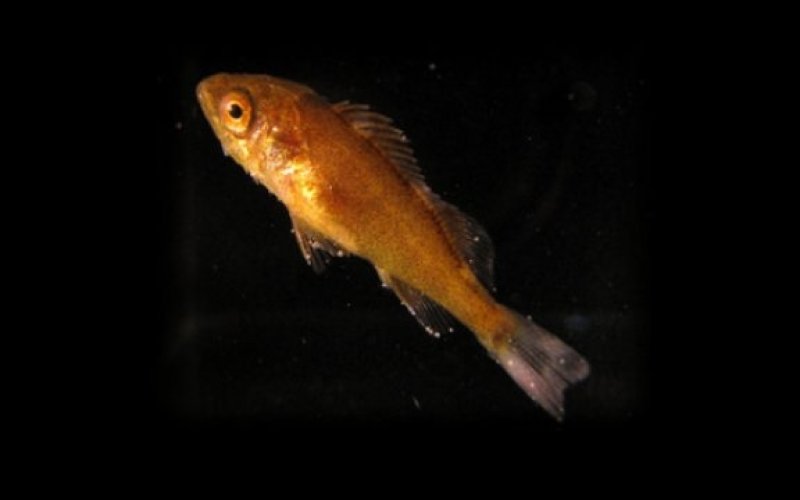
Juvenile splitnose rockfish (c) Daniel Ottmann
Research at Oregon State University shows that a splitnose rockfish’s
(Sebastes diploproa) offspring stick together in groups from the time
they are released into the open ocean until the time they move to
shallower water. The study sheds light on how rockfish disperse through the ocean and
take up residence in nearshore habitats. Previously, it was believed
their larvae dispersed to wherever currents carried them.
When you manage populations, it’s really important to understand where
the young are going to and where the young are coming from – how
populations are connected and replenished, " said Su Sponaugle, a
professor of integrative biology based at OSU’s Hatfield Marine Science
Center.
The discovery of this behaviour among the larvae came to light after
nearly 500 newly settled rockfish in a shallow nearshore habitat off
the central Oregon coast were collected and genetically analysed. The
results showed that 11.6 percent had at least one sibling in the group.
That's much higher than we would have expected if they were randomly dispersing, " Sponaugle said.
A female can release thousands of able-to-swim larvae at a time.
Dwelling close to the seafloor in the benthic zone, the rockfish makes
up a diverse genus with many species.
The adults live in deep water – usually 100 to 350 meters – but
juveniles often settle in nearshore habitats less than 20 metres deep
after spending up to a year in the open sea. Taking into account
dynamic influences like the California Current, siblings living to the
same area suggested that they stayed close together as larvae, and did
not diffuse randomly and then reconnect as recruits. This totally changes the way we understand dispersal, " said lead
author Daniel Ottmann, a graduate student in integrative biology at the
Hatfield Marine Science Center. " We’d thought larvae were just released
and then largely diffused by currents, but now we know behaviour can
substantially modify that. "
The species range from Alaska to Baja California. Pelagic juveniles
(juveniles in the open sea) often aggregate to drifting mats of kelp,
and the large amount of time larvae and juveniles spend at open sea is
thought to enable them to disperse great distances from their parental
source. This research gives us a window into a stage of the fishes’ life we
know so little about, " added Kirsten Grorud-Colvert, an assistant
professor of integrative biology at OSU’s Corvallis campus. " We can't
track the larvae out there in the ocean; we can’t look at their
behaviour early and see where they go. But this genetic technique
allows us to look at how they disperse, and it changes the
conversation. Now that we know that siblings are ending up in the same
places, we can consider how to more effectively manage and protect
these species. "
Because larval aggregation shapes the dispersal process more than
previously thought, Ottmann said, it highlights the need to better
understand what happens in the pelagic ocean to affect the growth,
survival and dispersal of the larvae.
" Successful recruitment is critical for the population dynamics of most
marine species, " he said. " Our findings have far-reaching implications
for our understanding of how populations are connected by dispersing
larvae. "
Besides the scientific aspect of the discovery, there is also the "gee
whiz" factor, as Grorud-Colvert describes it: " These tiny little fish,
a few days old, out there in the humongous ocean, instead of just going
wherever are able to swim and stay close together on their epic
journey. These tiny, tiny things, sticking together in the open ocean –
it's cool.
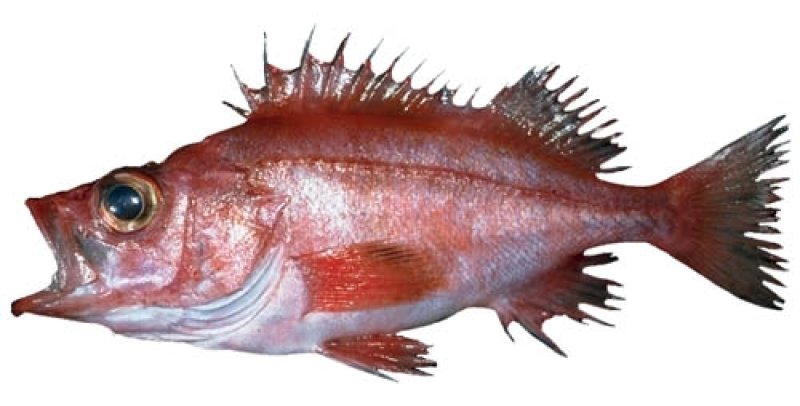
Adult splitnose rockfish (c) NOAA
Ten artykuł został przetłumaczony automatycznie i może zawierać drobne nieścisłości; w razie wątpliwości zapoznaj się z oryginalną wersją angielską.