Growing ‘dead zone’ in the Gulf of Oman
environmentmarine conservationoceanunderwater ecosystem
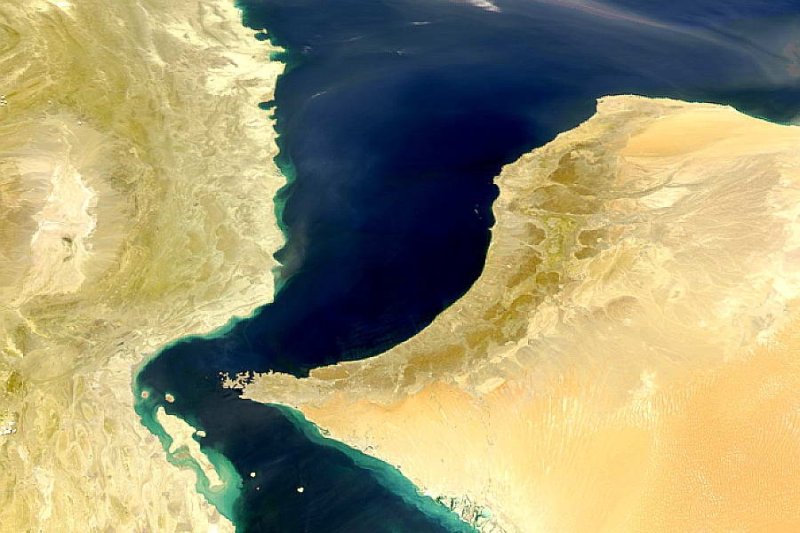
Gulf of Oman, Strait of Hormuz und Arabian Gulf (from top to bottom) (c) NASA
Oxygen minimums greater than expected
New studies by the University of East Anglia (UEA) have confirmed a dramatic drop in O2 in the Gulf of Oman: the environmental disaster is worse than expected. The dead zone has been confirmed by marine robots, known as seagliders, which were able to collect data in areas that were previously inaccessible due to piracy and geopolitical tensions. The robots are about the size of a small human diver, but can reach a depth of 1,000 meters and travel thousands of miles in the ocean for months. Two of these gliders were used for eight months in the Gulf of Oman to create an underwater image of oxygen content and ocean mechanics that transports oxygen from one area to another. Your collected data will be lifted and transmitted by satellite. Where the researchers expected some oxygen, they found an area that was larger than Scotland and almost free of oxygen. The research was Bastien Queste from the UEA School of Environmental Sciences in collaboration with the Sultan Qaboos University in Oman. "Dead zones are areas without oxygen, which are also referred to as 'oxygen minimum zones' in the ocean and are found in some parts of the world at a depth of between 200 and 800 meters, a disaster that is made even worse by climate change, as it is warmer Contain less oxygen and allow fertilizers and wastewater to flow from the land into the oceans," said Dr. Queste. "The Arabian Sea is the largest and densest dead zone in the world, but so far no one knew how bad the situation was because piracy and conflict in the region made it too dangerous to gather data there. We have barely collected data for nearly half a century because it is difficult to send ships there, and our research shows that the situation is actually worse than feared. And that the area of the dead zone is huge and growing - the ocean is suffocating," continued Dr. Queste. "Of course, all fish, seaweeds, and other animals need oxygen to survive there, and it's an environmental problem, with terrible consequences for people who depend on the oceans for food and employment. The chemical cycle of nitrogen, an important nutrient for plant growth, changes dramatically when there is no oxygen, producing nitrous oxide, a greenhouse gas that is 300 times more powerful than CO2," Quest added. The team combined its seaglider data with a high-resolution computer simulation to determine how the oxygen in the northwestern Arabian Sea spreads over different seasons and the monsoon. They found that the death zone moves up and down between seasons, forcing the fish in a thin layer near the surface. "The management of Western Indian Ocean fisheries and ecosystems in the coming decades will depend on a better understanding and better prediction of oxygen content in key areas such as the Gulf of Oman," said Dr. Quest. The study was recently published in the journal Geophysical Research Letters. Information: https://www.uea.ac.uk