Japan seeking to get whaling ban overturned
environmentmarine conservationjapanwhalinginternational whaling commission
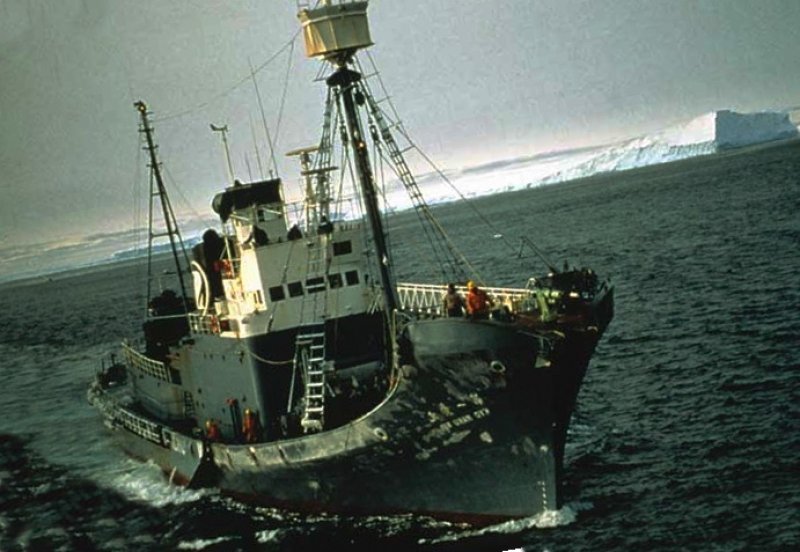
Japanese whaler
(c) Mark Votier / WDC
Representatives dispatched to persuade other countries to support them
The Japanese government is doing everything it can to overturn the ban on whaling (see also here ).
According to government representatives, Japan intends to send experts from the fisheries industry to countries that are likely to join the International Whaling Commission (IWC), as well as to anti-whaling countries which may support Japan's stance in a bid to boost support for themselves.
In the IWC, important decisions such as the termination of the moratorium (so-called Annex amendments) require a three-quarter majority. At the moment, the 88 IWC members are divided into 39 pro-whaling and 49 anti-whaling member states. For this reason, the Japanese Fisheries Agency is sending experts as "advisors" to liaise with government authorities of states that are considering entry into the IWC.
Japan also wants to strengthen its cooperation with countries that already support whaling.
The Japanese Ministry of Foreign Affairs will also send experts to anti-whaling countries that have displayed some understanding of the Japanese stance. On this aspect, plans include seminars for local and media stakeholders.
To achieve its objectives in the IWC, Japan has been garnering the support of economically developing countries without a personal interest in whaling for decades. Its government will use its Overseas Development Assistance (ODA) Programme to incentivise them to join the IWC and support the pro-whaling stance.
In 2010, an investigation by the Sunday Times (UK) revealed Japan's long-term strategy to influence the votes of small countries at IWC meetings. Its reporters had filmed government representatives admitting that they supported whaling so that their countries would receive aid from Japan. The governments mentioned in the news report were St Kitts and Nevis, the Marshall Islands, Kiribati, Grenada, Republic of Guinea, the Ivory Coast and Tanzania.
"Japanese whalers are currently travelling to the Southern Ocean to hunt minke whales, despite two IWC resolutions and the ruling of the International Court of Justice. In addition, Japan wants to kill more whales in the North Pacific. The new announcement officially confirms what Japan is all about. My question to the protectors of whales is what they would do about it," said Astrid Fuchs, Program Director of the Whale and Dolphin Conservation ( ), in German.
" For example, the EU is negotiating a free trade agreement with Japan, and it is high time to use this opportunity to create economic pressure. The EU must clearly state that there will be no agreement as long as Japan does not comply with international agreements, and becomes committed to protecting and preserving whales rather than slaughtering them for political reasons, " Fuchs continued.
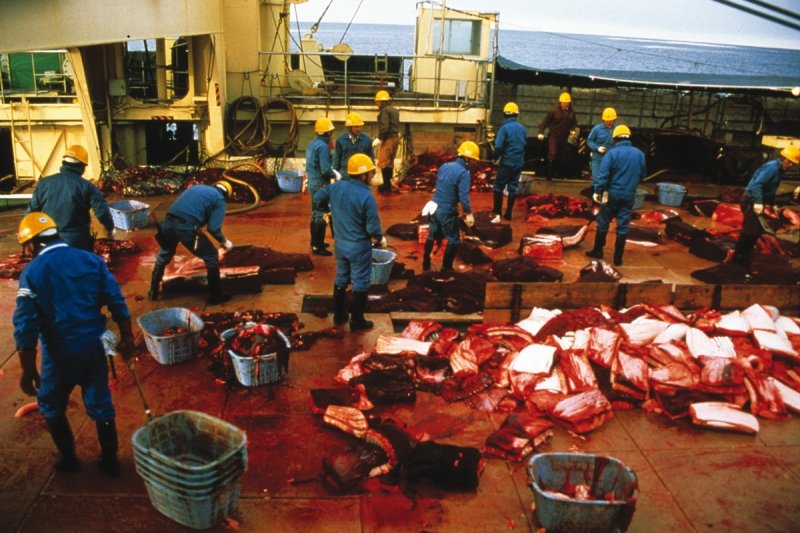
Japanese whaler
(c) Mark Votier / WDC
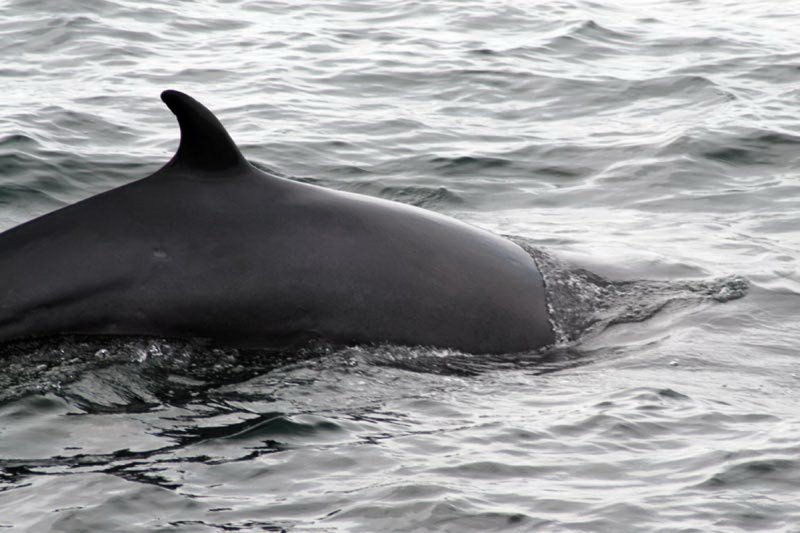
Minke whale in the Souther Ocean
(c) Regina Asmutis Silvia
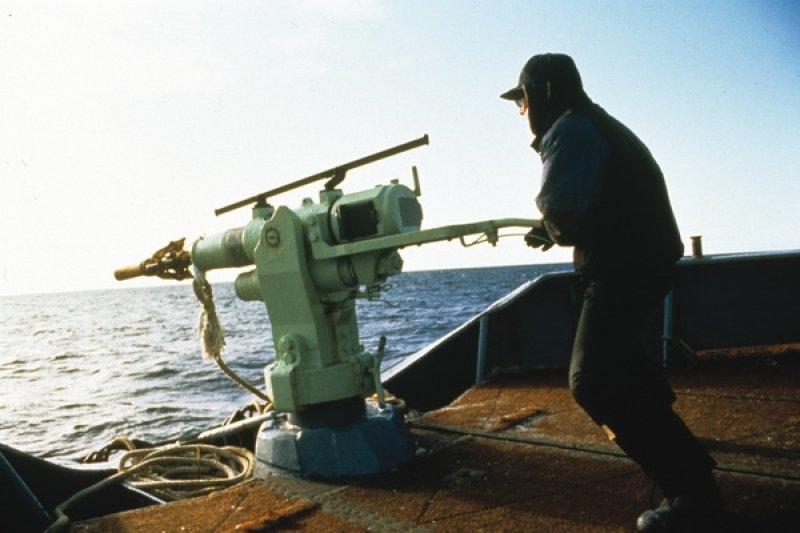
Japanese whaler
(c) Mark Votier / WDC
Cet article a été traduit automatiquement et peut contenir des inexactitudes mineures ; veuillez vous référer à la version anglaise originale en cas de doute.