Ice diving at its best in the East of Greenland
scuba divingenvironmentssiextreme divingice divinggreenland
(c) Franco Banfi
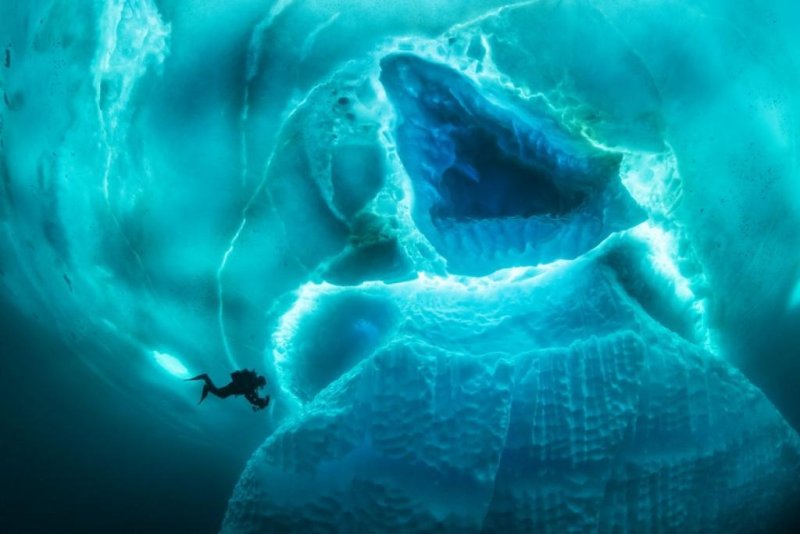
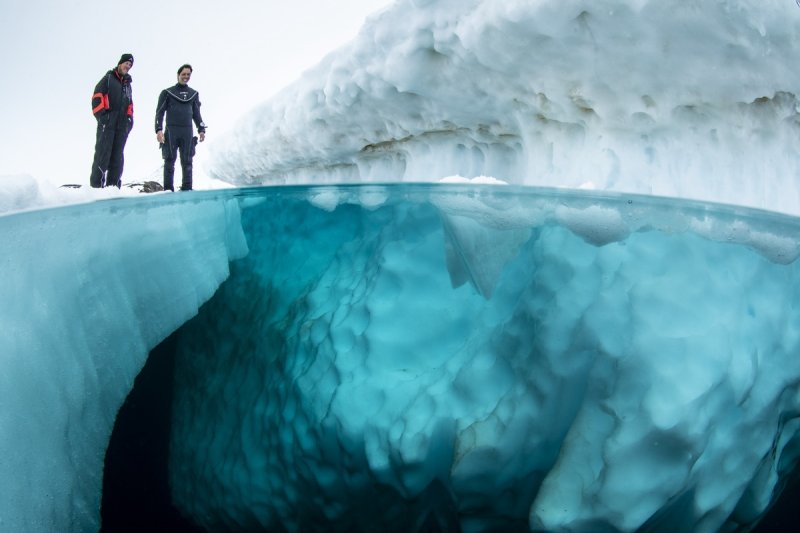
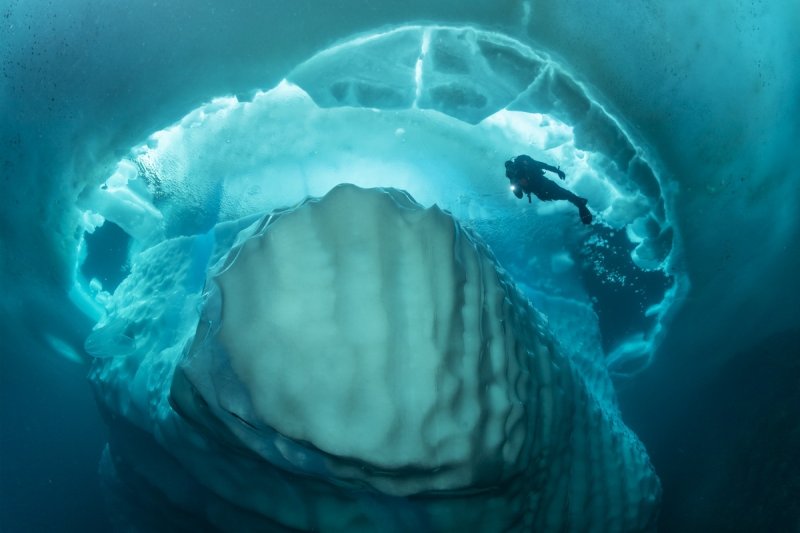
The wind blows streaks of powdery snow over the ice, forming wave patterns, elevations and valleys as one would expect in the Sahara and at low tide on the beaches of the North Sea. The wild East of Greenland. The oldest town here was celebrating its 125th anniversary. Virtually every one of the approximately 4,000 inhabitants on the thousands of miles of coastline are hunters and fishermen. The Inuit can survive here without snowscooter, firearms, fixed and heated houses and imported food. We are in the lee of an iceberg, which is stranded here at the beginning of winter almost half a year ago in pack ice, to create a dive site. After clearing away the snow, we saw a triangular hole about 2 meters long and then put on three safety exits. The water is crystal clear and icy. The first divers put on the safety lines and slide under the ice cover. Rule No.1: Do not stay on the surface for a long time to avoid icing. The first meter is a mixture of ice shards, water and semi-frozen. Then you are suddenly in the Ice Cathedral, a tiny point in a huge room. The wall of the iceberg falls into the depth, while the frozen ice pack forms a massive ceiling. Light falls here and there through the ice, sometimes in the most impossible places. It is one of the most extreme and unforgettable dives you can experience on our planet. Ice diving at the end of the world. About 40 minutes later, more and more air bubbles rise in the manhole. Shortly thereafter, one of the two divers breaks through the thin ice in the entrance, which was just about to form on the now open water. In the acute corners of the triangle, it is quite easy to drag the diver onto the ice and help with the removal of equipment. Hot tea helps with the first warm-up while the next team prepares for the dive. The iceberg we dive is located in a sheltered bay, near the village of Tasiilaq. From the village there are only a few minutes with the snowscooter (which, however, brings a whopping 100 kmh and more on the flat ice). It is not a very large iceberg, maybe just three to four meters height above the water. However, 90% of the mass of the iceberg is under water – and thats the place we want to explore. The ice walls are white, reminiscent of the surface of a golf ball - typical of quite "soft" ice. An iceberg is actually also pressed snow, flowed over a glacier from the interior to the fjord, broken off (calved) and then formed by the tides. Each iceberg only waits for its own destruction and yet is at the same time a work of art in permanent change. Even "our" iceberg will be released in the coming weeks from the approaching spring from its icy shackles. He will not survive the summer - melt, break and disappear in the end. Every dive site is transient and every dive is unique - maybe that's just part of the appeal? The German-Norwegian operator Northern Explorers looks back on more than ten years of diving experience in Greenland. Diving on icebergs in winter takes place in March and April. Weather and ice conditions can vary considerably. The expeditions take place in small groups of about 5 to 6 participants. www.northern-explorers.com Thanks to Sven Gust ( northern-explorers.com), all Photos (c) Franco Banfi ( wildlifephototours.ch) & Uli Kunz ( uli-kunz.com)
(c) Franco Banfi
(c) Franco Banfi
(c) Franco Banfi

(c) Uli Kunz

(c) Uli Kunz
Cet article a été traduit automatiquement et peut contenir des inexactitudes mineures ; veuillez vous référer à la version anglaise originale en cas de doute.