The Hydra – the key to everlasting life?
environmentregenerationagingimmortalitystem cells
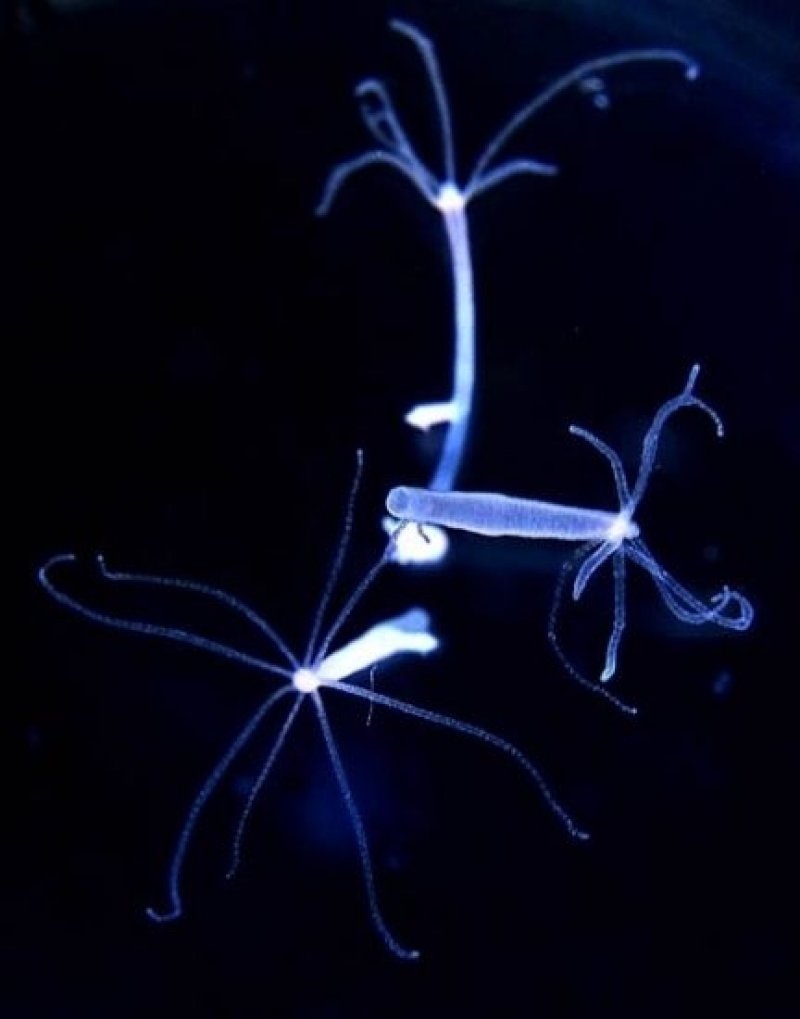
Studying the freshwater polyp that can regenerate damaged cells The principle that all living things grow old eventually has always been a fact of life – till now. For nearly a decade, scientists at the Max Planck Institute for Demographic Research (MPIDR) have been studying the freshwater polyp Hydra, an organism whose mortality is constant and extremely low. For most species, including humans, the likelihood of dying increases as one gets older. Scientists regard this as an indicator of the physical decay within the body. However, the Hydra appears to have found a way to resist the physical deterioration of an aging body. The researchers involved in this study – MPIDR Director James Vaupel and Daniel Martinez (Pomona College, Claremont,California, USA) – have published their findings in the PNAS science journal.
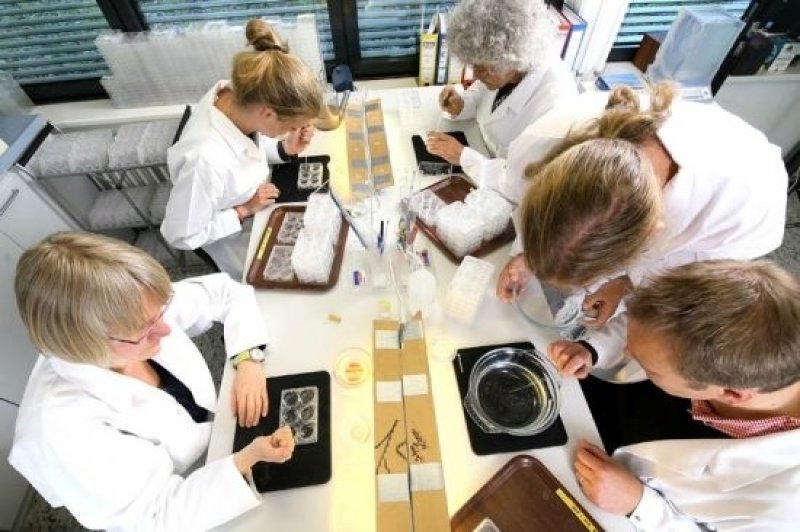
"Our findings are a fundamental challenge to common theories of the evolution of aging," said MPIDR demographer Ralf Schaible. According to these theories, all multicellular organisms capable of procreation would experience decay of its physical form as it grows old. Scientists measure this in two ways: Fertility rates that decrease significantly after a period of reproductive ability during early adulthood; and the increased risk of death after maturity. For humans, the possibility of dying within a year is as high as 50 percent for those in the advanced stage of life. However, for the Hydra, this rate remains relatively constant – at about 0.6 percent. What's more, the Hydra's reproductive ability does not diminish but remains constant as well. Studying (almost) eternal life in a basement lab In a ongoing long-term experiment, the researchers created artificial environments for the Hydra. Here, the organisms are free from threats and natural predators. Over nearly a decade, the researchers cared for about 1,800 Hydras in a laboratory situated in the basement of the institute in Rostock. Each Hydra lives in its own small glass bowl in a natural day-night cycle in cabinets that are maintained at a constant 18 degree Celcius. Thrice a week, a team of scientists and assistants feed them, using special pipettes to place tiny shellfish into the polyp's barely visible tentacles. Every polyp receives the same amount of food. Ever since the experiment started in March 2006, the Hydras have been reproducing asexually, and their descendants are subsequently placed in their own glass bowl and receive the same treatment as their parents. Fountain of youth Overall, there have been 3.9 million observation days of individual Hydra. Over this time, the number of natural deaths can be counted on a single hand. On average, this number stands at about five per year. The number of actual deaths is higher, when one considers instances when a Hydra perishes due to laboratory accidents like a polyp sticking to the lid of its bowl and drying up, or it having been dropped onto the floor. So, disregarding such unnatural causes of death, the scientists proceeded to assess the organism's mortality rate. It turns out that several generations of researchers would be insufficient to live out the Hydra. After 500 years, it was estimated that five percent of a cohort would still be alive. For two out of twelve of the cohorts in the study, the risk of death was so small that it would take 3,000 years until just five percent of the polyps remained. "Hydra apparently manages to keep its body young because it does not senesce by accumulating damages and mutations, as most other living beings do," said biodemographer Alexander Scheuerlein. He added that the organism was probably able to follow a special self-preservation strategy, due to the fact that its body and cellular processes were rather simple. For example, the Hydra can completely regenerate parts of its body that have been damaged or lost, due to a large number of stem cells. (Stem cells have the ability to develop into any part of the body at any time.) In addition, the Hydra can replace all its cells within only four weeks, so it regularly expels those cells that have been damaged or genetically mutated. As a result, any damage the Hydra suffers is swiftly repaired before it has a chance to get worse.
Αυτό το άρθρο μεταφράστηκε αυτόματα και ενδέχεται να περιέχει μικρές ανακρίβειες. Σε περίπτωση αμφιβολίας, ανατρέξτε στην πρωτότυπη αγγλική έκδοση.