Technical Diving Skills: 9 Must-Haves for Tech Divers
extended range
mares
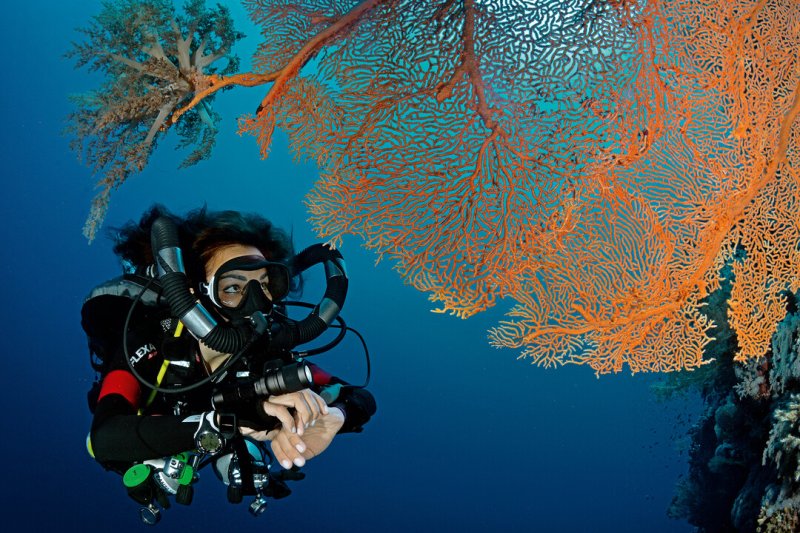
Hanging still at 6 meters with a DSMB line in one hand, your team's lights steady in the water, and minutes of decompression still ahead — that is where technical diving skills stop being theory.
Technical diving opens the door to deeper wrecks, longer bottom times, decompression diving, cave systems, and advanced exploration.
But the real pull is not depth alone. It is the discipline behind it: the quiet control, the clean movements, and the ability to stay calm when the dive becomes more complex.
Whether you are moving into decompression diving, twinset training, or overhead environments, technical diving demands strong fundamentals: managing gas, time, depth, lines, lights, and your own breathing while the plan keeps moving.
These 9 technical diving skills are not boxes to tick. They are habits to refine on every dive.
Table of Contents:
-
Top 9 Technical Diving Skills for Safer, Enjoyable Tech Dives
Perfect buoyancy and stable trim are non-negotiable in technical diving because every other skill depends on them.
Good trim keeps you flat and streamlined, so you move with less effort, use gas more predictably, and avoid stirring up the bottom around a wreck, cave entrance, or silty slope. On a technical dive, even small buoyancy changes matter. Rising only 0.5 meter (1.5 feet) during a stop can affect the planned profile, and one careless fin kick can turn clear visibility into a cloud.
Practice stillness during normal dives: hold depth precisely, make the smallest corrections with your breathing, and notice what changes when your attention shifts to a gauge, a spool, or your teammate. Video feedback also helps because the camera catches what you may not feel underwater: dropped knees, busy fins, or one hand quietly doing extra work.
For divers preparing for tech diving training, SSI Extended Range Foundations helps you refine the essential skills before moving into more complex dives.

mares
Gas planning is where confidence starts before the dive even begins.
One of the most important technical diving skills is knowing exactly how much gas you need before entering the water, and which gas belongs to each part of the plan.
Technical dives often involve bottom gas, travel gas, and decompression gases, so the plan has to be accurate before the descent begins. Consumption rates, reserve volumes, bailout needs, and turn pressures shape the dive before anyone leaves the surface.
Gas switching needs the same level of attention. Every planned switch should follow the same calm routine: Signal the team – Check the depth – Identify the cylinder to be used – Turn on and orientate the second stage – confirm with the team – check the plan and switch computers to the new gas.
Practice gas planning on every dive, even shallow ones. Estimate your expected gas use, compare it with your actual consumption afterward, and refine your calculations over time. The goal is not perfect theory. It is a gas plan that matches the way you actually dive.
For stronger emergency awareness across all kinds of diving, read Dive Rescue Skills Every Diver Should Know and How to Keep Them Sharp.
A backup system only helps if your hands can find it when your brain is busy.
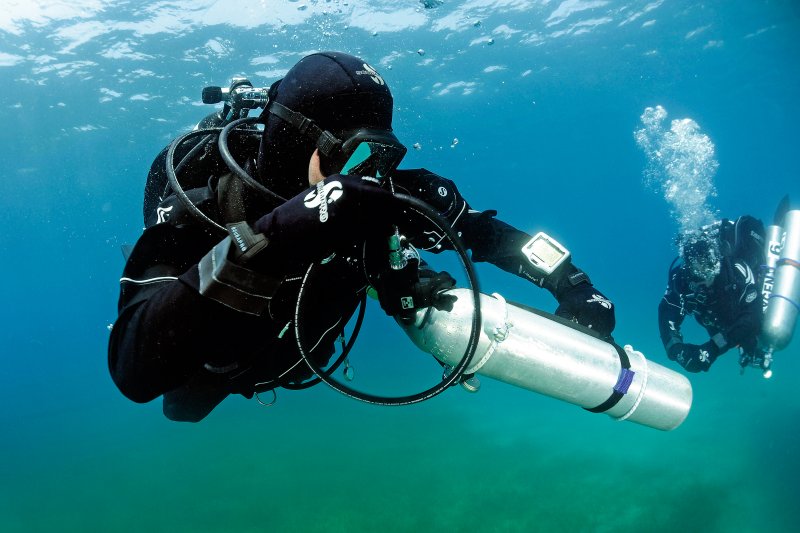
Redundant masks, lights, regulators, computers, cutting devices, and gas supplies are common in technical diving. What matters is whether you can reach your backups and use them when needed while staying stable, aware of your team, and in control of the dive.
Practice with the gear as you would use it on a real dive: gloves on, lights clipped, second stages where they belong. Over time, the movement should feel familiar, not rushed.
Valve shutdown drills tell a lot about a technical diver.
Can you reach the valves? Can you identify the correct one? Can you isolate, and reopen while staying neutral? Can you do it without rolling, sculling, or drifting away from the team?
A free flow or hose failure will not wait for a calm moment. That is why valve shutdowns need to feel familiar long before you need them. Start on land in full equipment, then move into shallow water and practice while staying neutral. With a qualified instructor, build toward realistic scenarios such as the full thinking shutdown while keeping depth, trim, and team position stable. A clean shutdown should feel controlled, not dramatic.

mares
Technical diving skills are physical, but the real test often happens mentally.
A flooded mask, a building current, or a teammate needing assistance can all be manageable on their own.
The real test begins when two or three things happen at once and you still need to hold depth, secure gas, and keep the team together.
Good divers slow the moment down. They stabilize depth, secure gas, check the team, and solve one issue at a time. Rushing burns gas, breaks communication, and turns small problems into bigger ones.
Scenario training helps because it gives your brain a pattern before real stress appears: stop, breathe, think, then act.
Once you move inside a cave, mine, or wreck, direct ascent is no longer the way out. Navigation becomes part of your safety system.
Navigation errors in these environments can have serious consequences.
Line awareness, line markers, light discipline, team spacing, and route memory all matter. The exit has to stay clear in your mind without turning the dive into a discussion.
You can build that mindset in open water, too. Pay attention to natural references, make compass work part of regular dives, and mentally retrace your route afterward. Those habits strengthen situational awareness long before you enter more complex environments.
For divers looking to move into wreck penetration and more advanced overhead environments, SSI Technical Wreck Diving develops essential skills such as precision buoyancy, propulsion techniques, line work, light procedures, and emergency protocols.
Decompression is where patience becomes a skill.
A planned stop at 9 meters (30 feet) or 6 meters (20 feet) is not “somewhere around there.” It is a specific depth, for a specific reason, at a specific time in the plan.
Drifting shallow, sinking deep, or losing focus because nothing exciting is happening can affect the profile and create serious problems.
Strong decompression discipline means staying present, even when the dive feels almost over. Keep monitoring depth, time, gas supply, team position, and comfort. While the ascent requires focus, it can still be one of the calmest parts of the dive: a few quiet minutes to stay present, watch the team, and let the plan unfold.
One of the easiest ways to practice this discipline is during your recreational safety stops. Hold a precise depth for several minutes and avoid drifting up or down. It may sound simple, but it teaches the patience and control needed when conditions become more demanding.
For divers who want structured technical diving training around limited decompression, SSI Extended Range is designed to introduce the concepts, techniques, and procedures required for decompression diving with nitrox.
gerald_nowak
A strong technical diving team feels calm before anyone gets in the water.
The dive plan is clear, gas rules are agreed, and everyone understands turn points, maximum depth, ascent strategy, and decompression obligations.
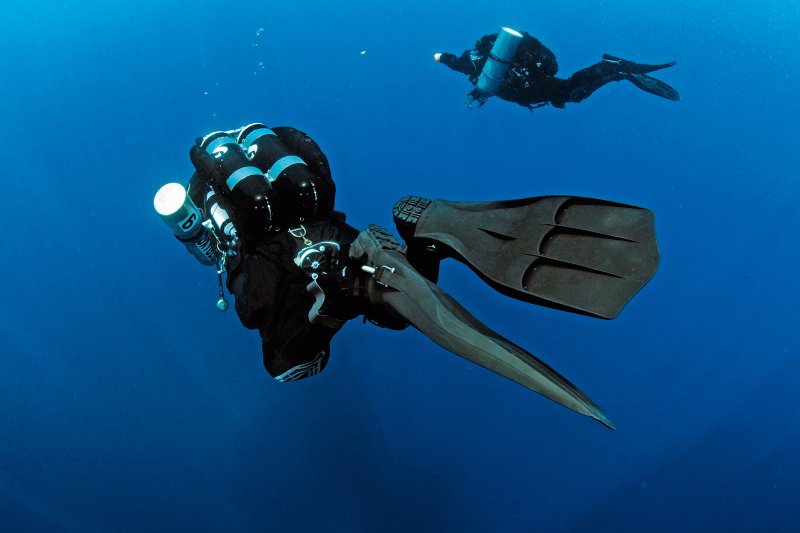
Once underwater, the team almost seems to move as one. Divers know where their teammates are without constantly searching for them, communication feels natural, and even small adjustments happen smoothly and without strain.
The best teammates are not just skilled divers. They are easy to read, consistent in their actions, and alert to small changes before they become bigger problems.
That kind of trust is built before the dive, tested during the dive, and refined after the dive.
Even with careful planning, a dive may need to end early. Knowing how to ascend safely or return to the exit without panic is one of the final essential tech diving skills.
That may mean switching to bailout gas, sharing gas with your buddy, following a line in poor visibility, or adjusting the decompression plan while maintaining a controlled ascent.
That is why emergency protocols should be practiced progressively with qualified instructors and the right equipment.
The aim is controlled execution under pressure: a clear sequence, a stable team, and enough discipline to follow the trained procedure when the dive gets uncomfortable.
Technical diving experience is [AW3] built step by step. You do not chase depth first. You chase precision first.
That means better buoyancy before bigger dives, better gas planning before longer decompression, stronger team habits before more complex environments, and better self-control before higher task loading.
Even experienced tech divers never really “finish” these skills. They keep refining them.
There is always room for a cleaner shutdown, a steadier decompression stop, and a sharper team briefing.
If you are ready to develop your technical diving skills through structured training, explore SSI Extended Range programs or use the SSI Center Locator to find an SSI Professional near you.
gerald_nowak-min
SSI Extended Range Foundations
A good choice for divers who want to refine buoyancy, trim, propulsion, equipment handling, and team awareness before moving deeper into technical diving.
Technical Diving Training: Is It Right for You? A Full Guide
A helpful SSI blog for divers who want to understand what technical diving training involves, what skills matter, and how to prepare for the next step.
SSI Center Locator
Find an SSI Training Center or Professional near you and choose the right path for your next stage of technical diving.