Increased CO2 content affects the hunting behaviour of squid
environmentmarine lifemarine ecosystemscephalopodsocean acidification
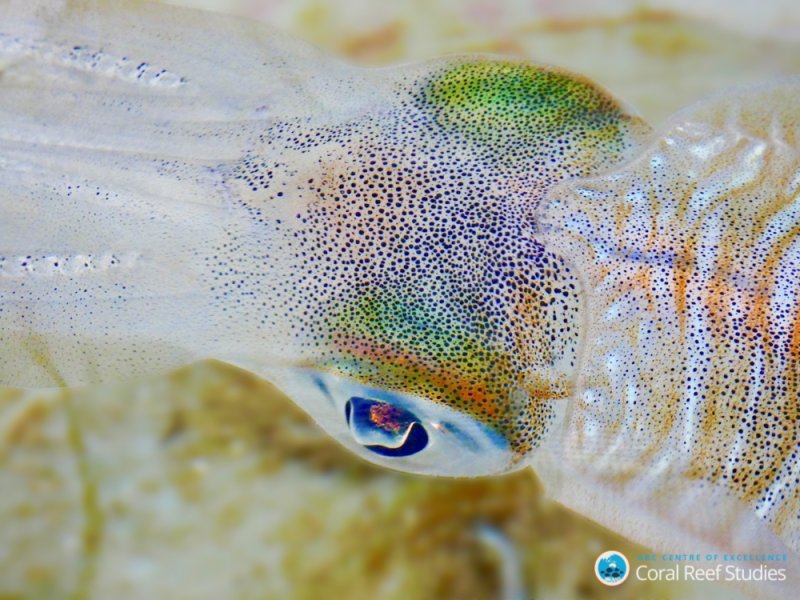
Close up of adult bigfin reef squid, Sepioteuthis lessoniana. (c) Blake Spady
Ocean acidification in the sea has an impact on the behaviour of cephalopods
Blake Spady of the ARC Center for Coral Reef Studies (Coral CoE) at James Cook University conducted a study on the effects of ocean acidification on cuttlefish. The oceans absorb more than a quarter of the excess carbon dioxide (CO2) that humans release into the atmosphere, and this uptake of additional CO2 causes seawater to become more acidic
"Climate models predict that CO2 levels will continue to rise this century if there is no serious commitment to reducing emissions," said Spady.
The research team chose to study cephalopods (a group that also includes cuttlefish) because most previous behavioural studies have focused on fish. The effects of increased CO2 concentrations in the ocean on highly active invertebrates are largely unknown.
"Cephalopods capture just about anything they can hug, and are themselves hunted by a variety of predatory species so that they occupy an important place in the food webs of the seas," explains Spady.
The scientists tested the effects of elevated CO2 on the hunting behaviour of pygmy squids and large-finned reef squid.
"The pygmy squids were 20% less aggressive with increased levels of CO2, and they attacked their prey slower and from a distance, and they often chose more eye-catching body patterns," explains Spady.
Large-finned reef scalms showed no difference in the proportion of individuals attacking prey, but like the pygmy squids they were slower in attacking and more often using different body patterns.
Both species showed increased activity when exposed to elevated CO2, if they did not hunt. This suggests that they could also negatively affect their energy balance.
"We found similar behavioural effects of elevated CO2 levels in two separate species occupying widely differing niches, meaning that a large number of cephalopods can be affected by the increase in CO2 in the oceans, which could have a significant impact on marine ecosystems "adds Dr. Sue-Ann Watson, co-author of the new study.
"However, since squid have a short life expectancy, large populations and high population growth, they may have the potential to adapt to rapid changes in the physical environment," adds Spady.
Information: https://www.coralcoe.org.au.
Link to the study: https://onlinelibrary.wiley.com/doi/abs/10.1111/gcb.14098
บทความนี้ได้รับการแปลโดยอัตโนมัติและอาจมีข้อผิดพลาดเล็กน้อย โปรดอ้างอิงจากฉบับภาษาอังกฤษต้นฉบับหากมีข้อสงสัย