Global Shark Count
environmentmarine conservationcoral reefsharks
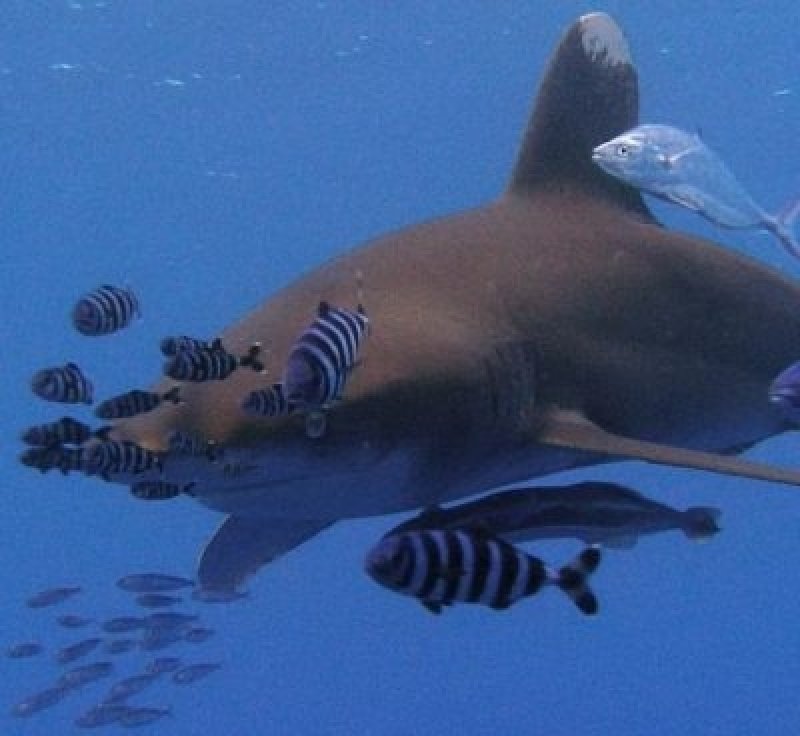
Whitetip shark (c) Lutz Hoffmann/Archiv Taucher.Net
Roll Call For The World's Sharks
Every year, as many as 100 million sharks worldwide are killed for their fins and meat. This has caused severe declines in certain shark populations, leading to the need to find out the current status of reef sharks.
This is where the Global FinPrint Project comes in.
Launched in the summer of 2015, this project is a population count of elasmobranches (sharks, rays, skates and sawfish) at coral reefs worldwide, from offshore areas of populated islands to remote atolls.
The aim is to gather information about shark behaviour, as well as the locations where sharks numbers are healthy, and where they are still dwindling.
At each site, the sharks are counted by luring them with a small bait box placed in front of an underwater camera (called a Baited Remote Underwater Video). Any shark that appears in front of the camera lens within 80 minutes is recorded on film, and 'counted'.
Although similar studies had been conducted in a few places, including Belize, Australia, Fiji and the French Polynesia, extending the studies to a more comprehensive geographic scope would yield much more insight into the population, characteristics and behaviour of sharks.
Hence, with the support from the Paul Allen Family Foundation, the Global FinPrint Project was established to conduct such research at more than 400 reefs in more than 30 countries in the Indo-Pacific, tropical western Atlantic, southern and eastern Africa and the Indian Ocean islands. Little is known about the shark populations at many of these sites.
The objectives of the inventory are not the mere numbers alone. The researchers also hope to gain new insights into how reef ecosystems evolve when the sharks are absent, and the shark's regulatory role in the marine food chain.
In many places worldwide, sharks are still being perceived as 'monsters of the deep'. While the general public has accepted the need to protect other marine creatures like whales, this is not so for sharks. Although an apex predator, sharks have become the hunted, and continue to be feared and hunted down relentlessly. Indeed, much more needs to be done to acknowledge and safeguard the shark's essential role in our marine ecosystems, as it is their presence within it that guarantees our oxygen supply and therefore our own survival.
Source: https://globalfinprint.org
Video Link: https://vimeo.com/131904146
บทความนี้ได้รับการแปลโดยอัตโนมัติและอาจมีข้อผิดพลาดเล็กน้อย โปรดอ้างอิงจากฉบับภาษาอังกฤษต้นฉบับหากมีข้อสงสัย